

(Re)discover the essential digital Advent Calendar

(Re)discover the essential digital Advent Calendar

The digital advent calendar, that essential tool that takes us back to our childhood memories, is the ideal way to celebrate the festive season. Setting up a digital advent calendar in your marketing strategy is offering you a unique opportunity. Celebrate this special time of year while strengthening the relationship with your audience.

Against this enchanting backdrop, invite your users to take part every day during the month of December. It’s a great opportunity to engage, recruit and qualify your prospects!

In this article, we explore the benefits of the digital advent calendar, how it can be used in a campaign, and some concrete customer use cases. Let’s dive into the fairytale world of these interactive campaigns that transcend the boundaries of time to connect brands with their audiences throughout December.

1. Why choose a digital advent calendar?

When the lights are twinkling and the excitement around the holidays is building, brands can find a unique opportunity to connect with their audience. By the way, the French spend around 5 hours online every day. The digital advent calendar is emerging as a powerful marketing strategy.

Creating a strong commitment

Christmas is a great time for engagement, and a digital advent calendar offers a unique opportunity to spend time with your audience throughout December. Last year, an average of no less than 8 games per user were played on Adictiz’s December calendars!

Every day, a new offer or mechanic is unveiled (from a wide choice of game mechanics and customisable content), encouraging participants to return to the campaign regularly.

Recruit and qualify leads

A well-designed Advent calendar campaign is the ideal way to recruit and qualify leads. Beyond the fun and festive aspect it brings to the festive season, this type of campaign stands out for its ability to recruit and qualify leads strategically.

What’s more, the daily offers and surprises encourage visitors to sign up and take part, enabling brands and chains to develop a prospect base. In 2022, Adictiz recorded 800k registrations for all December calendars!

Thanks to customisable forms and a variety of mechanisms, it’s easy to qualify your database!

Collect opt-in leads

Placed on a homepage, the advent calendar will be an excellent data-gathering tool. A well thought-out form will help you transform your web traffic, which is often higher before Christmas, into opt-in leads. What’s more, this first-party data is invaluable, enabling the information gathered to be used to target future campaigns more effectively.

The more attractive they are, the more likely you are to convert visitors into subscribers. So to optimise your performance, think 100% winner and give away discount vouchers to use in the shop or on your website!

2. How to use a digital advent calendar in a marketing campaign

Now you know the advantages of the digital advent calendar. This second part will dive into the details of its implementation, revealing tips to help you create high performing calendars.

Taking care of the calendar’s design

The online advent calendar is fully customisable, giving you the choice of the number of boxes, the type of content and its distribution (Facebook, iFrame or dedicated domain). The possibilities are vast, from varied game mechanics to text, image, video or downloadable content. Your visual identity is the key to an attractive campaign.

Creating a coherent story

Advent calendars allow brands to create an in-depth storytelling experience, offering users an immersive experience at the heart of their brand universe. By offering prizes to be won every day for 24 days, you can multiply the amount of contact and time spent with users. Each day has its own box and a chance to communicate with your prospects. You can thus tell a story or share your brand’s values to reach your audience.

Stimulate sharing thanks to the social gauge

Some features, such as the social gauge, help to stimulate the sharing of the game between users. Encourage participants to invite their friends to increase their chances of winning. This feature generates qualified traffic and improves the return on investment (ROI) of the operation.

3. Examples of digital Advent calendars from our clients

Floa’s interactive advent calendar: A winning strategy for raising awareness and qualifying prospects
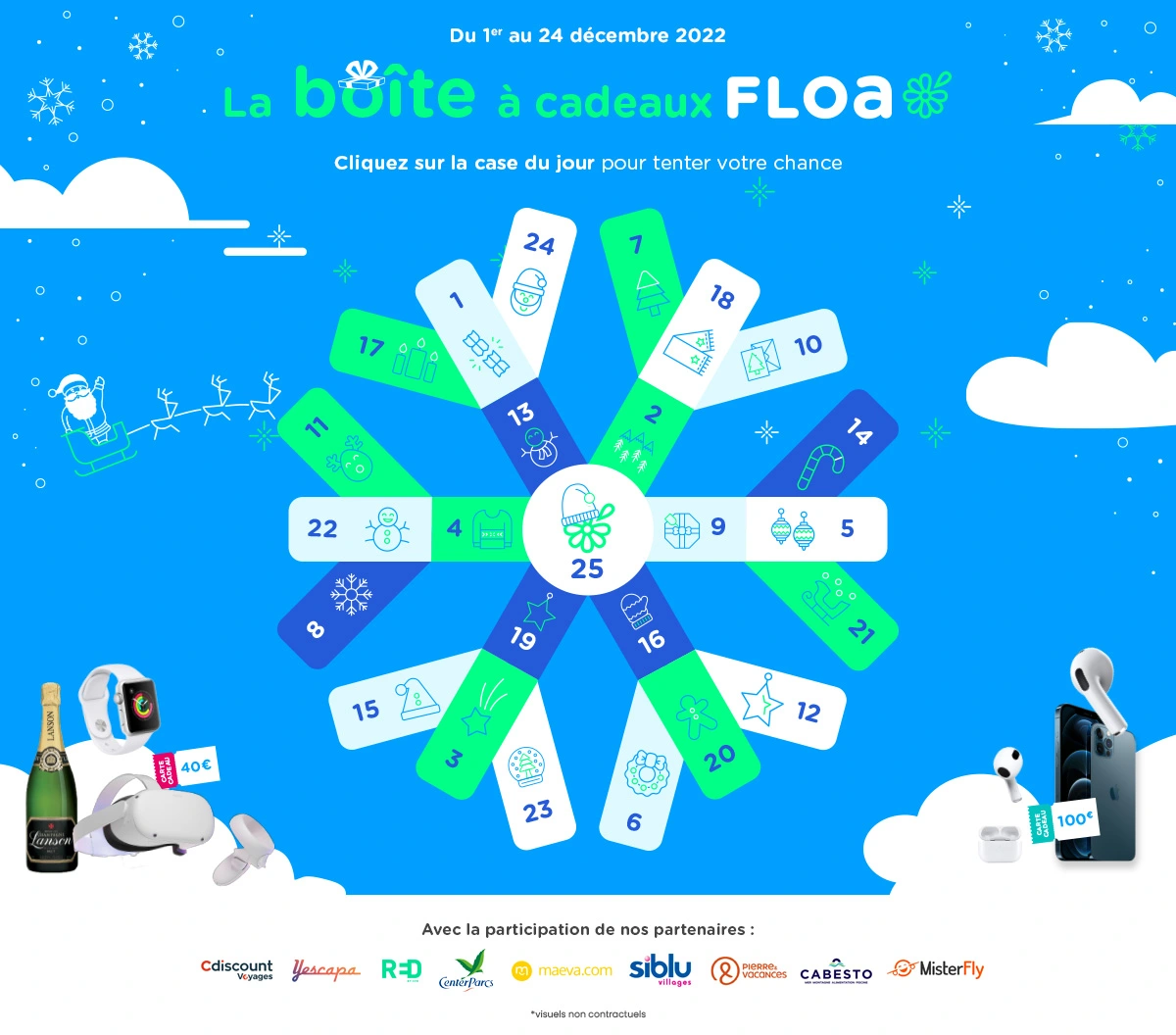
Floa-calendar

Floa Bank cleverly opted for an advent calendar to raise its brand awareness while qualifying its prospects. The results speak for themselves, with an opt-in rate of 36% and no fewer than 1,000 shares on social networks. The campaign is proving to be an undeniable success for the online bank. By implementing this creative approach, Floa has set itself apart by offering its customers an interactive and engaging experience. The advent calendar is proving to be an effective way of strengthening its presence and attracting consumer interest.

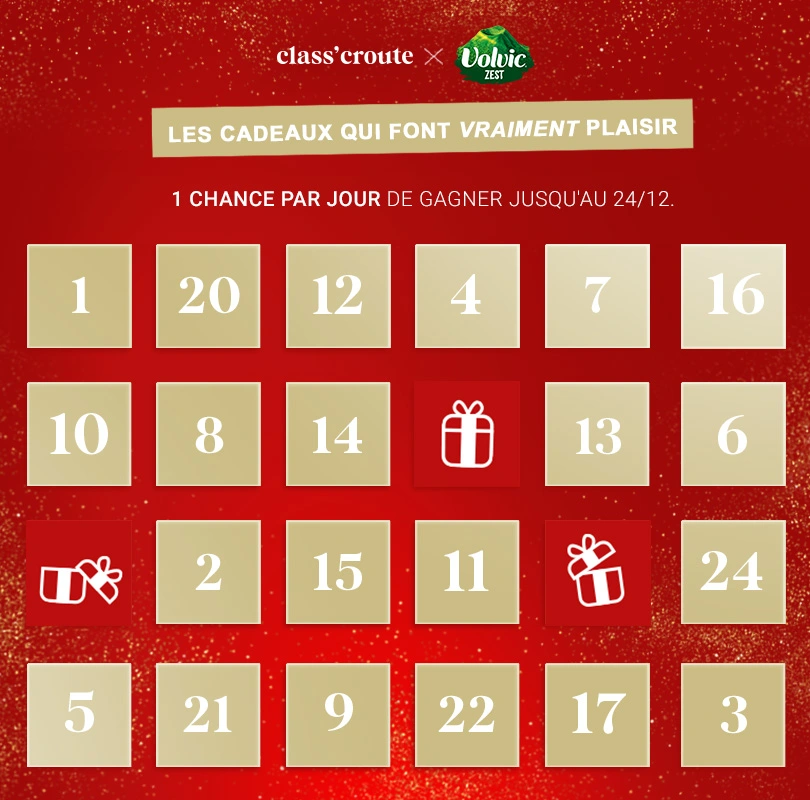
How Class’ Croute won over 50k prospects with a digital advent calendar
example-calendar

The advent calendar can be a powerful tool for attracting leads, as shown by the Class’Croute experience. Using a simple calendar with a scratch-off system, the company succeeded in recruiting no fewer than 50,000 subscribers during their campaign. This clever device captivated users, who played an average of 4.5 times each. Undeniable proof that this fun, interactive strategy is bearing fruit in terms of acquiring new prospects.

Find out how Savencia achieved a 41% opt-in rate

Savencia has set up a digital advent calendar aimed at recruiting leads for its Qui Veut Du Fromage website. With an impressive opt-in rate of 41%, the success of this initiative is undeniable. What’s more, the neat, gourmet design immerses users in the world of the brand. The digital advent calendar has proved to be an effective way for Savencia to communicate with and engage its consumers. This interactive strategy demonstrates the importance of innovation in creating lasting links with its community.

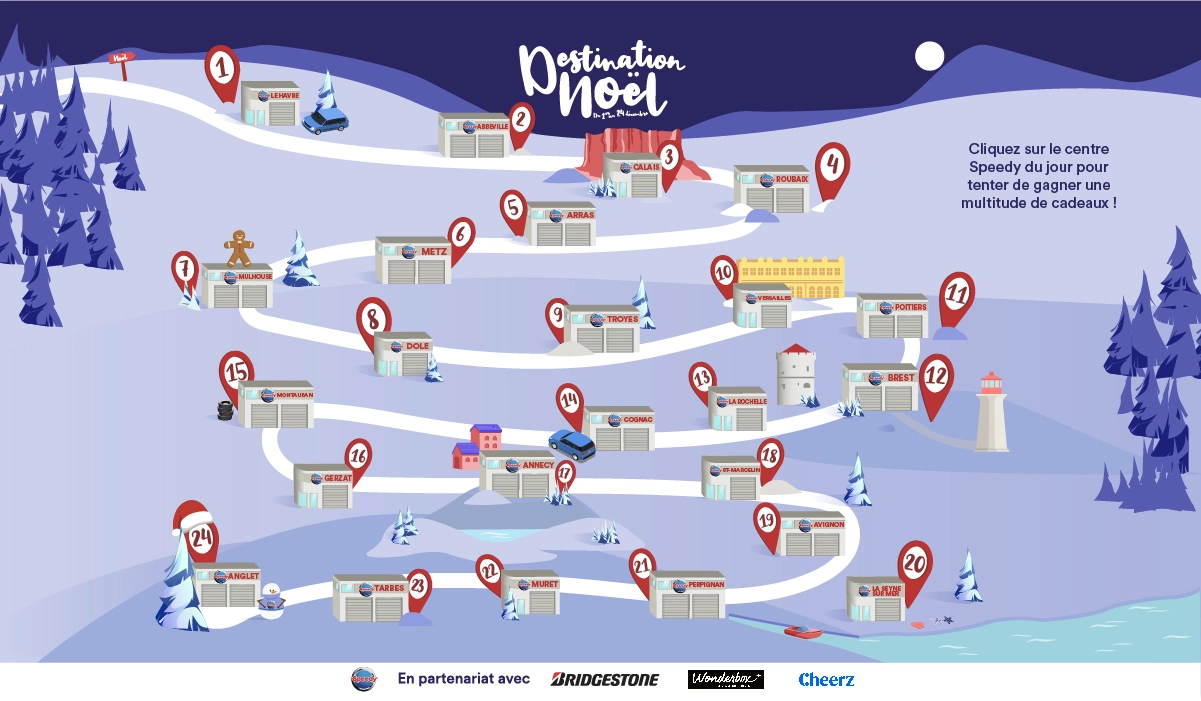
How Speedy’s campaign attracted 37k new leads
speedy-calendar

Speedy has chosen an advent calendar to attract new leads. Highlighting its various shops throughout France, the company stood out with an original and attractive campaign. The results were immediate, with the campaign attracting no fewer than 37,000 subscribers.

This strategy demonstrates the effectiveness of the advent calendar as a means of capturing the attention of prospective customers and arousing their interest in the brand. Speedy was able to take advantage of this initiative to increase its visibility and strengthen its links with prospective customers throughout France.

Conclusion

Thanks to its customisability, this traditional game mechanic can be adapted to any story you want to tell. As well as delighting your prospects and customers at the festive season, it will also enable you to achieve your various objectives. In short, this timeless device is sure to end the year on a high note!

Ready to engage your community in an unforgettable festive adventure? Then go ahead and offer your customers and prospects a memorable digital Advent Calendar!

What is first-party data?

What is first-party data?

If you’re looking to collect valuable and reliable data, or are curious to find out more about first party data, then you’ve come to the right place. Find out how it can be useful to businesses and its crucial role in the world of modern marketing.

What is first-party data?

This data is collected from customers whenever they interact with a brand. By buying products or signing up to a loyalty program, for example. This information can be used to improve the customer experience on the merchant site or to send personalised offers to a database. It may include information such as name, age, telephone number or e-mail address.

Considered to be the most reliable source of data, the collection of first-party data is a highly prized objective for marketing teams.

Description of the data collection process

Collecting data, although systematic in marketing, is not trivial. We’re talking about sensitive information, but it’s also a commercial issue for companies.

The first step is to identify the data the company needs. This could be information about the location of their prospects and customers, or their age.

Once the needs have been identified, the format for collecting the information needs to be chosen. This can be a form or a survey.

First party data in digital marketing

La stratégie de collecte de données est devenue banale pour les marketeurs. En effet, le secteur du digital a pris une ampleur considérable ces dernières années et quelques abus ont été reportés. 

Respecter de la vie privée est un sujet qui touche de plus en plus d’utilisateurs. Ces derniers sont de plus en plus exigeants quant à l’utilisation de leurs données, ce qui explique la restriction récente concernant les cookies tiers sur divers navigateurs. Google a annoncé la fin de ces cookies face à la méfiance croissante des internautes. Il est donc urgent pour les marketeurs de trouver de nouvelles solutions plus respectueuses de la confidentialité des données, mais aussi de l’environnement.        

C’est pourquoi les données dites first party constituent un réel atout pour les marketeurs.

A valuable source of data

First-party data is a data collection strategy that is now very popular in digital marketing. Why ? Simply because information submitted voluntarily is qualifying data.

Thanks to customisable forms, it is possible to collect the data that brands need. Whether it’s to generate leads or to get to know your customer base better, first-party data is a valuable source of data. Collected transparently, it contains valuable and reliable information.

The role of first-party data

A stronger relationship with the customer

Getting to know your customers is the key to forging closer links and building loyalty. Offering personalised content or offers is what today’s users expect.

Participating in campaigns and voluntarily filling in information on a form provides a transparent data collection solution.

A more effective way of prospecting

Collecting first-party data enables companies to better understand their customers’ needs and preferences. However, this strategy can also identify the prospects most likely to become customers of the brand. Based on online behaviour and purchase history, companies can create target audiences for subsequent conversion. Offering personalised offers and getting prospects to spend time with the brand can make all the difference.

Better control of customer relations

First-party data collection has the advantage of being both reliable and transparent. Thanks to this strategy, companies can capture their customers’ intentions as well as any relevant information. This makes it possible to propose personalised content or offers and respond to potential customer needs. It’s an ideal way of improving the relationship between the company and its customers.

The different uses of first-party data

First party data is a powerful tool for companies and brands to better understand and target their customers. First party data can be collected from a wide range of sources, including websites, mobile applications and social networks. It is a source of data that companies can collect, analyse and exploit. This makes it easier for them to improve their products or services, their advertising campaigns and their marketing strategy. The Swiss army knife of data can be adapted to any situation!

First party data, very useful for your marketing team

First party data has become an indispensable tool for marketing teams. Data collection helps marketers to better understand customer journeys, discover the most effective communication channels and identify weak points in the customer experience. This enables marketing teams to implement more effective and profitable campaigns, while improving the overall customer experience.

This strategy is also effective for identifying market trends and preparing future collections or campaigns.

Analysing customer behaviour

En collectant les informations données volontairement par les utilisateurs, il est possible de créer des profils clients détaillés pour analyser des comportements d’achats. Les données first party incluent des informations sur les achats passés, les paniers composés sur le site marchand ou encore les commentaires laissés sur le site. 

Grâce à l’utilisation de ces données, c’est une conversation qui a lieu entre l’entreprise et sa clientèle. Les clients vous parlent et s’ils sont écoutés, vous pourrez alors les fidéliser et vous assurer que vos actions marketing soient efficaces.

Easier to improve conversion rates

Improving conversion rates is a real challenge for businesses. By using first-party data, you can distribute targeted offers to trigger purchases. Thanks to the valuable information collected upstream, you can respond to customers’ real needs.

Conclusion

In conclusion, gearing your strategy towards the collection of first-party data allows you to develop an ethical and more transparent approach. It is essential to listen to users’ concerns, while taking into account the changes on the horizon in terms of digital marketing.

This will enable companies to strengthen customer relations by learning about their preferences and purchasing intentions. What’s more, personalising offers and improving the customer experience will only improve the conversion rate!

Need advice on your first-party data collection strategy?

Ouest France: how to attract new users through gamification

Ouest France: how to attract new users through gamification

Developing a mailing list and collecting new users are key issues. Once subscriptions have been made and opt-in obtained, this audience can receive information about services or products.

There are several ways of encouraging prospects to register for a tool, service or platform. The collection of opt-ins and registration can be offered at different points in the marketing journey. By optimising this strategy, brands can expand their audience and hope to convert and retain a large number of customers.

Marketing highlights, when consumers are interested in brand content, are crucial moments. By creating effective campaigns, using techniques such as gamification, brands can collect enriched and reactivatable opt-ins.

In this article, we explore how to turn a branded event into an opportunity to generate users. We will look at the notion of enriched opt-ins and how they can encourage the act of buying. To illustrate this, we’ll take the example of a campaign run by the Ouest France media.

Marketing challenges in the press sector

In the age of the Internet and social networks, the press media are faced with marketing and commercial challenges. It is becoming complicated for companies to maintain their financial health, given the competitors that have emerged. These include pure-play media (such as Mediapart), which have taken on the print media, as well as influencers and content creators. The latter represent an alternative to traditional media (among the younger generation).

Among the challenges facing the sector, the media point to the decline in advertising and their traditional sources of revenue. They have had to turn to new business models (the paywall, which consists of offering certain content free of charge to encourage visitors to take out a paying subscription).

Trust in information is a priority for the media. They cite the accuracy of the content (40%), being perceived as a trusted medium (23%), as well as audience development (17%) as the main issues they need to work on. The veracity of information and the reliability of sources are at the heart of their concerns, particularly in the face of the arrival of AI.

Attract new users to meet media challenges

To meet these challenges (standing out from the competition, converting readers, creating a bond of trust), the media are turning to the collection of new users and enriched optins (collecting preference data in addition to user consent).

By developing their mailing lists and subscriber bases, companies can build up an audience with which to communicate directly (via personalised emails).This audience can be nurtured (this is known as lead nurturing) to provide them with high value-added content. This may involve encouraging them to create an account or take out a paid subscription in exchange for benefits (exclusive offers).

This registration will create a link between the prospect and the media. It will enable the company to to achieve several objectives that are crucial to its growth:

  • Better understand your audience and collect their preferences (content categories and formats, preferred information channels). This data will enable the media to adapt its editorial line and offer personalised newsletters;
  • Reactivate users interested in the media by offering them incentives to create an account or even take out a paying subscription (discounts, goodies, etc.);
  • Generate visits by offering relevant content that encourages subscribers to visit the site. This increase in traffic will enable the company to negotiate advertising partnerships and generate greater revenue.

Gamify a special event to collect enriched opt-ins

Gamification is an effective way of collecting registrations and enriched optins. The interactive and playful nature of the game mechanics helps to attract and capture the attention of its target audience.

By offering a reward in return (discount, voucher, exclusive content), the media can easily encourage their audience to share their email and consent to the communication being sent.

This strategy is effective when it is implemented during a peak marketing period. Users are alert to the opportunities that brands can offer and are more inclined to make a purchase. The end-of-year festivities are a high-consumption period. A media audience will be looking for good deals to save on a subscription, for themselves or as a gift.

With an opt-in valid for 13 months, the media will be able to use gamification to re-engage their database (and collect new data).

The example of Ouest France

The Ouest France media chose to use gamification marketing to animate its audiences during the month of December. The aim of the campaign was to develop this audience.

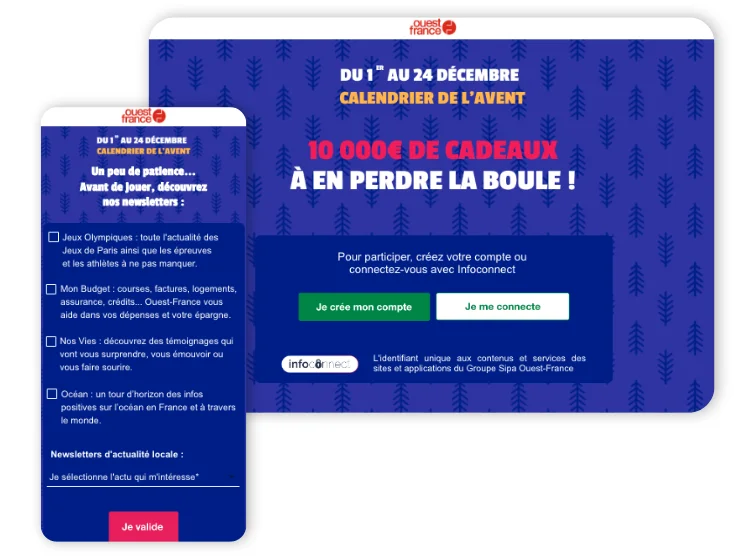
Participants in the operation had to create a Ouest France account to take part in the Advent Calendar. To reach a wide audience, the competition was broadcast on the newspaper’s website, on its app, in the press and via email campaigns.

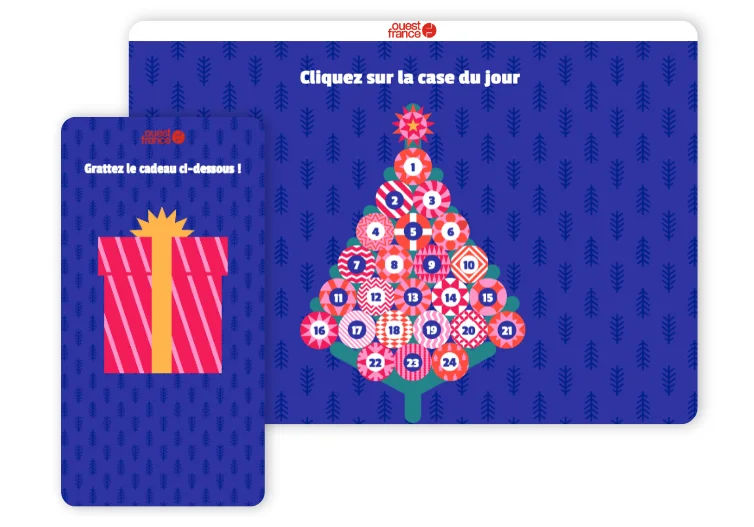
Every day, from 1 to 24 December, Ouest France offered an animation in the form of boxes to be opened. After creating an account and filling in the collection form, participants could win attractive prizes such as a holiday, household and high-tech appliances, shopping vouchers, etc.

ouest france attract new users

The objective was more than achieved, since 25% of the participants in the operation came from the creation of a new account (i.e. 21,000 new accounts created via the operation).

Ouest France was able to capitalise on the engagement to collect enriched opt-ins on different themes (thematic preferences of future readers). The medium was then able to use this data to encourage subscriptions via targeted retargeting email campaigns.

ouest france opt-in collection

Conclusion

Gamification, particularly during a peak period in the marketing calendar, is an excellent strategy for attracting new subscribers and enriching your customer base. Discover
our marketing animation catalog and boost customer account creation!

In 30 minutes, we show you how to launch your own high-performance interactive marketing campaign