
Engagement mechanics in gamification marketing: analysis of 3 500 campaigns

Engagement mechanics in gamification marketing: analysis of 3 500 campaigns

While gamification has become a permanent fixture in digital strategies, the real impact of its various mechanics is often estimated empirically. To provide marketing professionals with factual and quantified insights, this observatory offers an analysis of 3 516 activation campaigns and nearly 60 million sessions compiled between 2022 and 2024.

Our primary objective with this study is to identify the influence of seasonality, sector typologies and the nature of game mechanics on user engagement.

Table Of Content

1. Demographics and accessibility : participant profile

The global analysis of sessions highlights a strong predominance of female profiles among participants in gamified operations. Female users represent an average of 77.4 % of the studied sample. The core target is mainly concentrated around the 18-39 age group, characterized by a primarily opportunistic and occasional participation pattern.

On a technical level, the smartphone stands out as the hegemonic access terminal. However, observation by industry vertical nuances this hegemony :

  • Fashion and beauty sectors: the mobile usage rate reaches 100 %.
  • Banking and insurance sectors: these verticals show a notable resistance of the desktop computer, which remains the majority medium for these specific user journeys.

2. Typology of mechanics: “Instant Win” vs “Score-based Game”

Our data allows the classification of activations into two major algorithmic families, each meeting distinct engagement objectives:

A. Instant Wins (Immediate reward logic)

Based on pure chance, instant wins allow users to know the result of their participation immediately. Such a mechanic features a very low psychological barrier to entry, fostering mass engagement volume. Peak usage occurs during the Advent period (Christmas) when audiences look for quick gratification.

B. Score-based Games (Performance and loyalty logic)

Score-based games condition the outcome on the player’s skill, speed or sagacity. Interactive concepts require a higher cognitive investment while generating deeper engagement and stimulating the replay mechanism. Gamers participate again to improve their ranking. Outside the end-of-year period, performance formats stand out as the most effective lever for maximizing time spent per session.

3. Seasonality and calendar highlights

Campaign distribution throughout the year highlights a highly pronounced seasonality based on the business challenges of brands:

  • Back-to-school period (September): a high-activity period for the retail and B2B sectors. Mobile usage systematically crosses the 60 % threshold.

  • Halloween (October): this temporary highlight is characterized by a particularly young audience and an almost exclusive use of smartphones.

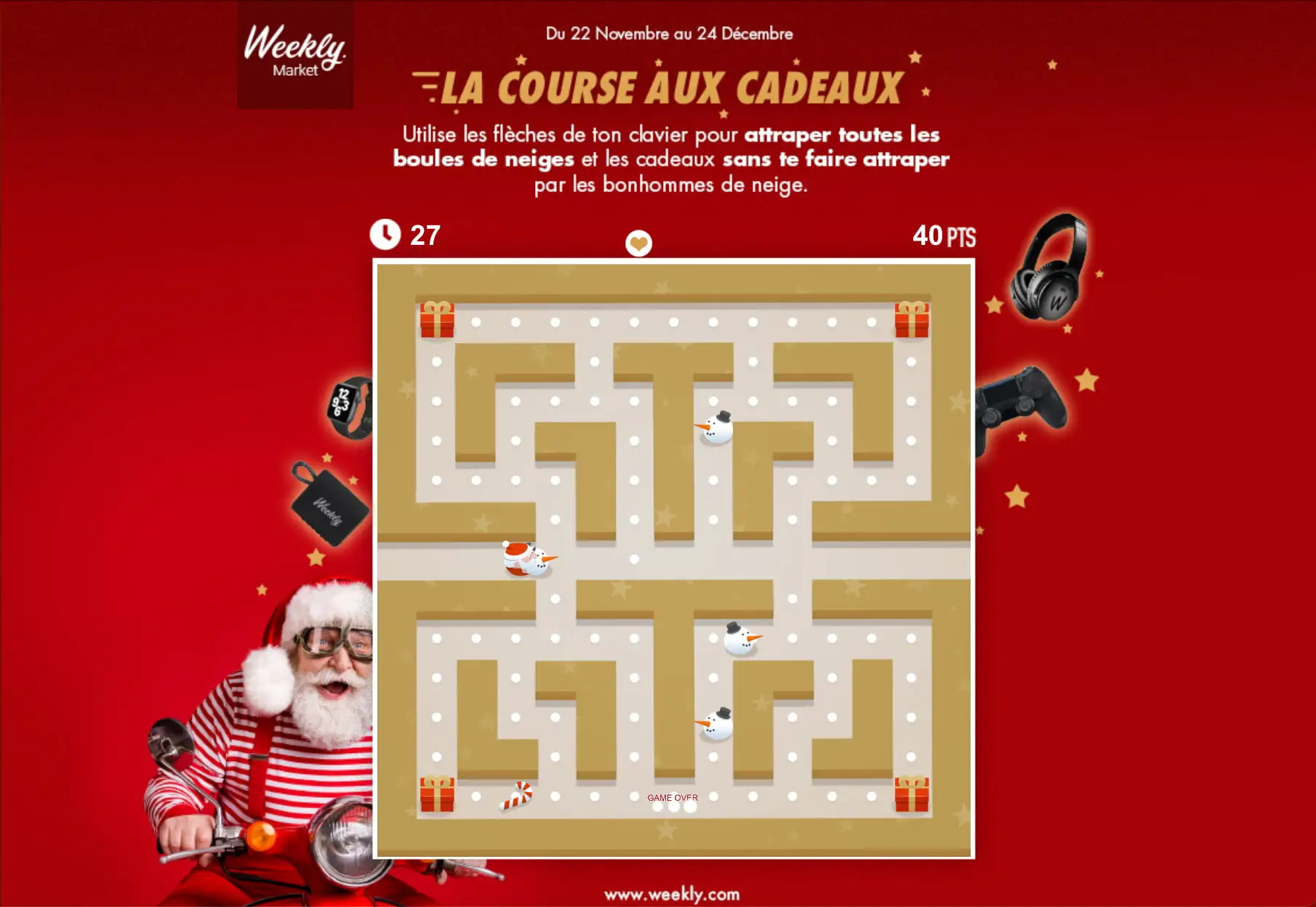
  • Advent period (November – December): this is the annual peak for activation. Retail, E-commerce and fast-moving consumer goods (FMCG) concentrate their budgets here, attracting a more family-oriented audience through formats mostly focused on instant wins.

Conclusion

This macroscopic analysis demonstrates that the effectiveness of a gamification strategy does not depend on the intrinsic complexity of the game, but on the alignment between the chosen mechanic (chance or skill), cultural seasonality and the preferential distribution channel of the targeted industry sector.

Adictiz, the platform to reach
your marketing goals
Gamification: definition, guide and marketing solutions

Gamification: definition, guide and marketing solutions

Quel est le but de la gamification en marketing ? La gamification est un moyen d’engager une audience. Le fait de proposer un contenu interactif booste les performances des campagnes marketing. De fait, 93 % des spécialistes du marketing déclarent utiliser et obtenir d’excellents résultats grâce à cette stratégie marketing. 

Dans ce guide, nous allons vous présenter ce qu’est la gamification et comment cet outil peut vous aider à relever vos défis marketing.

What is marketing gamification?

La gamification est une technique qui emprunte des éléments de conception aux jeux pour attirer et fidéliser les clients. Dans le marketing gamifié, les consommateurs effectuent une action (remplir un formulaire, réaliser un achat, s’inscrire au programme de fidélité). Celle-ci permet de décrocher une récompense. 

Les campagnes marketing de gamification peuvent prendre la forme d’un programme de fidélité gamifié, d’un quiz pour découvrir des offres ou d’une roue de la chance. Parmi les éléments jouables que les marques peuvent intégrer dans leur contenu ou leurs publicités, on retrouve : 

  • Le système de points (à collecter après chaque action, comme un achat par exemple) ; 
  • Les niveaux et barres de progression. LinkedIn a intégré une barre de progression pour encourager ses utilisateurs à remplir leur profil. Le programme de fidélité de Starbucks comporte plusieurs niveaux, chacun permettant de débloquer de nouveaux avantages. 
  • Le compte à rebours pour encourager ses utilisateurs à accomplir une action dans un certain délai. 

Les mécaniques de jeu incluent des scores qui permettent de maximiser le temps passé avec la marque. Ou encore les jeux de connaissance et les animations comme le Bonto

Gamification-Example

History of gamification

Le concept de gamification s’est développé au cours des années 2010, mais il est plus ancien. Dès la fin du 19e siècle, les détaillants distribuent des timbres pour récompenser leurs clients. 100 ans plus tard, les jeux ont fait leur entrée dans le monde de l’entreprise pour booster la satisfaction et l’engagement. 

Mais c’est American Airlines qui nous offre le premier cas d’usage du marketing gamifié en 1981. Son programme de fidélité, AAdvantage proposait des récompenses en fonction de la fréquence d’achat. 

Le terme de gamification a été inventé par Nick Peeling en 2002, encourageant les recherches quant à ses effets sur le cerveau humain. En 2005, la première plateforme de gamification moderne est créée. Bunchball permet aux marques d’ajouter une couche d’interactivité à leur site web pour booster l’engagement des visiteurs. 

En 2016, l’apport de la gamification en marketing est reconnu par les entreprises et le secteur représente plus de 2,8 milliards de dollars. Cette part de marché augmente et les spécialistes prévoient qu’elle atteindra 27,7 milliards d’ici 2026.

The 3 main benefits of gamification in marketing

En invitant son audience à interagir via un jeu ou une mécanique ludique, l’entreprise peut booster l’impact et les performances de ses campagnes marketing. 

Pour mieux comprendre comment la gamification s’est imposée comme un outil marketing, quel que soit le secteur d’activité, voici ses 3 avantages :

1. Increase user engagement

Nous sommes attirés par la perspective d’une récompense, mais aussi celle de nous mesurer à d’autres personnes. En introduisant un élément de compétition, le jeu augmente l’engagement des utilisateurs jusqu’à 48 %. En raison de leur nature interactive, les taux d’engagement des campagnes gamifiées sont plus élevés. Introduire des jeux dans son parcours d’achat en ligne permet d’augmenter le taux de navigation denviron 30 %.

2. Collecting data

Recruit new leads and obtain relevant information about your audience is crucial for any company. Contact data not only enables the company to reactivate leads via email or SMS. But the data collected via game marketing campaigns is also very useful for segmenting customers, personalizing offers and building buyer loyalty.

But gamification makes it possible to share lead generation or preference gathering forms in a more organic way. The playful element and the possibility of winning a reward/benefit also boosts participation rates and encourages users to answer honestly.

3. Increase your conversion rate and boost sales.

Gamification also offers powerful purchase incentives. The simple act of sharing discount coupons with participants in a marketing naturally encourages them to buy from the brand. The VIP points system is another gamification mechanism that increases repeat purchases by rewarding consumers for their loyalty. As is the post-purchases game (via a QR code received after the order), which encourages customers to buy from the brand.

How to use gamification in your marketing strategy?

Gamification is a marketing tool that can be perfectly integrated into all stages of the customer journey and across all communication and sales channels. Whether at the moment of discovery, to encourage conversion or build loyalty, on social networks, in your online store or in-store… Interactive marketing can be used in many different ways.

Many brands have opted for gamification to boost their visibility on social networks. Celio, for example, has partnered with a popular influencer to attract consumer’s attention for Father’s Day.

  • Attract visitors to your website with an instant win.

Mechanisms of Instant-win such as the Wheel of Fortune are used to distribute discount vouchers to participants. This type of event, which offers the chance to win prizes instantly, is a great way to drive traffic to your online store and boost sales.

  • Increase online purchases with a marketing game.

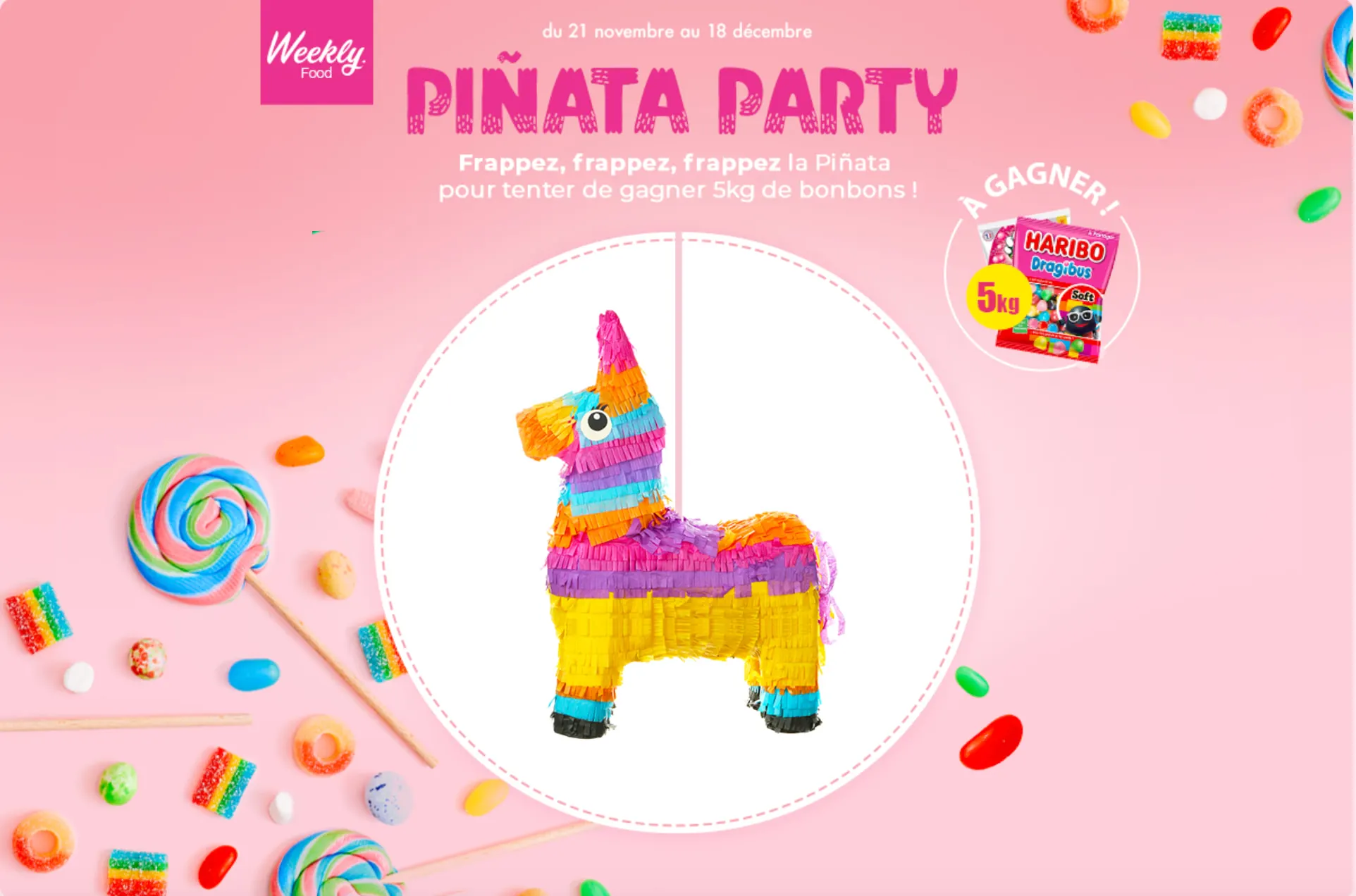
Brands can also integrate gamified formats, such as a pinata for example, directly on their website or app. This helps to keep visitors engaged for longer, effectively promote certain products or encourage purchase via targeted incentives.

Gamification-Pinata

Whether in-store or e-commerce, an interactive quiz will enable the brand to better understand its customers’ needs. It can then offer them more relevant products or informative content with greater added value. Interactive quizzes are also widely used to raise awareness of a brand’s offering.

The challenges of gamification

There’s no doubt that gamification marketing can help brands achieve their marketing objectives. However, there are a few points to bear in mind before you start designing an interactive campaign.

First, develop a marketing game requires creativity. Even a simple quiz requires the development of relevant questions that will keep the user’s attention right to the end. Gamified formats also require a certain amount of technical expertise, and may force the company to call on specialized tools.

Conclusion

SaaS solutions such as SaaS gamification platforms enable you to design, personalize, distribute and publicize your gamification marketing campaigns. Adictiz, for example, lets you choose from an exhaustive catalog the mechanics of your choice, according to your objectives. You can then adapt it to your brand universe and easily track the performance of your campaigns. The platform also enables you to activate the data collected directly from the tool, thanks to emailing and segmentation modules.

In just 30 minutes, we’ll show you how to launch your own high-performance interactive marketing campaign.