

4 AdTech trends to incorporate into your marketing strategy

4 AdTech trends to incorporate into your marketing strategy

La manière dont nous communiquons en ligne ne cesse d’évoluer, notamment avec l’usage de l’AdTech. Cela vaut pour les particuliers et pour les marques, qui doivent s’adapter aux nouveaux canaux et stratégies marketing pour garder une longueur d’avance sur leurs concurrentes.

En quelques années, nous sommes passés des encarts publicitaires télévisés ultra scriptés à des campagnes marketing natives sur les réseaux sociaux, créées et portées par les consommateurs. Les marques adoptent ainsi une communication authentique et engageante en misant sur des leviers comme les jeux marketing, les challenges sur les réseaux sociaux ou encore l’UGC.

Ces stratégies marketing repose sur l’usage des nouvelles technologies publicitaires, que l’on appellent aussi AdTech. Quelles sont les tendances fortes pour optimiser la manière dont votre entreprise communique avec son audience ? Comment les intégrer à votre calendrier marketing ? Nous répondons à toutes vos questions !

What is AdTech?

Le concept d’Adtech fait référence à un éventail de technologies et solutions qui permettent à votre marque de créer et diffuser ses campagnes publicitaires. Il peut s’agir de logiciels ou de plateformes SaaS offrant différentes fonctionnalités. Mais encore d’outils plus ciblés qui se concentrent sur la personnalisation, le ciblage, ou le monitoring de vos publicités digitales.

Un très bon exemple d’AdTech est le système de header bidding. Il s’agit d’un programme informatique qui permet de gérer les enchères et de fixer le prix le plus juste entre la régie publicitaire (par exemple Google ou TikTok) et l’annonceur (comme votre marque).

4 tendances AdTech à surveiller en 2023

Le monde des AdTech évolue à vitesse grand V. Pour booster la visibilité de votre marque et maximiser son taux d’acquisition, il est crucial de garder un œil sur les nouvelles technologies publicitaires à intégrer à votre stratégie.

Voici les tendances fortes à surveiller en 2023 :

Advertising programming

La programmation publicitaire (ou programmatic advertising) consiste à automatiser l’achat et la vente d’espace publicitaire sur un large spectre de canaux de diffusion. Mais aussi pour un large choix de format display (y compris les annonces display responsive, qui s’adaptent à l’appareil de l’utilisateur).

Cette technologie permet à votre entreprise d’allouer son budget efficacement et de s’assurer que ses campagnes aboutissent au résultat attendu (nombre de clic, taux de conversion, etc.)

La programmation publicitaire devrait continuer à connaître une forte croissance ces prochaines années. En 2019, plus de 86 % des dépenses publicitaires display ont été programmées. Ce pourcentage dépassera les 91 % en 2023.

Artificial Intelligence and AdTech

L’IA prend de plus en plus de place dans le secteur de l’AdTech. Elle permet d’optimiser la segmentation, d’affiner le ciblage ou encore de personnaliser votre message en fonction des comportements de chaque consommateur.

Netflix utilise par exemple l’intelligence artificielle pour définir automatiquement parmi plusieurs choix de vignettes celle qui a le plus de chances de pousser ses utilisateurs à regarder un film ou une série.

Mobile-first advertising solutions

Les annonceurs reconnaissent de plus en plus l’importance de répondre aux besoins des consommateurs qui utilisent principalement leur mobile pour se connecter à Internet. Les entreprises de l’AD Tech développent donc des formats et stratégies spécifiques aux mobiles, notamment la publicité intégrée aux applications.

The gamification boom in AdTech

L’AdTech est de plus en plus liée au gaming en ligne. Cette connexion se fait à tous les niveaux. On assiste à un véritable boom de la publicité native dans les jeux, en particulier dans les applications de jeu gratuites. Les utilisateurs sont invités à visionner une publicité avant de pouvoir commencer ou continuer leur partie. Cette pratique est de plus en plus populaire, notamment pour les applications partenaires de la plateforme de streaming Twitch.

En parallèle, les publicités intègrent une dynamique de gamification. Les consommateurs étant exposés chaque jour à plus de 1 200 publicités, ils ont développé une forme de banner blindness (soit le fait d’ignorer les informations partagées dans les bannières publicitaires classiques).

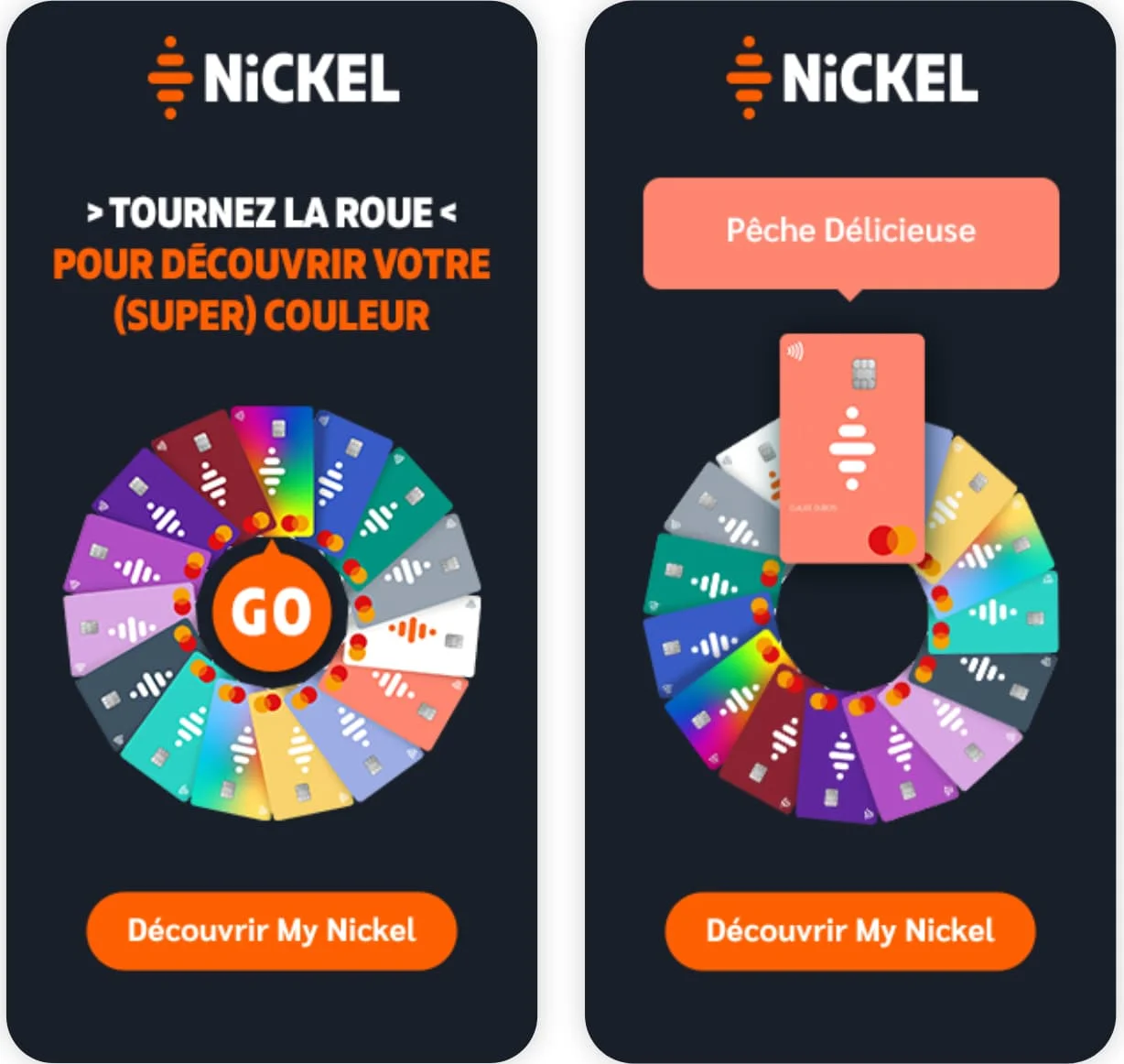
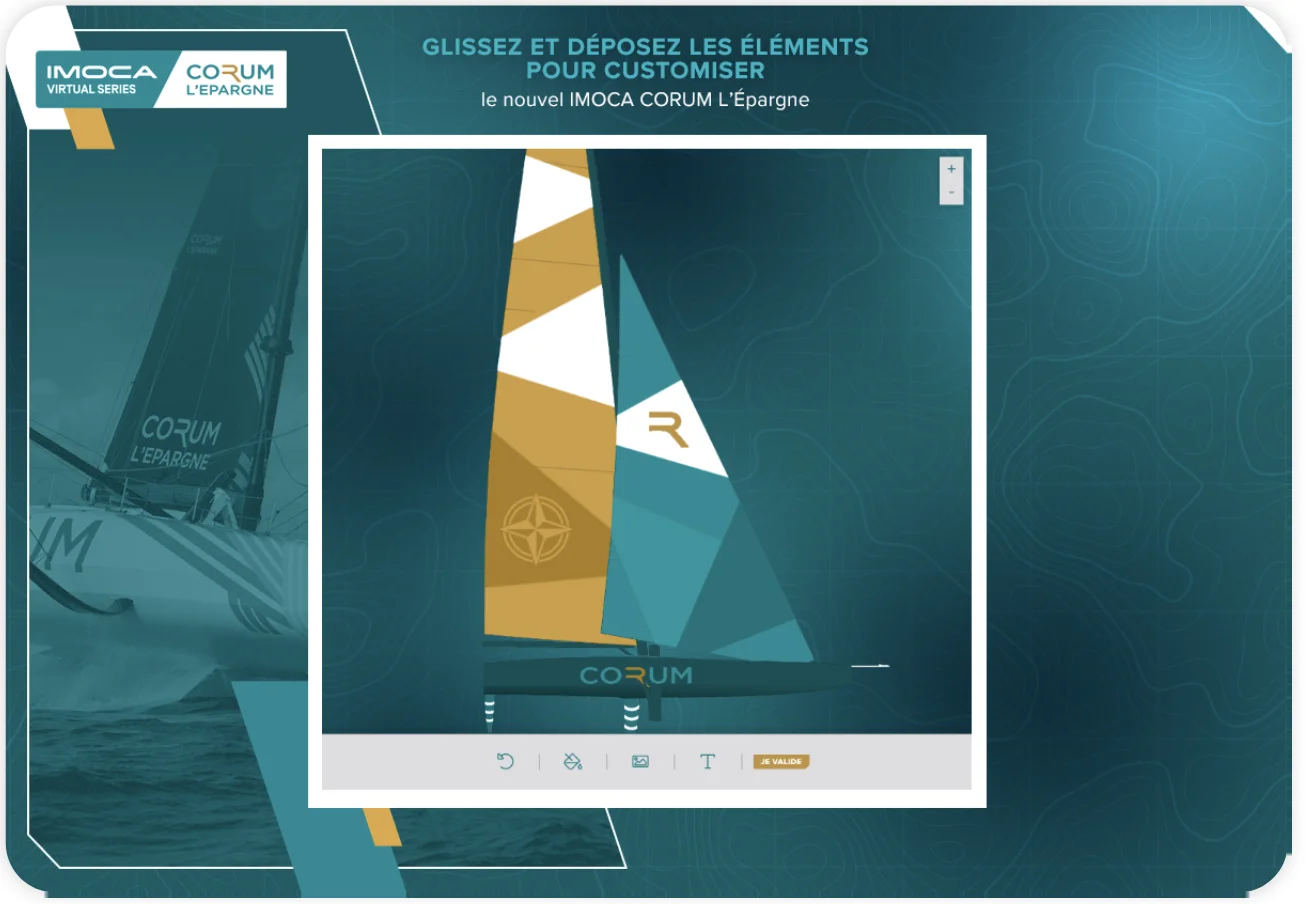
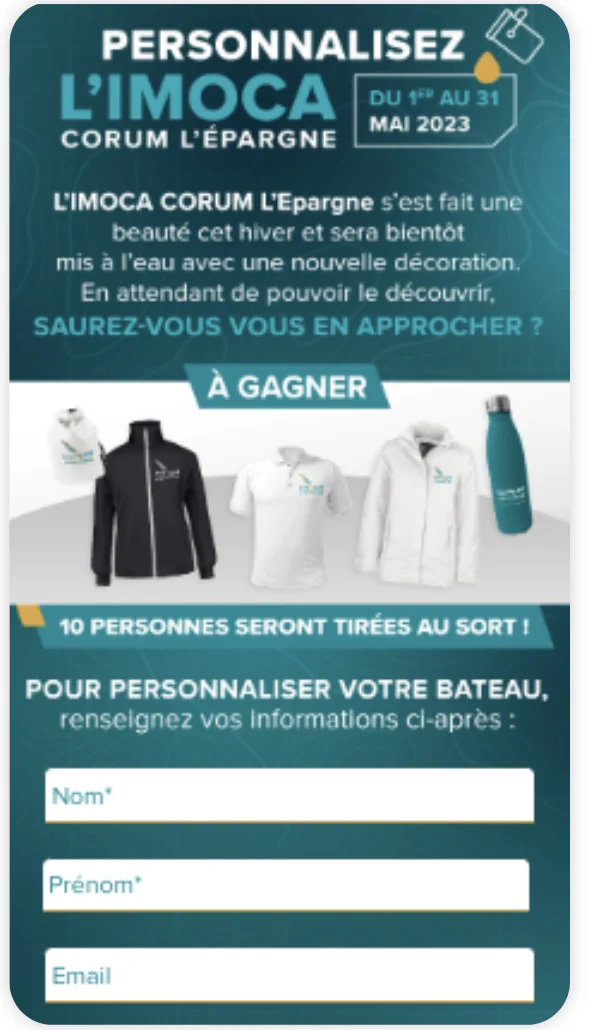
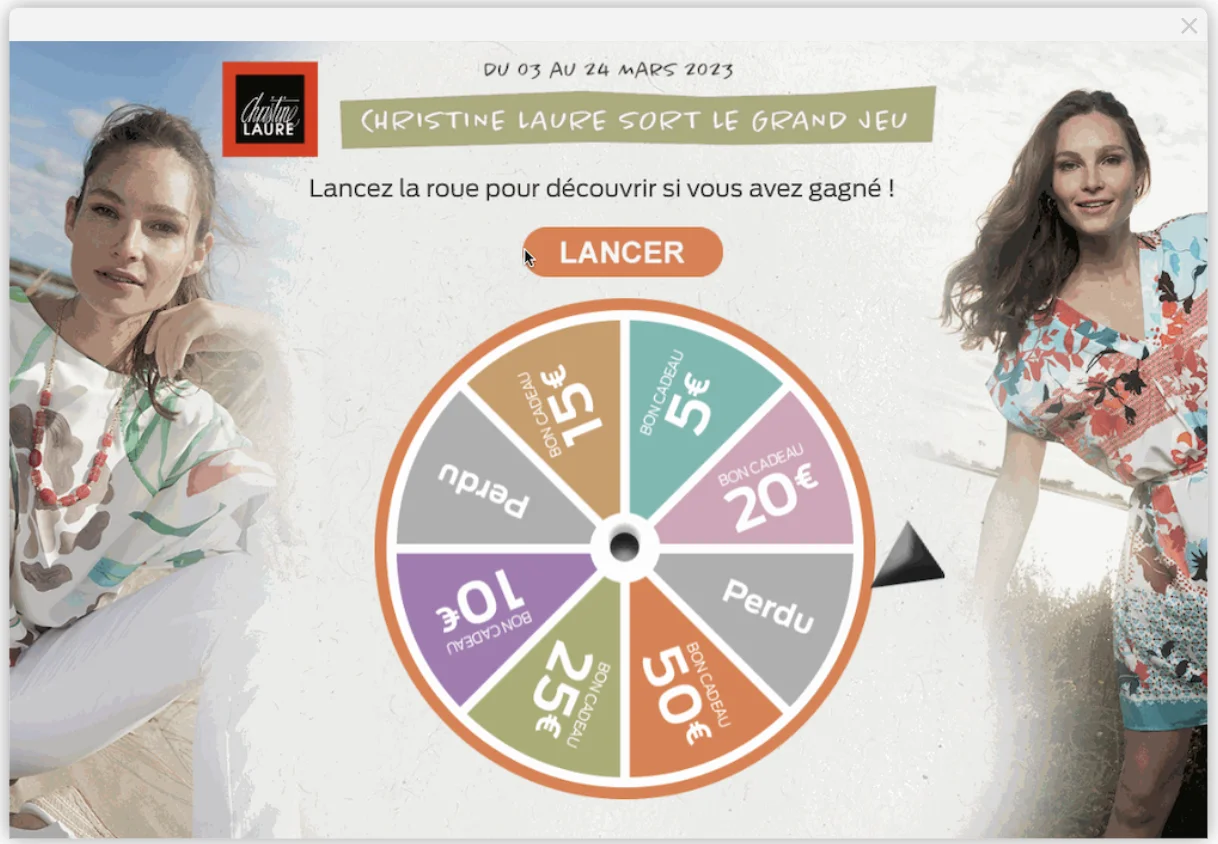
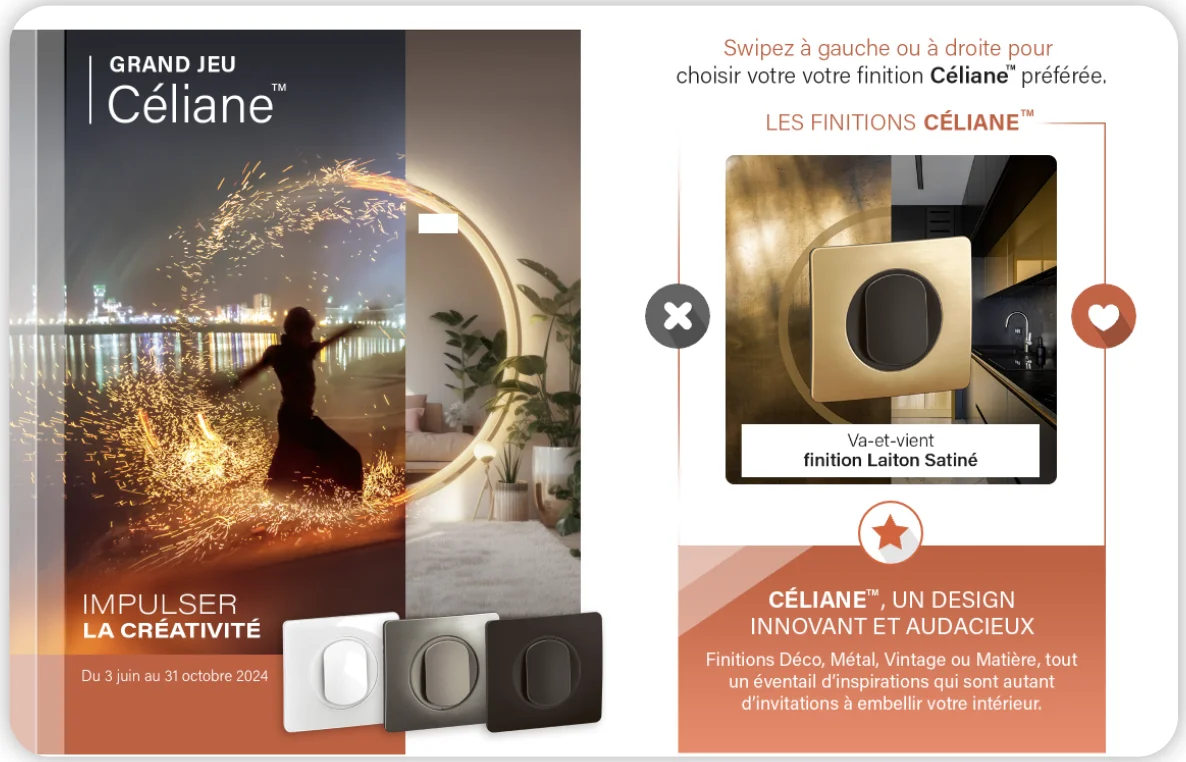
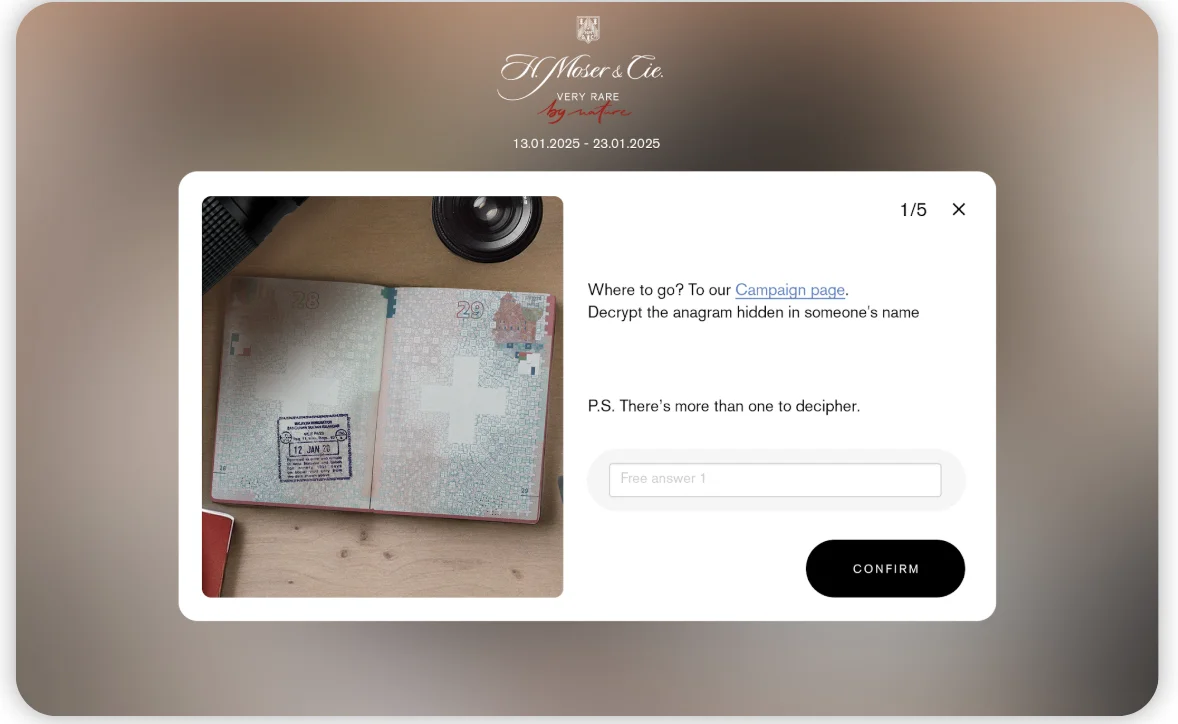
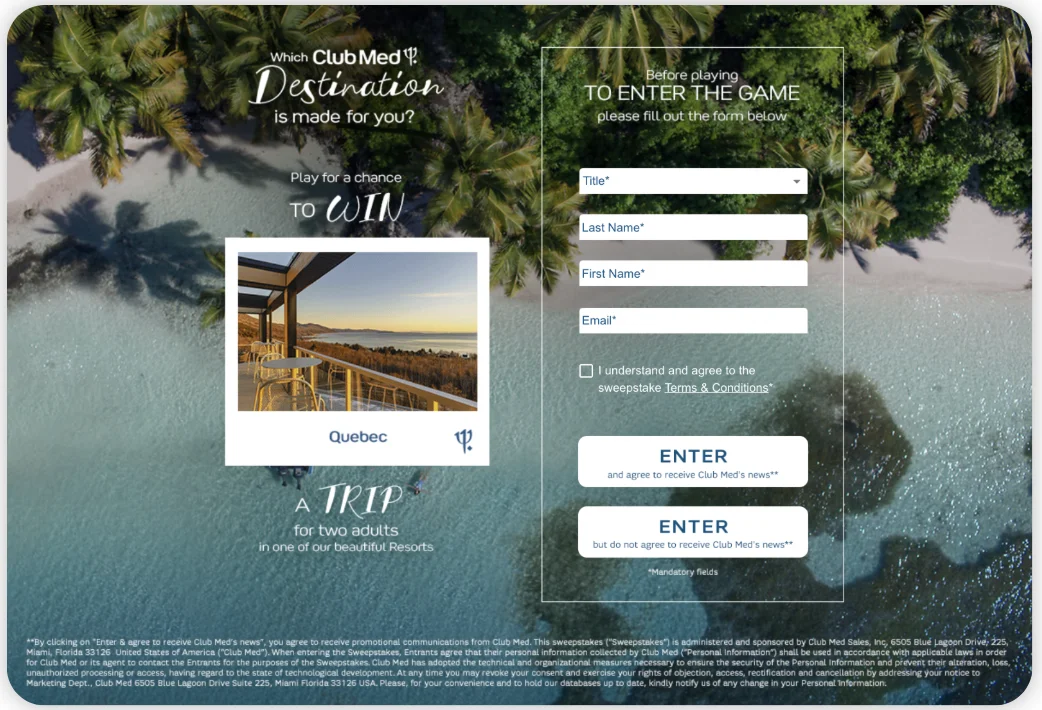
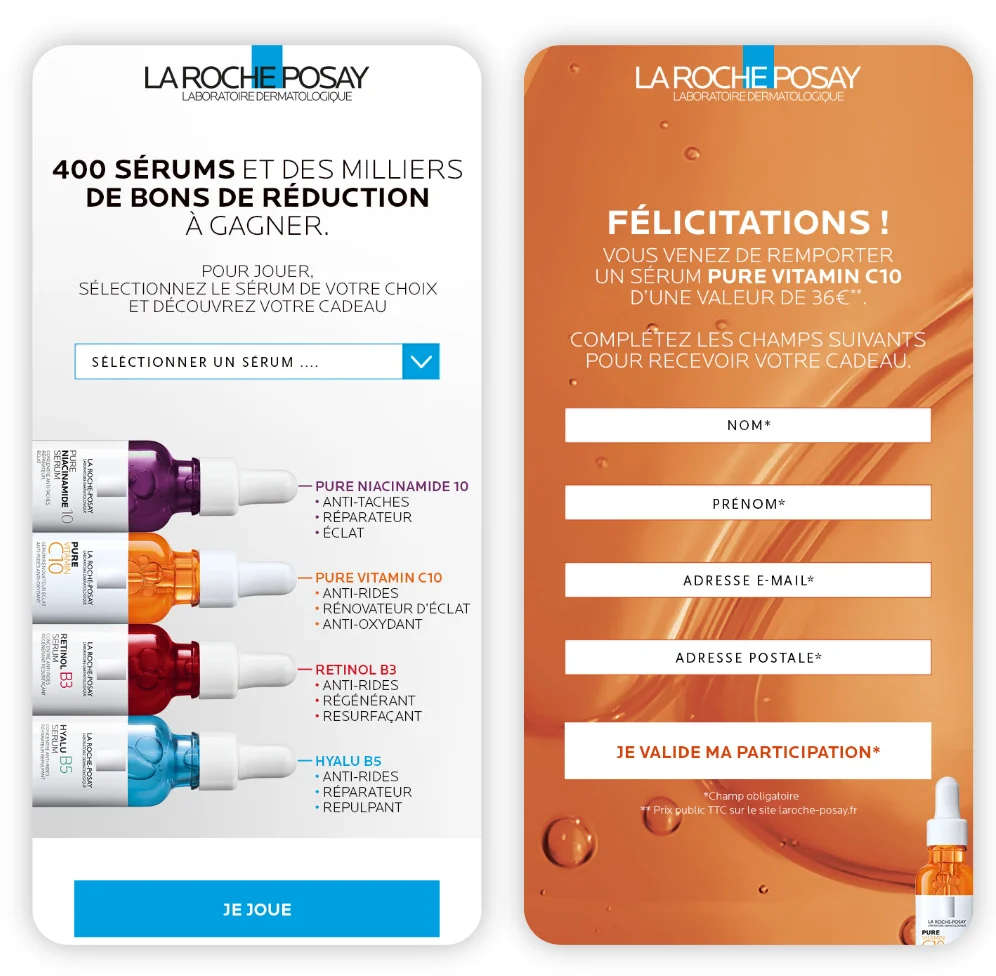
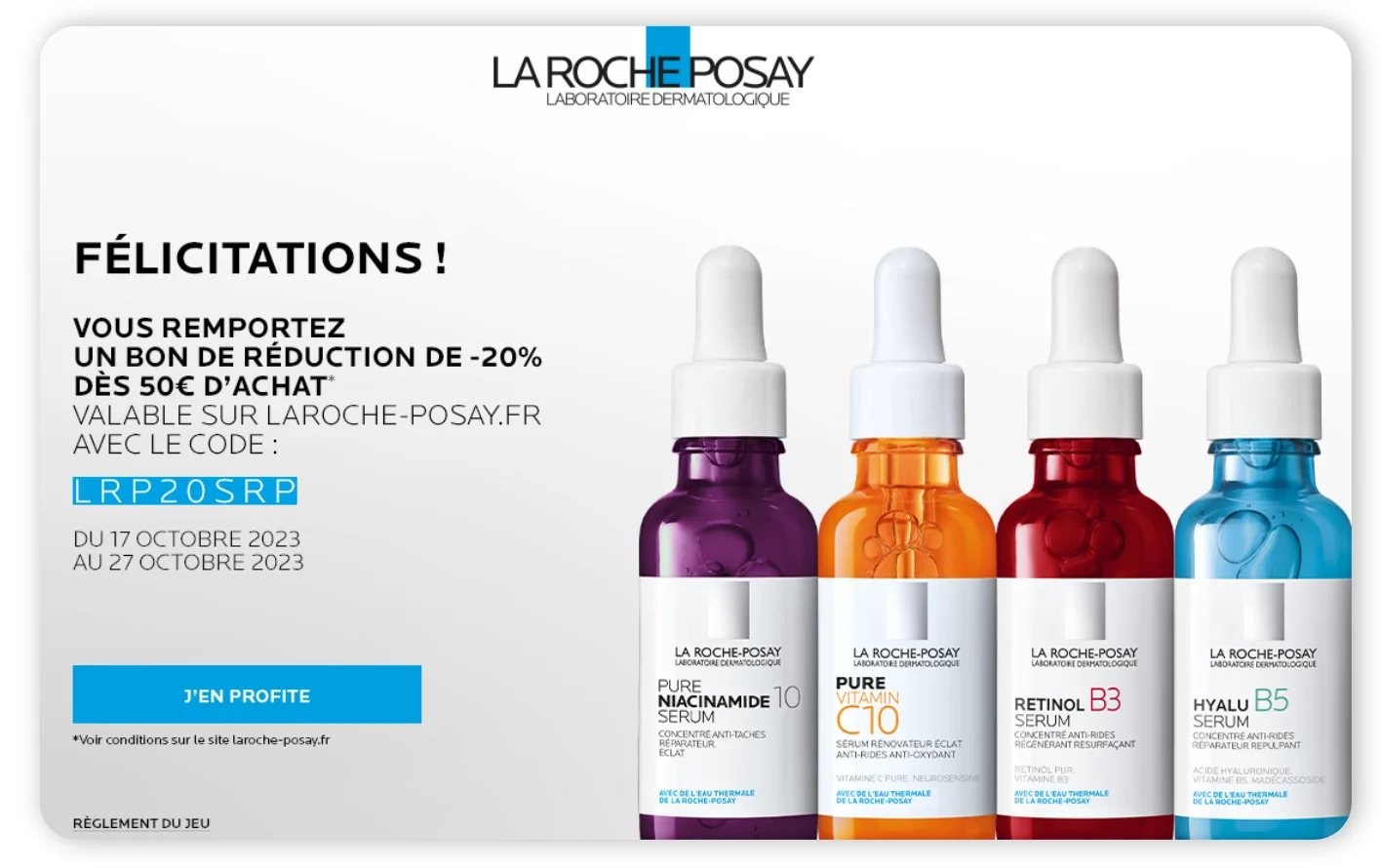
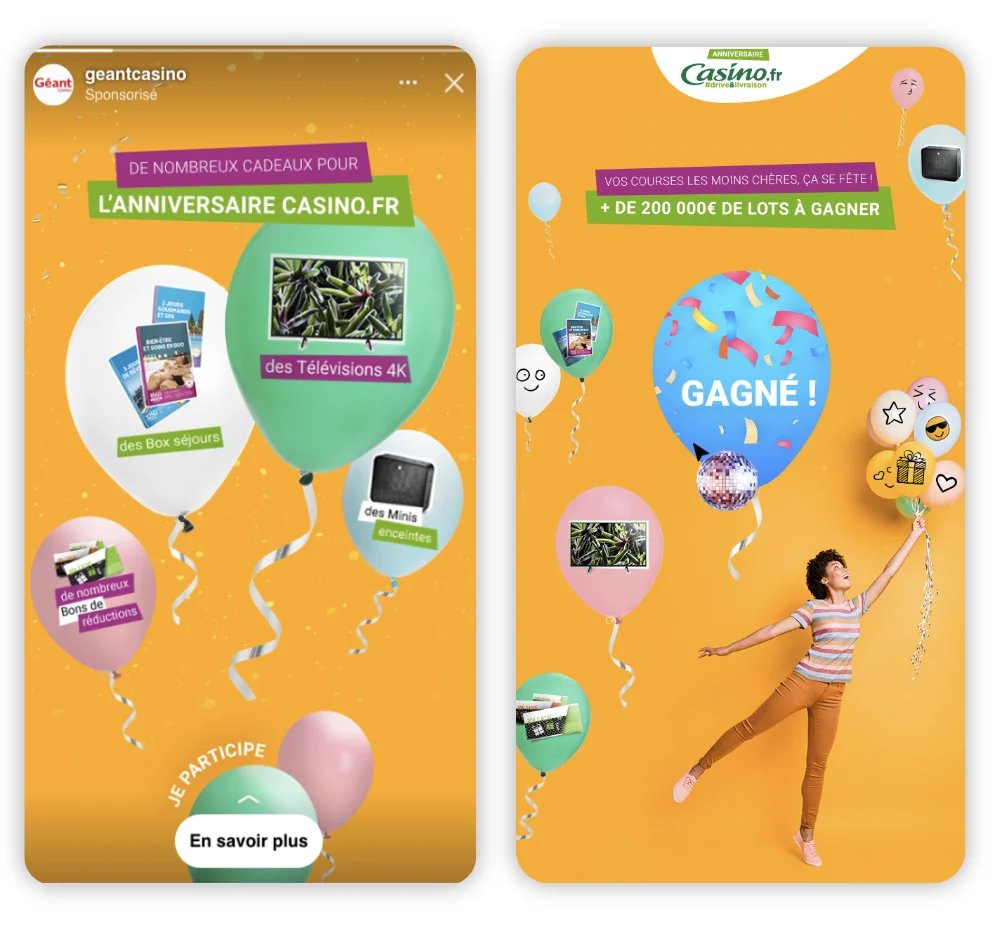
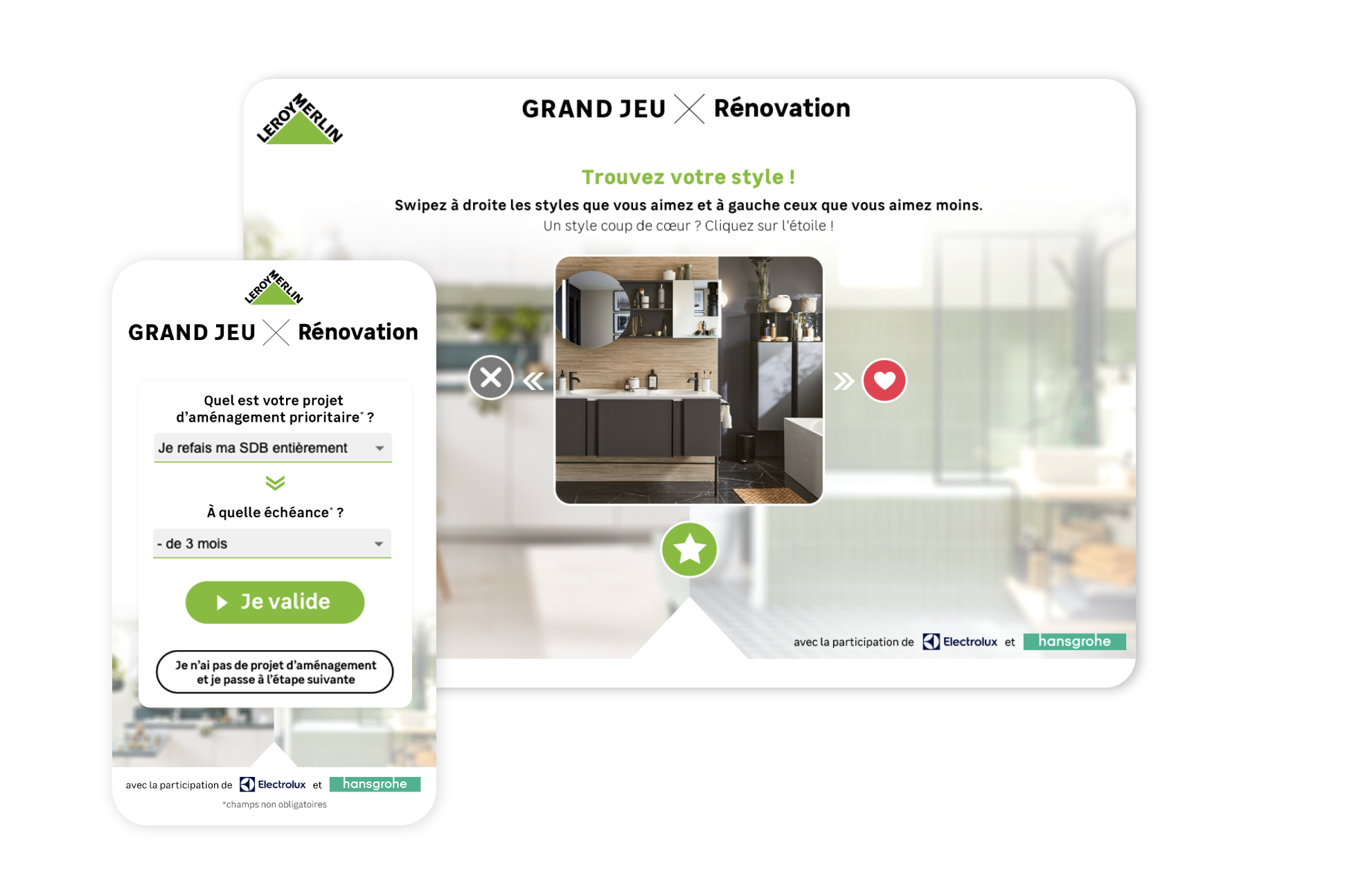
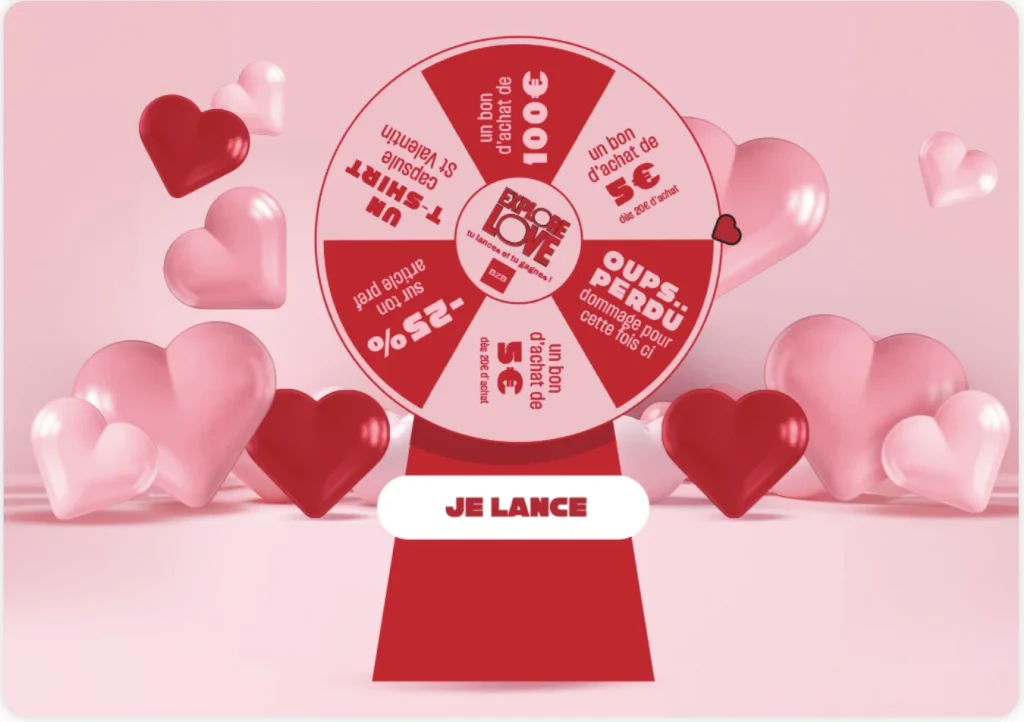
Pour gagner la bataille de l’attention, les marques ont donc dû inventer de nouveaux formats, plus ludiques. C’est dans ce contexte que sont apparus les Playables Ads (soit littéralement la publicité jouable). Ces formats display interactifs sont en effet idéaux pour donner de la visibilité aux campagnes, renforcer les performances publicitaires et améliorer la notoriété d’une marque.

Concrètement, la playable ad est donc un mini-jeu qui va s’exécuter pendant quelques secondes. Ce format est devenu si populaire qu’il ne se limite aujourd’hui plus aux applications de jeu mais aussi aux marques généralistes. Elles peuvent ainsi capter l’attention et engager leurs prospects à travers un jeu marketing.

The benefits of Playable Ads for your brand

The Playable ads advertising format offers your brand a number of advantages. The first is to capture the attention and boost the acquisition of your targets by offering them unique and entertaining content.

In the world of gaming, playable advertising is a bit like the interactive trailer for your mobile application. But for a brand in another sector, such as beauty, telecoms or sport, this gamified format is an extension of your game marketing strategy.

Your playable ad allows you to promote a new product or service by letting players discover it in an immersive virtual environment.

Playables ads help you to achieve several objectives:

  • Brand awareness: by raising awareness of your offer and demonstrating its added value;
  • Engagement: by encouraging users to interact with your brand. Playable ads attract 47% more attention than traditional video ads.
  • Conversion: by boosting traffic to your application or website.
  • Qualification: by gathering insights that will enable you to capitalise on consumer preferences.

Examples of interactive and playable displays

When it comes to gamification scenarios, you’re spoilt for choice. Memory, Battle, Swiper or Rattrape-Tout. Your brand can draw inspiration from different game mechanisms depending on the product to be promoted and its target audience.

Annonces jouables memory red sfr

To give you an example of a promotional campaign in the form of Playable ads, RED by SFR recently used the Memory game mechanic to present its range of packages. The interactive format makes the advertising more engaging. But the very nature of the game also encourages better retention of the information presented (and in particular the value delivered by the company).

Conclusion

The new advertising technologies (or AdTech) enable your brand to meet its key marketing challenges and stand out from the competition. Your ability to create unique interactive experiences will be a powerful lever for attracting and converting new customers, as well as gathering and activating valuable insights into your market. Discover our turnkey solutions for creating your Playable ads or opt for customised support for your next campaigns.

What is first-party data?

What is first-party data?

If you’re looking to collect valuable and reliable data, or are curious to find out more about first party data, then you’ve come to the right place. Find out how it can be useful to businesses and its crucial role in the world of modern marketing.

What is first-party data?

This data is collected from customers whenever they interact with a brand. By buying products or signing up to a loyalty program, for example. This information can be used to improve the customer experience on the merchant site or to send personalised offers to a database. It may include information such as name, age, telephone number or e-mail address.

Considered to be the most reliable source of data, the collection of first-party data is a highly prized objective for marketing teams.

Description of the data collection process

Collecting data, although systematic in marketing, is not trivial. We’re talking about sensitive information, but it’s also a commercial issue for companies.

The first step is to identify the data the company needs. This could be information about the location of their prospects and customers, or their age.

Once the needs have been identified, the format for collecting the information needs to be chosen. This can be a form or a survey.

First party data in digital marketing

La stratégie de collecte de données est devenue banale pour les marketeurs. En effet, le secteur du digital a pris une ampleur considérable ces dernières années et quelques abus ont été reportés. 

Respecter de la vie privée est un sujet qui touche de plus en plus d’utilisateurs. Ces derniers sont de plus en plus exigeants quant à l’utilisation de leurs données, ce qui explique la restriction récente concernant les cookies tiers sur divers navigateurs. Google a annoncé la fin de ces cookies face à la méfiance croissante des internautes. Il est donc urgent pour les marketeurs de trouver de nouvelles solutions plus respectueuses de la confidentialité des données, mais aussi de l’environnement.        

C’est pourquoi les données dites first party constituent un réel atout pour les marketeurs.

A valuable source of data

First-party data is a data collection strategy that is now very popular in digital marketing. Why ? Simply because information submitted voluntarily is qualifying data.

Thanks to customisable forms, it is possible to collect the data that brands need. Whether it’s to generate leads or to get to know your customer base better, first-party data is a valuable source of data. Collected transparently, it contains valuable and reliable information.

The role of first-party data

A stronger relationship with the customer

Getting to know your customers is the key to forging closer links and building loyalty. Offering personalised content or offers is what today’s users expect.

Participating in campaigns and voluntarily filling in information on a form provides a transparent data collection solution.

A more effective way of prospecting

Collecting first-party data enables companies to better understand their customers’ needs and preferences. However, this strategy can also identify the prospects most likely to become customers of the brand. Based on online behaviour and purchase history, companies can create target audiences for subsequent conversion. Offering personalised offers and getting prospects to spend time with the brand can make all the difference.

Better control of customer relations

First-party data collection has the advantage of being both reliable and transparent. Thanks to this strategy, companies can capture their customers’ intentions as well as any relevant information. This makes it possible to propose personalised content or offers and respond to potential customer needs. It’s an ideal way of improving the relationship between the company and its customers.

The different uses of first-party data

First party data is a powerful tool for companies and brands to better understand and target their customers. First party data can be collected from a wide range of sources, including websites, mobile applications and social networks. It is a source of data that companies can collect, analyse and exploit. This makes it easier for them to improve their products or services, their advertising campaigns and their marketing strategy. The Swiss army knife of data can be adapted to any situation!

First party data, very useful for your marketing team

First party data has become an indispensable tool for marketing teams. Data collection helps marketers to better understand customer journeys, discover the most effective communication channels and identify weak points in the customer experience. This enables marketing teams to implement more effective and profitable campaigns, while improving the overall customer experience.

This strategy is also effective for identifying market trends and preparing future collections or campaigns.

Analysing customer behaviour

En collectant les informations données volontairement par les utilisateurs, il est possible de créer des profils clients détaillés pour analyser des comportements d’achats. Les données first party incluent des informations sur les achats passés, les paniers composés sur le site marchand ou encore les commentaires laissés sur le site. 

Grâce à l’utilisation de ces données, c’est une conversation qui a lieu entre l’entreprise et sa clientèle. Les clients vous parlent et s’ils sont écoutés, vous pourrez alors les fidéliser et vous assurer que vos actions marketing soient efficaces.

Easier to improve conversion rates

Improving conversion rates is a real challenge for businesses. By using first-party data, you can distribute targeted offers to trigger purchases. Thanks to the valuable information collected upstream, you can respond to customers’ real needs.

Conclusion

In conclusion, gearing your strategy towards the collection of first-party data allows you to develop an ethical and more transparent approach. It is essential to listen to users’ concerns, while taking into account the changes on the horizon in terms of digital marketing.

This will enable companies to strengthen customer relations by learning about their preferences and purchasing intentions. What’s more, personalising offers and improving the customer experience will only improve the conversion rate!

Need advice on your first-party data collection strategy?

Gamification for the employer brand

Gamification for the employer brand

These days, it’s increasingly difficult to find qualified profiles to strengthen your teams, but also to retain talent within your company. It is therefore crucial for organisations to strengthen their employer brand, not only to boost their attractiveness to candidates, but also to better engage and retain their employees.

Gamification is a tool that can help create a strong employer brand, at every stage of the employee experience. In this article, we share with you some best practices and concrete use cases for gamifying your employer brand and responding to the HR challenges you are currently facing.

What is an employer brand?

Simply put, employer branding is the way companies present themselves to their employees. While a company’s brand image is primarily designed for and communicated to its customers, its employer brand is also aimed at its employees and the talented people who might consider joining its teams.

It is therefore an organisation’s unique value proposition
as a recruiter and an employer. An employer brand includes a range of very tangible elements, such as the conditions and benefits that the company offers its employees (salary policy, financial and intangible bonuses, etc.). But it also includes more intangible elements, such as the company culture, the values espoused by the organisation and its employees, the career prospects for both the company and its employees, etc.

The employer brand is also built around the image that the company conveys through different
communication tools (career page, LinkedIn profile, presence at trade fairs). But it is also co-constructed by all employees, past, present and future. This involves feedback that they share via their own networks or with a wider audience (on a site such as Glassdoor, for example, but also via their LinkedIn profile, etc.)

Why consolidate your employer brand?

The employer brand is a key element in a company’s ability to grow in the long term. The stronger the employer brand, the more likely it will be to attract, engage and retain the best performers in its teams.

Building your employer brand means you can :

  • Optimise your talent acquisition strategy. The employer brand helps to attract, engage and retain the most talented people. Not only will talent be more likely to apply to a company that enjoys a good reputation as an employer. But they will also be more motivated to give their best to the organisation and will tend to see themselves as long-term employees.

  • Ensure its financial stability. Recruitment is a major expense for companies. In the same way, high staff turnover and positions left vacant for too long can have a negative impact on an organisation’s profitability. The ability to attract and retain the best talent is therefore crucial to productivity and growth.

  • Consolidate your brand image. A company’s ability to offer its employees good working conditions is just as important to its customers. Consumers value responsible brands that respect people, starting with their employees.

Why gamify your employer brand?

Gamification, or the introduction of playful elements into a context not traditionally associated with games, is an excellent way of consolidating your employer brand. Here are 3 concrete steps (awareness, acquisition and retention) where this strategy can be a winner.

1. Gamification to develop an attractive employer brand

In the same way that gamification can be used by brands to raise their profile with potential customers, it is also an excellent way of capturing and retaining the attention of talented people. By introducing playful elements into its communication materials, a company can communicate more effectively with candidates and convey its values and messages in an impactful way.

Gamification offers a multitude of mechanisms for conveying information to your target audience, via an interactive quiz, for example. An interactive approach ensures that your audience will pay closer attention and retain the message better.

For example, many talented young people want to work for companies that share their values. Gamification can be used to communicating and reinforcing the employer’s unique value proposition with candidates. By opting for a Quiz or a Battle, the organisation can communicate its commitments (on work-life balance, sustainable development, diversity and inclusiveness) in a fun and memorable way.

2. Gamification to optimise your recruitment process

Gaming can also enable employers to break traditional recruitment codes. For example, organisations can attract talent by sharing gamified job offers. Instead of listing the requirements and tasks of the position to be filled, companies can use gamification to create immersive offers that highlight their internal culture and values.

By offering a personality test, recruiters can share their expectations in an original way and filter more effectively the profiles that do and don’t suit them. As well as simply standing out from the crowd, gamification is also a profitable strategy for optimising the candidate selection process. Companies can use interactive and fun formats to more effectively identify profiles that match their needs, for example through gamified assessments.

Rather than relying solely on traditional methods (such as tests or job interviews), the organisation can also offer immersive experiences (role-playing, interactive investigations such as escape games). Combined with traditional assessment tools, these enable us to measure candidates’ potential in action more accurately. But they can also be used to assess less tangible skills (such as soft skills like teamwork, empathy, creativity, etc.).

Example: The Bizzbee video competition

The Bizzbee brand proposed a simple challenge: submit your application on video, as originally as possible, and post it on the social networks to gather as many votes as possible from the Bizzbee community. The prize was a CM internship in the social media team and a great atmosphere guaranteed.

BZB challenge

3. Games as a means of engaging and motivating employees

Gamification is also a particularly effective way of engaging employees and building loyalty. In this way, employers can gamify their internal development processes, along the lines of their loyalty programmes. This system, which can include elements such as points and levels, will make it possible to offer teams greater recognition, reward them for their achievements and give them a transparent view of their career development possibilities.

Edutainment, or learning by playing, also shows the relevance of integrating gamification into vocational training.Employees gain skills while having fun, and have the feeling that they are growing with the company. But games can also be used to celebrate the organisation’s high points (anniversaries, new product launches) and to unite teams around fun experiences ( sports games, creative competitions, solidarity challenges, etc.

Example: DPD’s Catch All for the Davis Cup

DPD has set up a ‘Catch-all’ game
to engage and motivate its employees during the Davis Cup. It was a great success, with over 6,000 games played. The operation was a resounding success, with over 6,000 games played, reinforcing internal cohesion and enthusiasm around this sporting event.

DPD catch all
DPD - catch all employer brand

Conclusion

Gamifying your employer brand is an excellent way of boosting your company’s appeal and better engaging your candidates and employees. Discover
our catalogue of playful mechanisms to optimise your employer value proposition and consolidate your internal culture!

In 30 minutes, we show you how to launch your own high-performance interactive marketing campaign