
Loyalty and Gen Z: when gamification reinvents BZB’s in app program

Loyalty and Gen Z: when gamification reinvents BZB’s in app program

Traditional loyalty programs are no longer enough. Simply accumulating points after a purchase no longer captures Generation Z’s attention. For a fashion retailer like BZB, the current challenge is clear. A daily, interactive, and memorable relationship with its community must be created, going far beyond simple checkout transactions.

To modernize its approach, BZB transformed its mobile app by placing gamification at the heart of the customer experience.

Table Of Content

The synergy of gaming and loyalty

To reach a mobile first audience, gamification must be authentic. It could not be a mere marketing gimmick; it had to be integrated into the heart of the user journey.

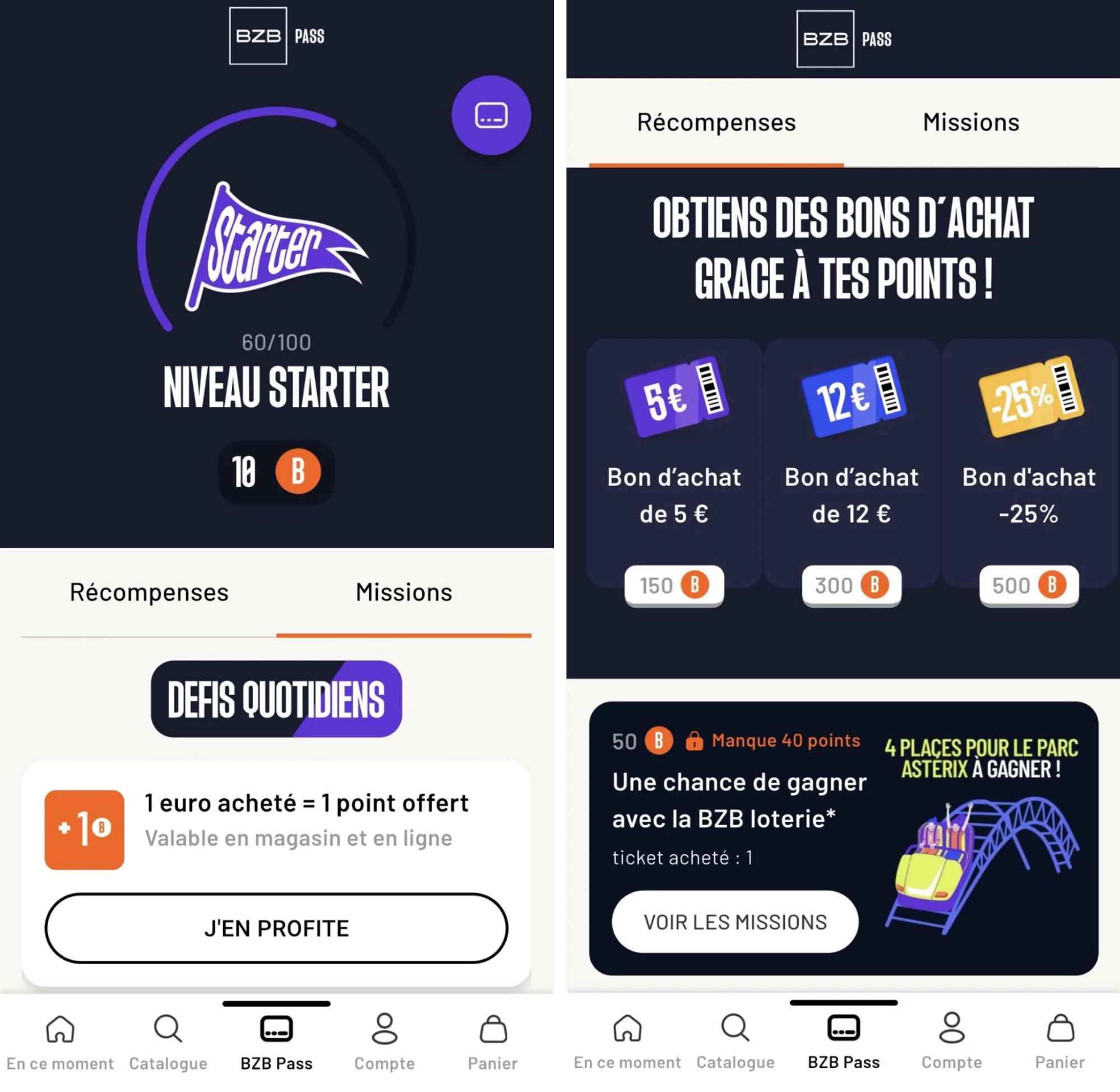
This is the work carried out as a duo by Adictiz and Maxxing. Roles are clearly divided to ensure a seamless experience. Maxxing manages the technical foundation and infrastructure, while handling the loyalty engine, customer accounts, and rewards. Meanwhile, Adictiz brings life and interactivity to the interface. Real time synchronization links the two platforms so that every in game action instantly converts into earned or spent loyalty points. All without the slightest friction for the user.
synergy-gaming-loyalty-BZB

Focus on mechanics: tailored activations

Adictiz deployed varied animations in the BZB app. This mix combines tailored innovations and turn key formats to set the pace of the experience.

1. The in app Raffle: the ideal mechanic to boost points

Our teams developed an exclusive tailored Raffle mechanism. The setup encourages customers to use their accumulated loyalty points.

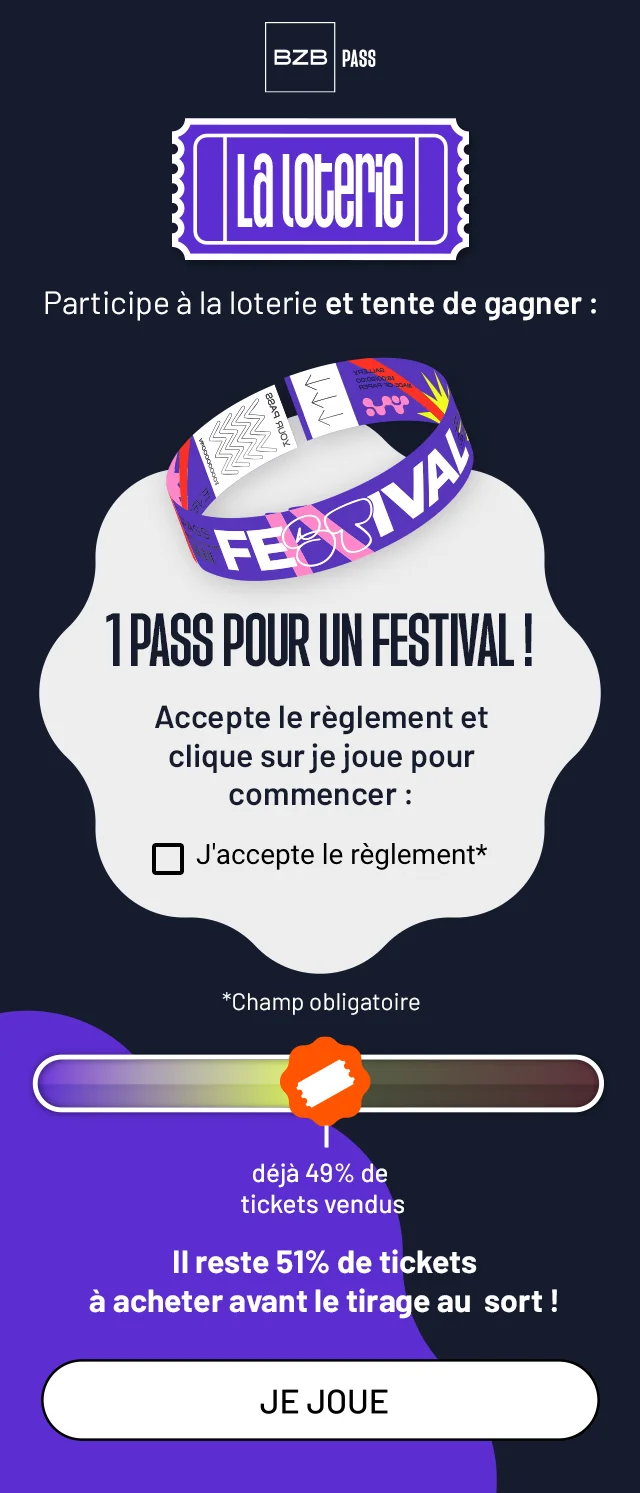
  • The concept: the user wagers 50 loyalty points to buy a ticket and try to win exceptional prizes highly sought after by the target audience (1 pass to a major music festival or a set of 4 tickets to Parc Astérix).
raffle-in-app-BZB
  • A dynamic interface: a visual gauge indicates the total number of tickets purchased in real time, creating a sense of collective enthusiasm.
  • End to end controlled UX: the Adictiz algorithm manages the draw while integrating smooth user flows (error pages if the point balance is insufficient or if the raffle is full, end of game alerts).

Results that met expectations: the very first raffle was an immediate success with over 6,900 participating program members. More than 6 out of 10 of whom validated their opt in, making this first activation a true marketing success both in terms of engagement and database qualification.

    2. The weekly Instant Win appointment

    To establish a routine and bring users back to the app every week, BZB offers Instant Win sessions guided by precise management rules:

    • Participation is limited to once a week per user to build anticipation.
    • A 100% winning mechanic that automatically distributes loyalty points, immediately credited to the customer’s account.
    • A single prize rule: a player who has won points cannot accumulate other prizes during the same session.

    3. A game catalog to set the pace for the commercial year

    To support the brand’s key moments and avoid user fatigue, BZB draws from the Adictiz catalog to launch temporary formats tailored to social media codes:
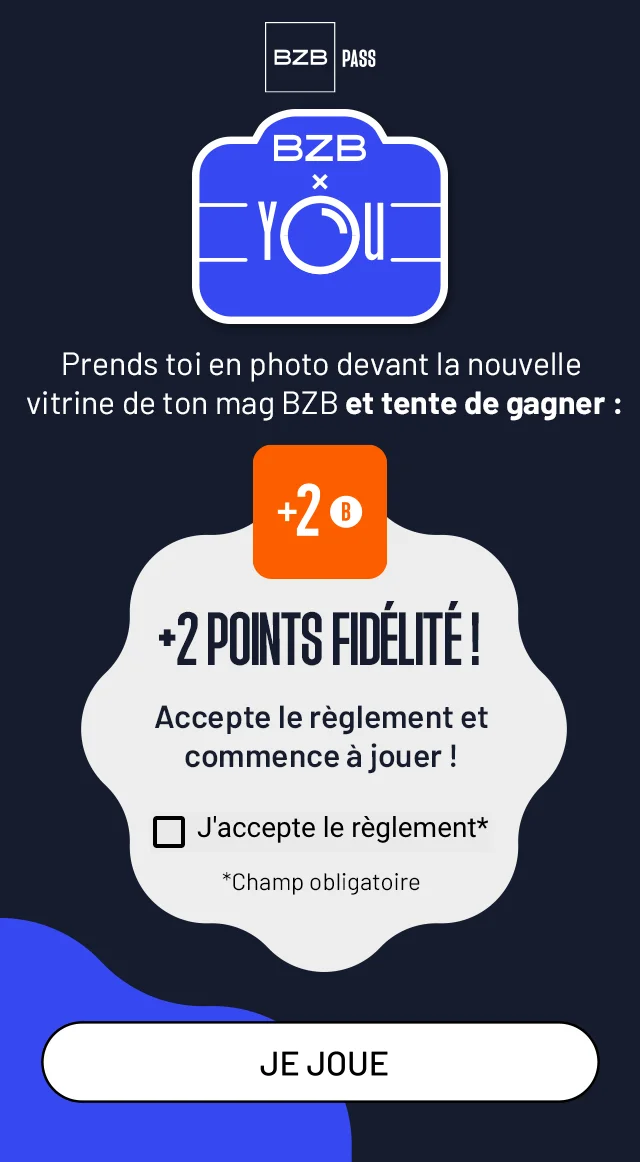
    photo-contest-BZB
    • The Photo Contest: A drive-to-store mechanic that invites customers to take photos of themselves in front of store windows for a chance to win rewards.
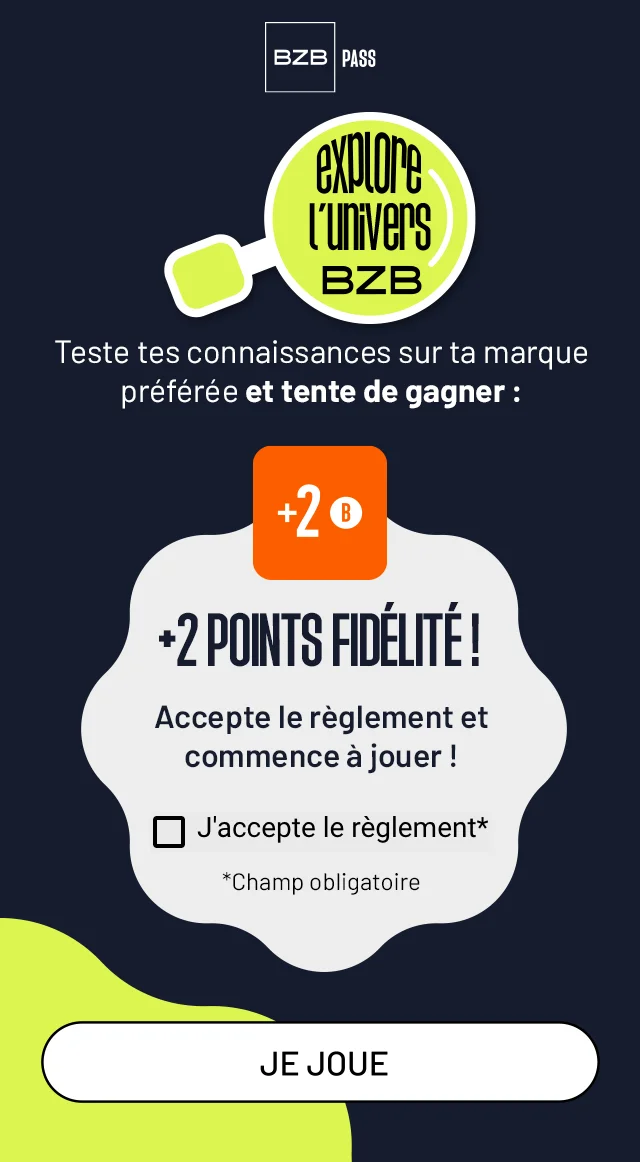
    quiz-BZB
    • The Quiz: To test the community’s fashion knowledge and showcase the BZB brand universe.
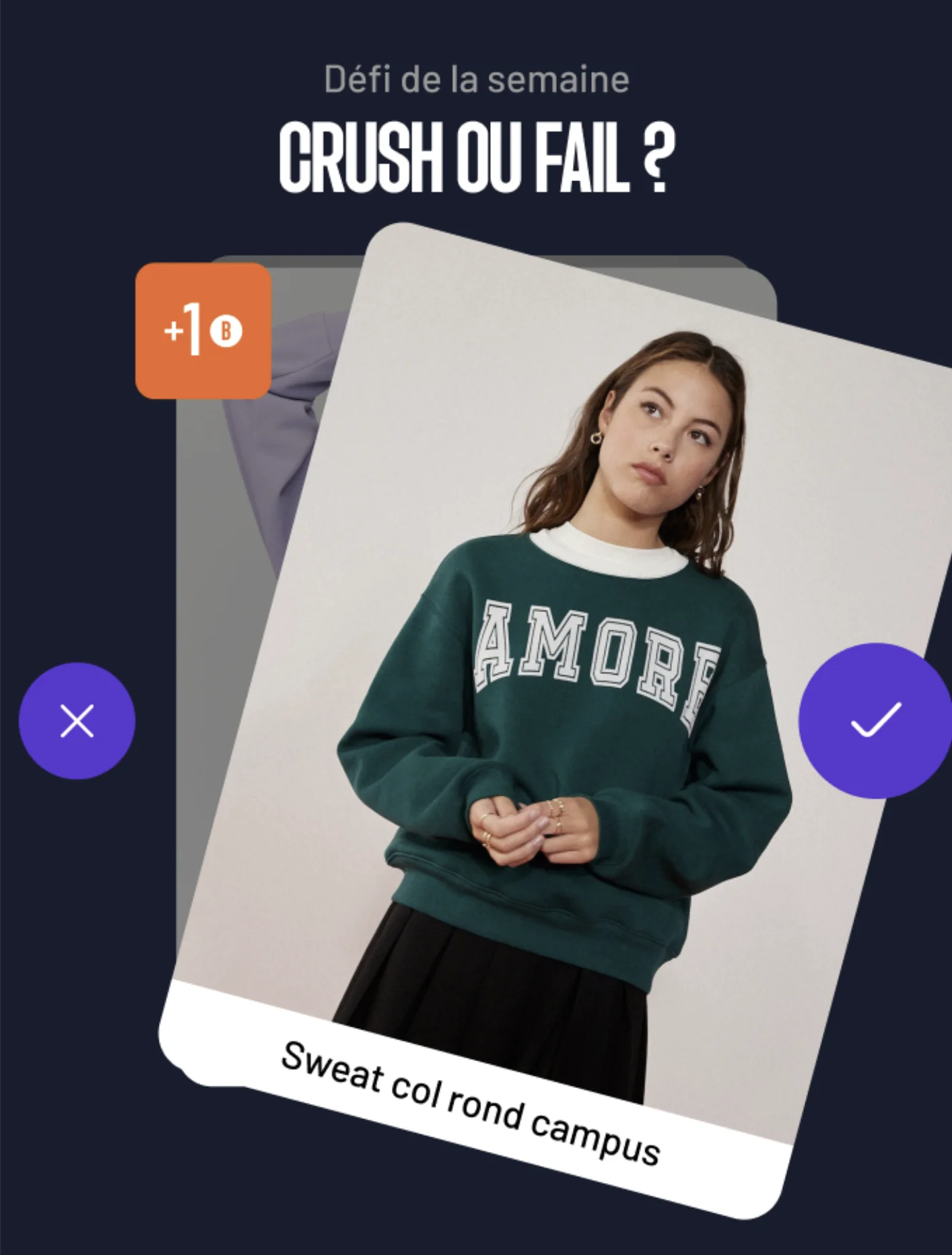
    swiper-BZB
    • The Swiper (“I want it / Not my style”): An ultra intuitive format to qualify customer product preferences in a playful way.

    Key takeaways

    By connecting the agility and creativity of Adictiz games to the power of Maxxing’s loyalty engine, BZB succeeds in its challenge. The brand no longer merely rewards purchases: it rewards interaction. In app gamification stands out here as the essential pillar of a modern retention strategy, capable of turning every app user into an active member of the BZB community.

    🚀 How about you, where does your loyalty strategy stand?

    Whether you want to modernize your current loyalty program or launch a new marketing campaign, our teams are here to support you. Let’s discuss your project.

    Adictiz, the platform to reach
    your marketing goals

    3 ways to leverage AI to better segment your customers through gamification

    3 ways to leverage AI to better segment your customers through gamification

    Applied to personalized marketing, artificial intelligence transforms raw data into actionable profiles.

    Quizzes, tests, or games with rewards effectively allow for the collection of diverse first party data: closed ended responses, verbatims, images… Through semantic and behavioral analysis, these signals fuel fine grained segmentation that subsequently boosts CRM performance and enables brands to better convert and retain their audience.

    Here are 3 concrete ways to leverage this data to personalize future marketing campaigns with precision.

    Analyzing quiz responses to better personalize campaigns

    How to use AI to personalize marketing campaigns ? Brands can start by sharing multiple choice tests (Quizzes, personality tests, etc.) with their audience. These interactive activities make it possible to qualify a contact based on their preferences, motivations, or needs, using actionable behavioral data.

    1. Each response is associated with a specific value (or weighting), determined beforehand according to the brand’s objectives.
    2. With the help of AI, these weightings can be interpreted and a score can be calculated for each participant.
    3. This score makes it possible to automatically associate a typical profile with an individual, based on their cumulative responses.

    Note: this processing relies both on rules defined by the brand (for example: “if a user selects answer A, they are probably price sensitive”) and on predictive models capable of identifying finer correlations between the responses given and future behaviors (such as interest in a product, the probability of purchase, or churn).

    Result: intelligent CRM segmentation. Indeed, it is based on declarative signals, easy to link to marketing personalization scenarios:

    • product recommendation,
    • promotional message,
    • highlighting a relevant service, etc.

    This type of analysis integrates natively into a personalized marketing strategy, with a high ROI.

    Examples of marketing personalization based on quiz profiles

    In the energy sector, a quiz can question an audience about their consumption habits or ecological sensitivity. By analyzing the responses, AI can group users into three segments:

    • a “thrifty” profile, looking for discounts and bill optimizations;
    • an “environmentalist” profile, interested in green offers;
    • and a “classic” profile, sensitive to simplicity and stability.

    Each group can then receive a personalized message, a different product, or a targeted demonstration.

    In retail, a marketing game centered on purchasing habits makes it possible to qualify profiles based on their primary motivation. The semantic analysis of choices helps isolate:

    • a “deal hunter” profile, for whom discounts are a trigger,
    • a “loyal” profile, attached to a brand,
    • or a “curious” profile, always in search of new products.

    Thanks to the power of IA and personalized marketing, these campaigns can trigger more relevant activations, leading to a better conversion rate.

    How to dynamically fuel audience segmentation

    Marketing games featuring free response fields (quizzes or personality tests with open ended questions, forms, surveys, etc.) are powerful data collection tools. Unlike predefined choices, verbatims reflect the actual language, expectations, or objections of the participants.

    Semantic analysis, applied by AI, makes it possible to automatically extract the key information contained in these responses: recurring words, expressed intentions, signals of interest or disinterest, and barriers to purchase. The algorithm then classifies and groups these elements according to themes and intensity levels.

    The benefits for marketing are multifaceted. This personalization through AI makes it psosible to refine automated customer profiling. It enriches the CRM with qualitative signals, which can be leveraged to adapt content, offers, or activation drivers.

    Even better: this contextual intelligence makes it possible to identify weak signals or uncover unexpected customer segments. It also improves AI lead scoring by integrating an emotional or intentional dimension.

    Examples of marketing personalization based on verbatims

    How to achieve dynamic segmentation with AI? Let’s take the tourism sector as an example.

    During a contest, participants are invited to answer the question:

    “What is your dream destination and why?”

    AI identifies quickly trends: “nature,” “disconnection,” “budget,” “with family,” “off the beaten track”… These elements then guide the dynamic segmentation of the CRM: “adventurer,” “slow traveler,” or “planning family” profiles.

    Marketing teams can then activate tailor made campaigns, adapted to these new targets, with a tone, a promise, and visuals aligned with their deepest expectations.

    Let’s take the example of the “slow traveler” profile identified via semantic analysis of verbatims. To meet the expectations of this segment, marketing campaigns will integrate:

    • A soothing tone, centered on experience and reconnection.
      E.g.: “Take the time to discover [the destination] differently”
    • A targeted promise: itineraries off the tourist circuits, responsible consumption.
      E.g.: “7 days by train through the little known landscapes of Italy”
    • Impactful visuals: contemplative atmosphere, people alone or in small groups, far from the crowds.
      E.g.: sunset over a lake, forest cabin, remote village

    These elements create a more relevant message, consistent with the segment’s aspirations. Result: a better engagement rate and an optimized marketing ROI.

    How to leverage AI to transform visual content into actionable marketing insights?

    Gamified campaigns that invite participants to upload an image (meal photo contests, favorite outfits, interior design, etc.) are a powerful source of behavioral data. Thanks to AI image analysis, this content can be leveraged for automated customer profiling.

    AI recognizes objects, scenes, moods, or even emotions present in the image. It then maps these elements to typical profiles or probable purchase intentions.

    Result: unprecedented CRM enrichment. These visual signals create a new level of segmentation, complementary to declarative data. AI lead scoring is thus much more refined and the personalization of marketing campaigns more relevant.

    Example of marketing personalization based on UGC

    Let’s take a fictional example. In a food marketing campaigna contest invites participants to share a photo of their favorite homemade dish. We are talking here about UGC, or content organically generated by users. AI can then analyze the visual composition: fresh products, careful plating, semi-professional utensils. It classifies this profile as a “passionate gourmet.”

    This signal enriches the CRM and makes it possible to target this audience with campaigns centered on premium products, cooking workshops, or exclusive content (recipes, food documentaries, etc.). Data collection from images thus boosts marketing personalization with a message, an offer, and visuals in total alignment with the customer’s needs and expectations.

    To better segment your customers, exploit the full potential of your gamified campaigns. With LeadSense, automatically analyze the data collected through interactive games, identify the most promising profiles, and adapt your campaigns in real time. You thus better feed your CRM, gaining efficiency and responsiveness. No more need to manually analyze your first party data; AI handles it for you!

    Mini glossary

    • Intelligent CRM segmentation: a technique for grouping contacts based on their behaviors, preferences, or intentions in order to activate personalized marketing campaigns.
    • AI lead scoring: automatic evaluation of a prospect’s potential to convert, based on their actions, responses, or intent signals.
    • Semantic analysis: Automated processing of free-form responses to identify keywords, emotions, or intentions expressed by the user.
    • Behavioral data (or first party data): set of data originating from a user’s interactions (clicks, choices, submissions) revealing their preferences or needs.
    • Marketing personalization: Adaptation of messages, content, or offers based on the profile or behavior of a prospect or customer.

    In 30 minutes, we show you how to launch your own high-performance interactive marketing campaign

    Improving the customer experience through personalised marketing

    Improving the customer experience through personalised marketing

    Personalised marketing is an imperative for brands. A study by Accenture shows that 91% of consumers are more likely to buy from companies that offer relevant content.

    These figures illustrate the importance of understaning the expectations of your audience, and of addresing each consumer as a unique individual,
    with specific needs. Personalised communication helps to establish a strong relationship, and to engage and retain buyers.

    But with the adoption of strict laws and regulations on data collection, it is becoming more complicated for brands to set up a CRM to design personalised campaigns.

    In this article, we look at the benefits and challenges of personalised marketing. We will see how gamification platforms can help you overcome these obstacles and deliver personalised messages.

    What is personalised marketing ?

    Personalised marketing is a strategy that consists of adapting each and every one of your messages and interactions (campaigns, emailing, customer journeys) based on the data collected from its prospects and customers. This may be demographic, psychographic or behavioural data (
    product preferences, purchase history, interests).

    Personalisation means creating an experience for each customer (or for each customer segment). When this strategy is put in place, it enables brands to ensure that customers feel listened to (without having the impression of being profiled).

    It can be found at every stage of the customer journey. It can be involved right from the product or service design stage, by offering audiences the opportunity to give their opinions via a customisation mechanism

    The challenges of personalised marketing

    Personalised marketing helps to improve the customer experience by taking account of expectations and preferences. The result is personalised content that increases satisfaction and loyalty.

    Over and above the quality of the experience offered, personalised marketing makes it possible to pursue a number of marketing objectives:

    • Increase engagement and conversions by deploying marketing actions. A targeted message or product recommendation is more likely to lead to a purchase. Personalisation makes it possible to present products and offers that are likely to be of interest. In addition to conversion objectives, personalisation is used to refine the up- or cross-selling strategy and increase the brand’s average shopping basket.

    • Boosting customer loyalty. Content and offers aligned with customer preferences are likely to lead to repeat purchases. A brand that understands and responds to customer needs will create a stronger relationship. Anticipating needs demonstrates real proactivity and interest in the brand, which strengthens loyalty.

    • Stand out from your competitors. Rather than slashing prices, the brand can differentiate itself by offering unique, tailor-made experiences.

    • Optimise the ROI (Return on Investment) of your campaigns. Investing in personalised marketing generates a higher return on investment than generalist campaigns. Refined customer knowledge and targeted messages will lead to more conversions and therefore better use of your budget.

    How do you do personalised marketing?

    Personalised marketing is a powerful strategy for targeting, engaging and retaining your audience. Comment la mettre en place ? Voici 3 étapes à suivre pour personnaliser ses prises de parole.

    Collecting data (first-party and zero-party)

    The basis of a personalisation approach is to understand who you are talking to and the expectations of its audience. This means collecting data, while respecting confidentiality.

    Customers need to share information that they feel will have a positive impact on their shopping experience. The transparency and the establishment of a win/win relationship are essential when collecting data for the purposes of personalisation.

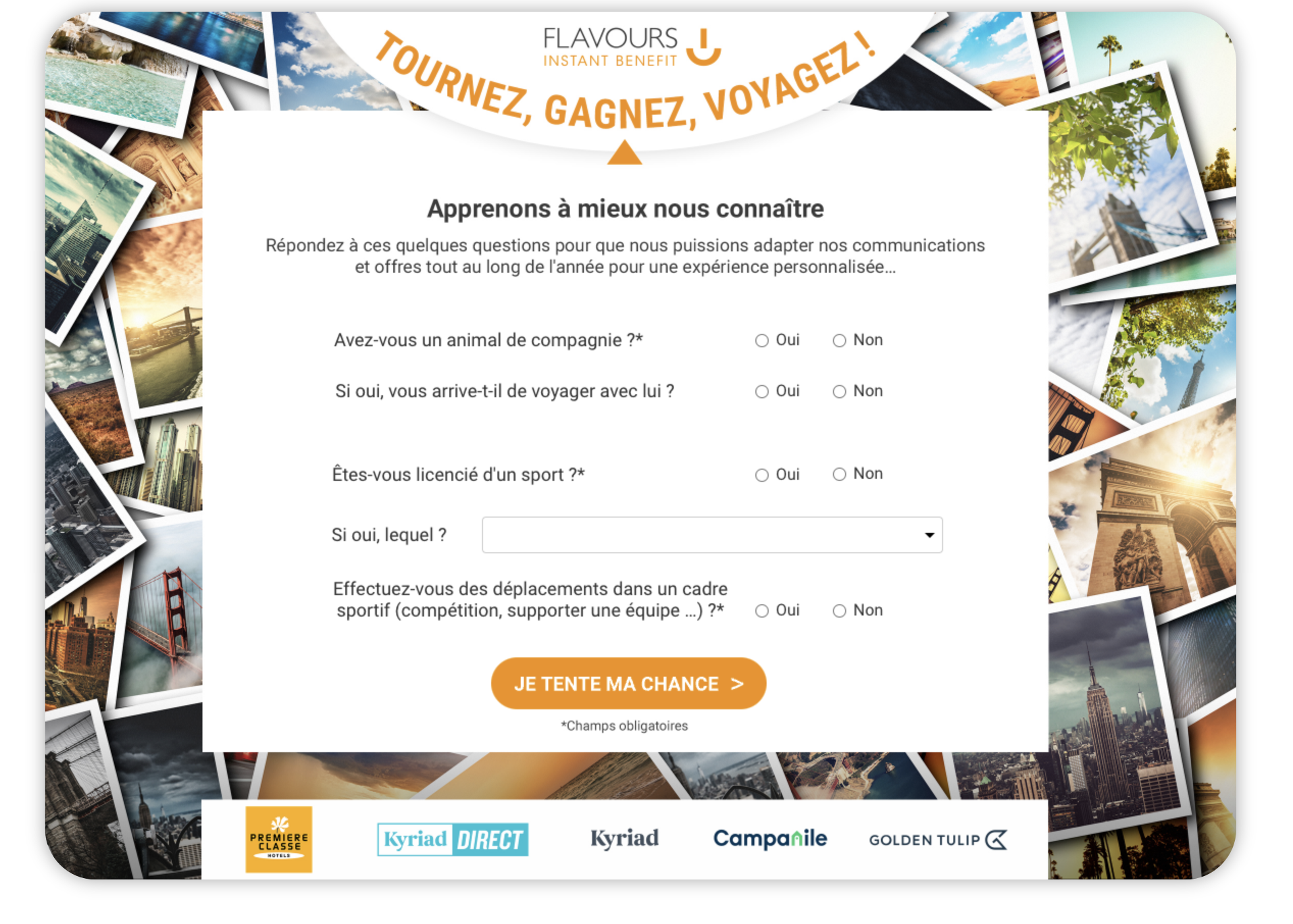
    This is what the Louvres Hotel group has done. To get to know its audience better, the company has shared a marketing game via which participants could try to win a free trip after filling in a collection form. The company explained at the start of the form that the information would be used to personalise its communications and customer experience.

    Louvre Hôtels - Personalised marketing game

    Creating personalised content

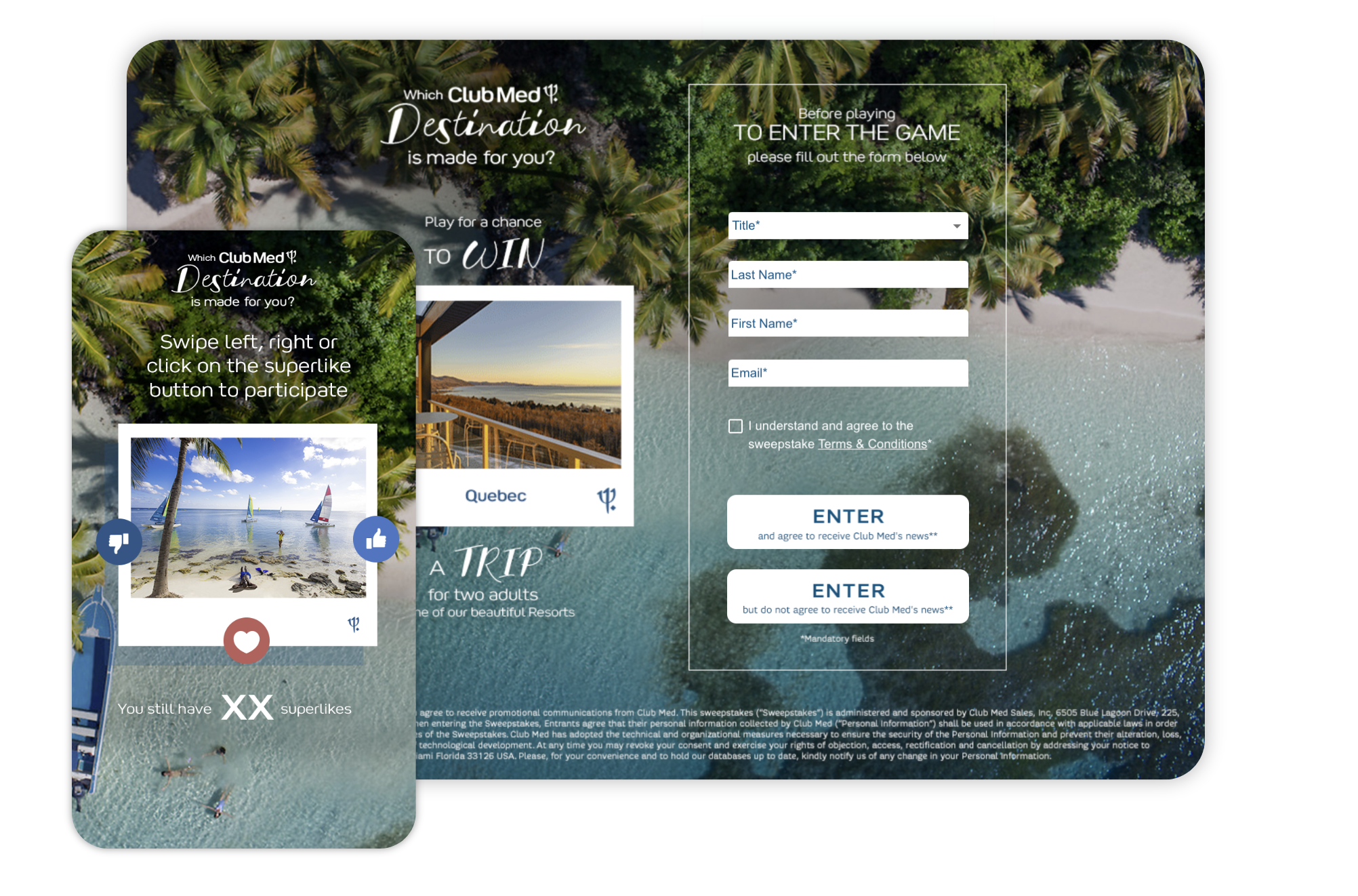
    Once the data has been collected, the brand will be able to segment its audience and create targeted content. Club Med has used the data collected as part of a Swiper to retarget new leads. Participants were invited to choose their favourite Club Med resort. This information enabled the company to personalise its email campaigns with relevant content and offers (price range, location, etc.).

    Club Med - Personalised marketing swiper

    Optimising personalised campaigns using customer feedback

    Personalisation is a strategy that needs to be continuously improved. Chaque prise de parole et interaction doit permettre à la marque d’affiner la qualité du ciblage. Notamment en sollicitant des feedbacks post achat (via un Interactive survey shared in the order confirmation email).

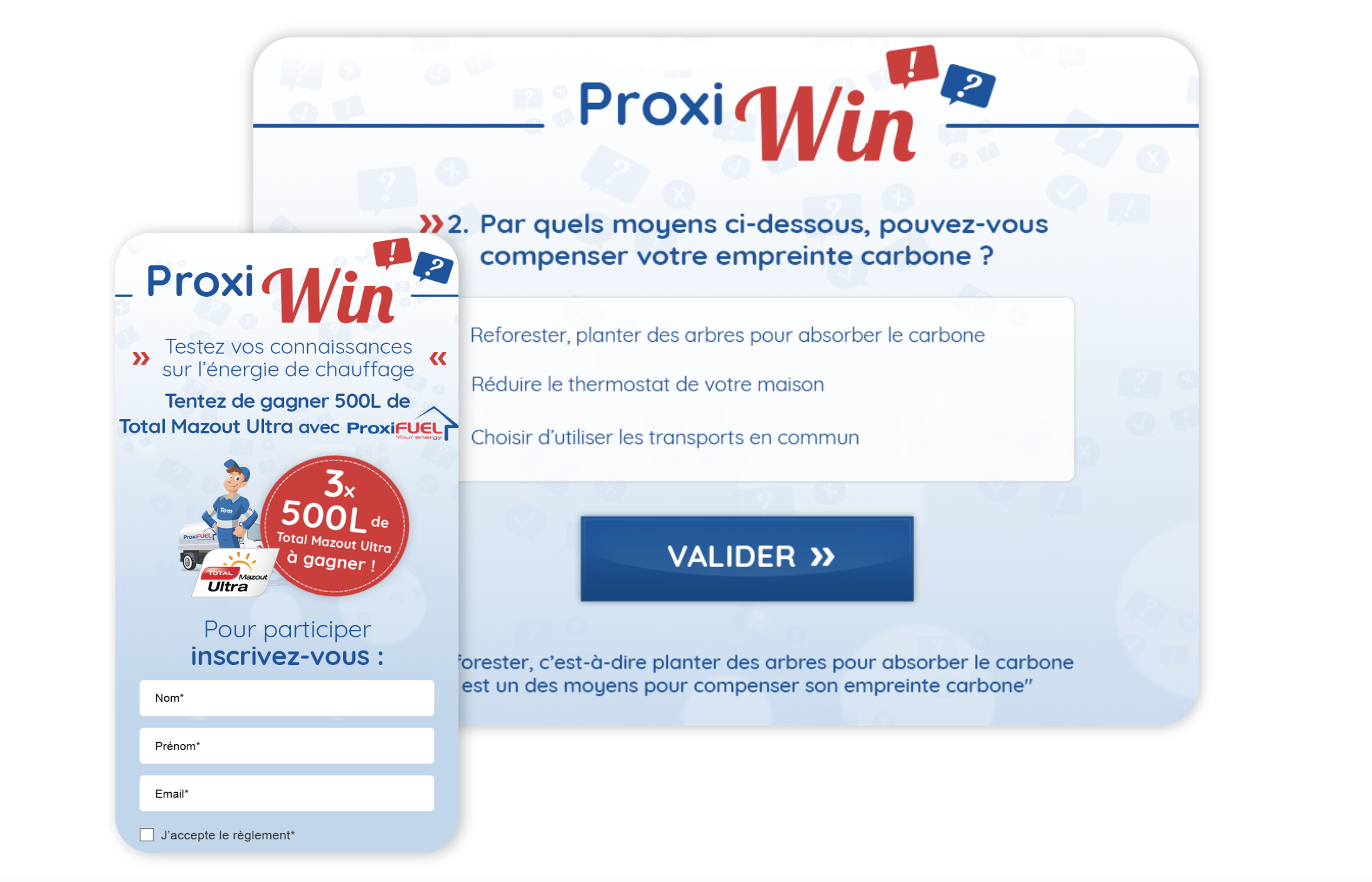
    Total used the marketing game as a lever to enrich its customer base. Sent to a targeted part of its CRM base, the Quiz permited to promote the company’s offer and identify prospects likely to become customers.

    Total - Personalised marketing quiz

    Conclusion

    Personalise the experience you offer each of your customers by getting to know them better. Our Playable marketing mechanisms allow you to collect personalised data about your audience, with their consent (demographic data, product preferences, etc.). You can then segment your customer base using Segment and create targeted marketing messages that are much more powerful for engagement and conversion.

    In 30 minutes, we show you how to launch your own high-performance interactive marketing campaign