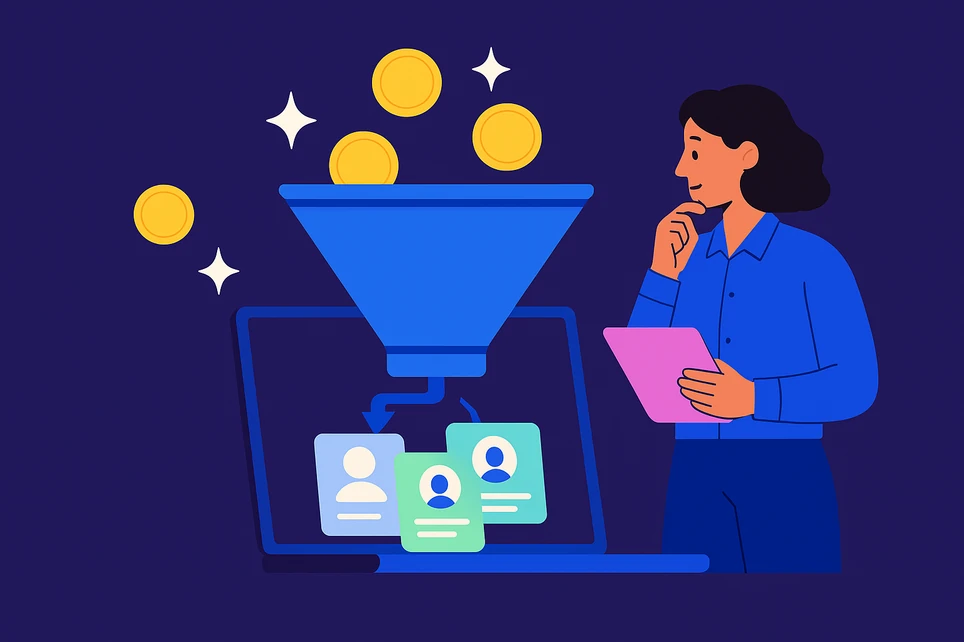


Applied to personalized marketing, artificial intelligence transforms raw data into actionable profiles.
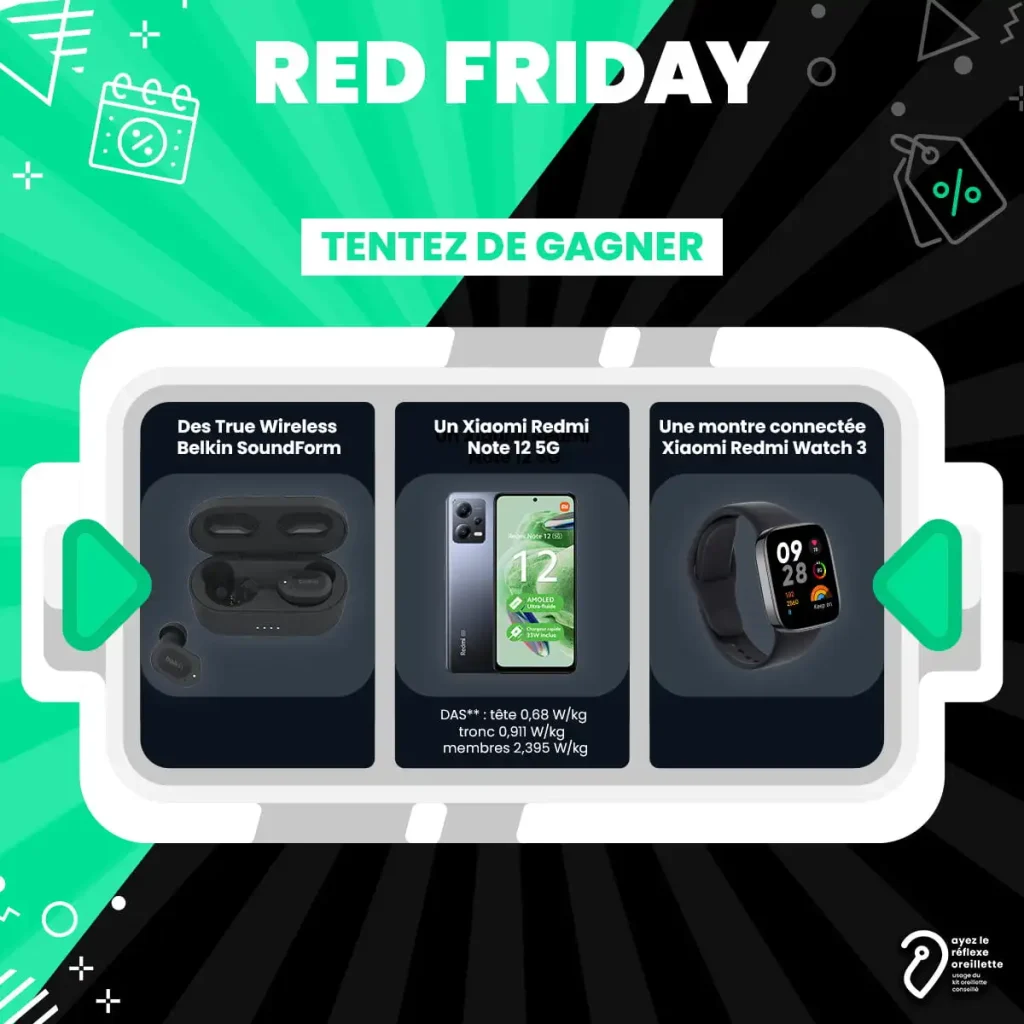
Quizzes, tests, or games with rewards effectively allow for the collection of diverse first party data: closed ended responses, verbatims, images… Through semantic and behavioral analysis, these signals fuel fine grained segmentation that subsequently boosts CRM performance and enables brands to better convert and retain their audience.
Here are 3 concrete ways to leverage this data to personalize future marketing campaigns with precision.
Analyzing quiz responses to better personalize campaigns
How to use AI to personalize marketing campaigns ? Brands can start by sharing multiple choice tests (Quizzes, personality tests, etc.) with their audience. These interactive activities make it possible to qualify a contact based on their preferences, motivations, or needs, using actionable behavioral data.
- Each response is associated with a specific value (or weighting), determined beforehand according to the brand’s objectives.
- With the help of AI, these weightings can be interpreted and a score can be calculated for each participant.
- This score makes it possible to automatically associate a typical profile with an individual, based on their cumulative responses.
Note: this processing relies both on rules defined by the brand (for example: “if a user selects answer A, they are probably price sensitive”) and on predictive models capable of identifying finer correlations between the responses given and future behaviors (such as interest in a product, the probability of purchase, or churn).
Result: intelligent CRM segmentation. Indeed, it is based on declarative signals, easy to link to marketing personalization scenarios:
- product recommendation,
- promotional message,
- highlighting a relevant service, etc.
This type of analysis integrates natively into a personalized marketing strategy, with a high ROI.
Examples of marketing personalization based on quiz profiles
In the energy sector, a quiz can question an audience about their consumption habits or ecological sensitivity. By analyzing the responses, AI can group users into three segments:
- a “thrifty” profile, looking for discounts and bill optimizations;
- an “environmentalist” profile, interested in green offers;
- and a “classic” profile, sensitive to simplicity and stability.
Each group can then receive a personalized message, a different product, or a targeted demonstration.
In retail, a marketing game centered on purchasing habits makes it possible to qualify profiles based on their primary motivation. The semantic analysis of choices helps isolate:
- a “deal hunter” profile, for whom discounts are a trigger,
- a “loyal” profile, attached to a brand,
- or a “curious” profile, always in search of new products.
Thanks to the power of IA and personalized marketing, these campaigns can trigger more relevant activations, leading to a better conversion rate.
How to dynamically fuel audience segmentation
Marketing games featuring free response fields (quizzes or personality tests with open ended questions, forms, surveys, etc.) are powerful data collection tools. Unlike predefined choices, verbatims reflect the actual language, expectations, or objections of the participants.
Semantic analysis, applied by AI, makes it possible to automatically extract the key information contained in these responses: recurring words, expressed intentions, signals of interest or disinterest, and barriers to purchase. The algorithm then classifies and groups these elements according to themes and intensity levels.
The benefits for marketing are multifaceted. This personalization through AI makes it psosible to refine automated customer profiling. It enriches the CRM with qualitative signals, which can be leveraged to adapt content, offers, or activation drivers.
Even better: this contextual intelligence makes it possible to identify weak signals or uncover unexpected customer segments. It also improves AI lead scoring by integrating an emotional or intentional dimension.
Examples of marketing personalization based on verbatims
How to achieve dynamic segmentation with AI? Let’s take the tourism sector as an example.
During a contest, participants are invited to answer the question:
“What is your dream destination and why?”
AI identifies quickly trends: “nature,” “disconnection,” “budget,” “with family,” “off the beaten track”… These elements then guide the dynamic segmentation of the CRM: “adventurer,” “slow traveler,” or “planning family” profiles.
Marketing teams can then activate tailor made campaigns, adapted to these new targets, with a tone, a promise, and visuals aligned with their deepest expectations.
Let’s take the example of the “slow traveler” profile identified via semantic analysis of verbatims. To meet the expectations of this segment, marketing campaigns will integrate:
- A soothing tone, centered on experience and reconnection.
E.g.: “Take the time to discover [the destination] differently” - A targeted promise: itineraries off the tourist circuits, responsible consumption.
E.g.: “7 days by train through the little known landscapes of Italy” - Impactful visuals: contemplative atmosphere, people alone or in small groups, far from the crowds.
E.g.: sunset over a lake, forest cabin, remote village
These elements create a more relevant message, consistent with the segment’s aspirations. Result: a better engagement rate and an optimized marketing ROI.
How to leverage AI to transform visual content into actionable marketing insights?
Gamified campaigns that invite participants to upload an image (meal photo contests, favorite outfits, interior design, etc.) are a powerful source of behavioral data. Thanks to AI image analysis, this content can be leveraged for automated customer profiling.
AI recognizes objects, scenes, moods, or even emotions present in the image. It then maps these elements to typical profiles or probable purchase intentions.
Result: unprecedented CRM enrichment. These visual signals create a new level of segmentation, complementary to declarative data. AI lead scoring is thus much more refined and the personalization of marketing campaigns more relevant.
Example of marketing personalization based on UGC
Let’s take a fictional example. In a food marketing campaigna contest invites participants to share a photo of their favorite homemade dish. We are talking here about UGC, or content organically generated by users. AI can then analyze the visual composition: fresh products, careful plating, semi-professional utensils. It classifies this profile as a “passionate gourmet.”
This signal enriches the CRM and makes it possible to target this audience with campaigns centered on premium products, cooking workshops, or exclusive content (recipes, food documentaries, etc.). Data collection from images thus boosts marketing personalization with a message, an offer, and visuals in total alignment with the customer’s needs and expectations.
To better segment your customers, exploit the full potential of your gamified campaigns. With LeadSense, automatically analyze the data collected through interactive games, identify the most promising profiles, and adapt your campaigns in real time. You thus better feed your CRM, gaining efficiency and responsiveness. No more need to manually analyze your first party data; AI handles it for you!
Mini glossary
- Intelligent CRM segmentation: a technique for grouping contacts based on their behaviors, preferences, or intentions in order to activate personalized marketing campaigns.
- AI lead scoring: automatic evaluation of a prospect’s potential to convert, based on their actions, responses, or intent signals.
- Semantic analysis: Automated processing of free-form responses to identify keywords, emotions, or intentions expressed by the user.
- Behavioral data (or first party data): set of data originating from a user’s interactions (clicks, choices, submissions) revealing their preferences or needs.
- Marketing personalization: Adaptation of messages, content, or offers based on the profile or behavior of a prospect or customer.