

Banking and insurance are evolving in a fast-changing environment. Between complex products, strict regulations and communications that are often perceived as austere. The relationship between brands and their customers remains difficult to energize.
However, the banking marketing strategy can take advantage of gamification to overcome these obstacles. By introducing interactive mechanics, these sectors can transform technical subjects into fun, memorable experiences.
More engaging and educational, this approach facilitates customer acquisition, loyalty and the activation of new services. In this article, we explore the different uses of playable marketing. And share inspiring examples of how to integrate play into the heart of banking and insurance campaigns.
The main pain points of the banking and insurance sector
Banking and insurance are evolving in a context of intensifying competition and rapidly changing customer expectations. A number of challenges still hamper marketing performance in these sectors:
- A complex acquisition: financial and insurance topics are not considered very engaging. The average conversion rate of digital campaigns in this sector is therefore generally well below the e-commerce average.
- Lack of customer data: in the banking and insurance sectors, the lack of fine-grained data collection blocks the personalization of services. And yet, 85% of customers expect an experience tailored to their needs.
- Poor retention rate: a significant proportion of customers become inactive after opening an account or taking out an insurance policy. The vast majority of banking customers see their relationship with the players in these sectors as purely transactional.
These obstacles underline the importance to introduce more interactive and differentiating approaches to capture attention and create a lasting bond.
How does gamification fit into the banking sector’s marketing strategy?
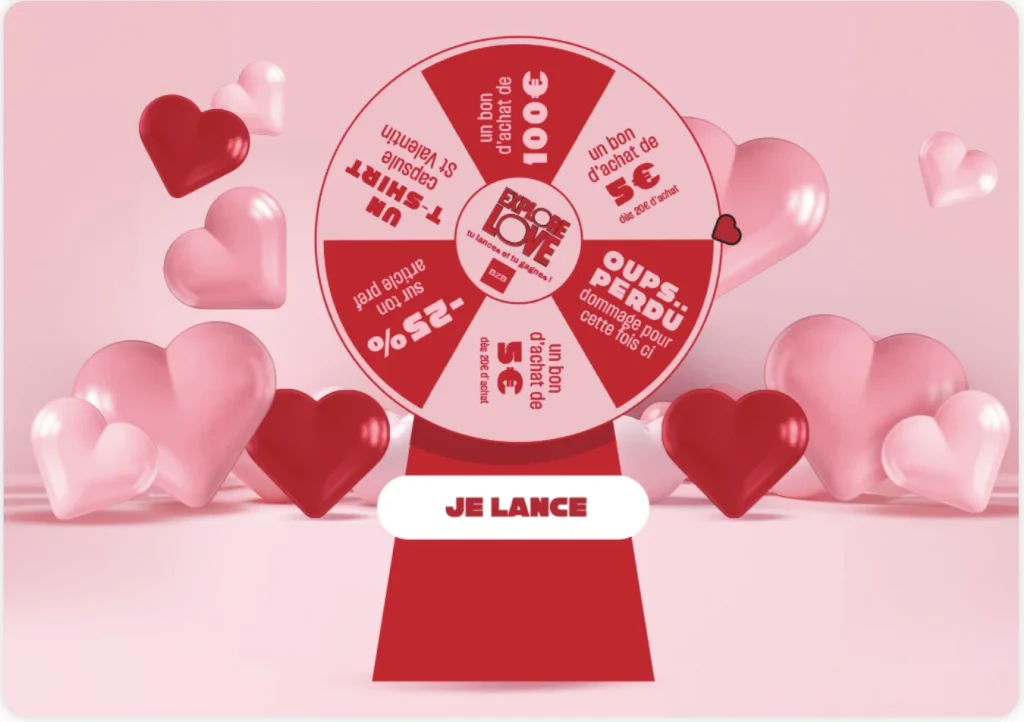
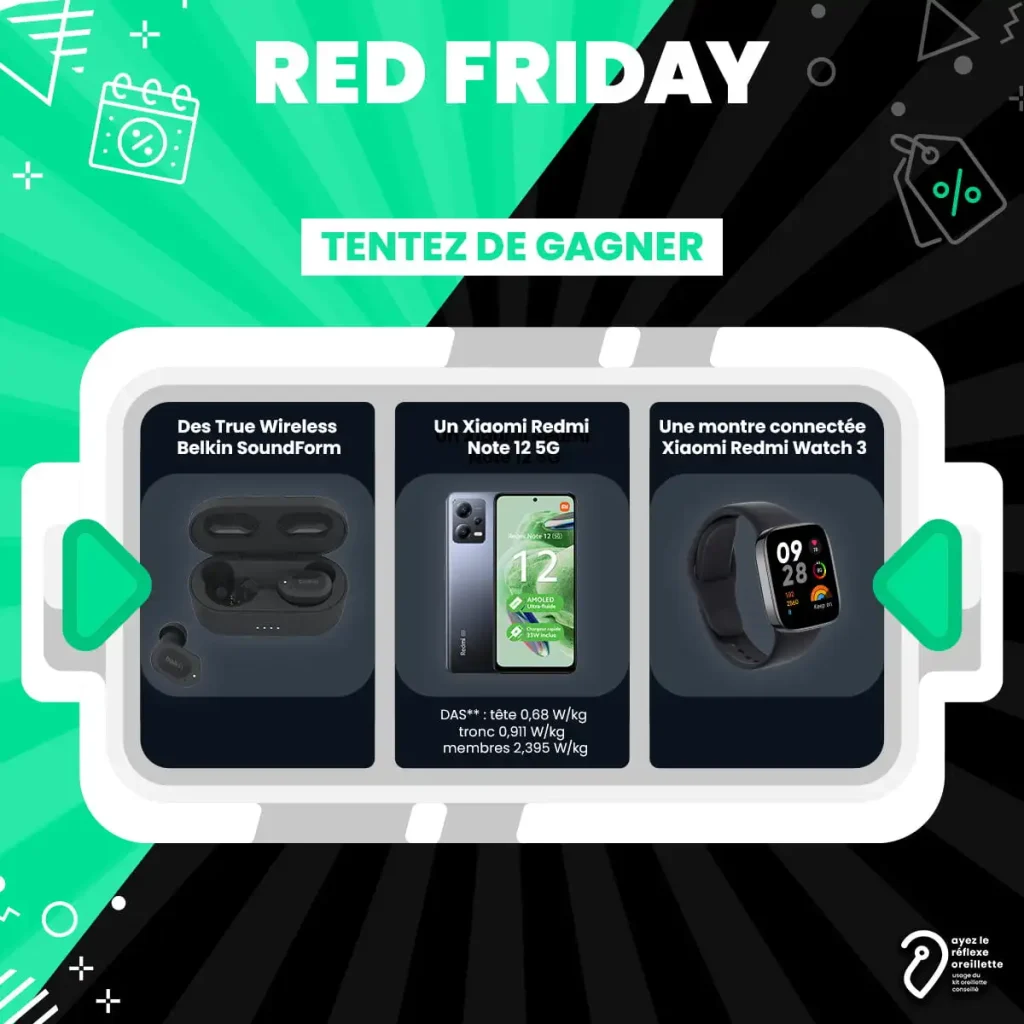
Gamification involves integrating game mechanics into a non-game experience, such as a marketing campaign. In the banking and insurance sectors, it transforms themes that are often perceived as complex into interactive and engaging experiences.
Playable marketing has a direct impact on several strategic KPIs: acquisition rate, volume of opt-ins, engagement time, loyalty and customer satisfaction. By making the relationship more dynamic, it also enriches the data collection and facilitates CRM activation.
Here’s how the major stages of the customer journey (from brand awareness to acquisition and loyalty) can be enhanced by an adapted play mechanic.
1. A playful presentation of offers in banking and insurance marketing
Presenting a banking or insurance offer in a playful format is more attention-grabbing than a conventional document. Instead of receiving a static brochure, customers enjoy an experience that encourages them to explore the offer.
Interactivity intrigues (and therefore increases the open rate of email campaigns), encourages discovery and facilitates understanding of the benefits. The more time spent, the greater the memorization of the message takes root.
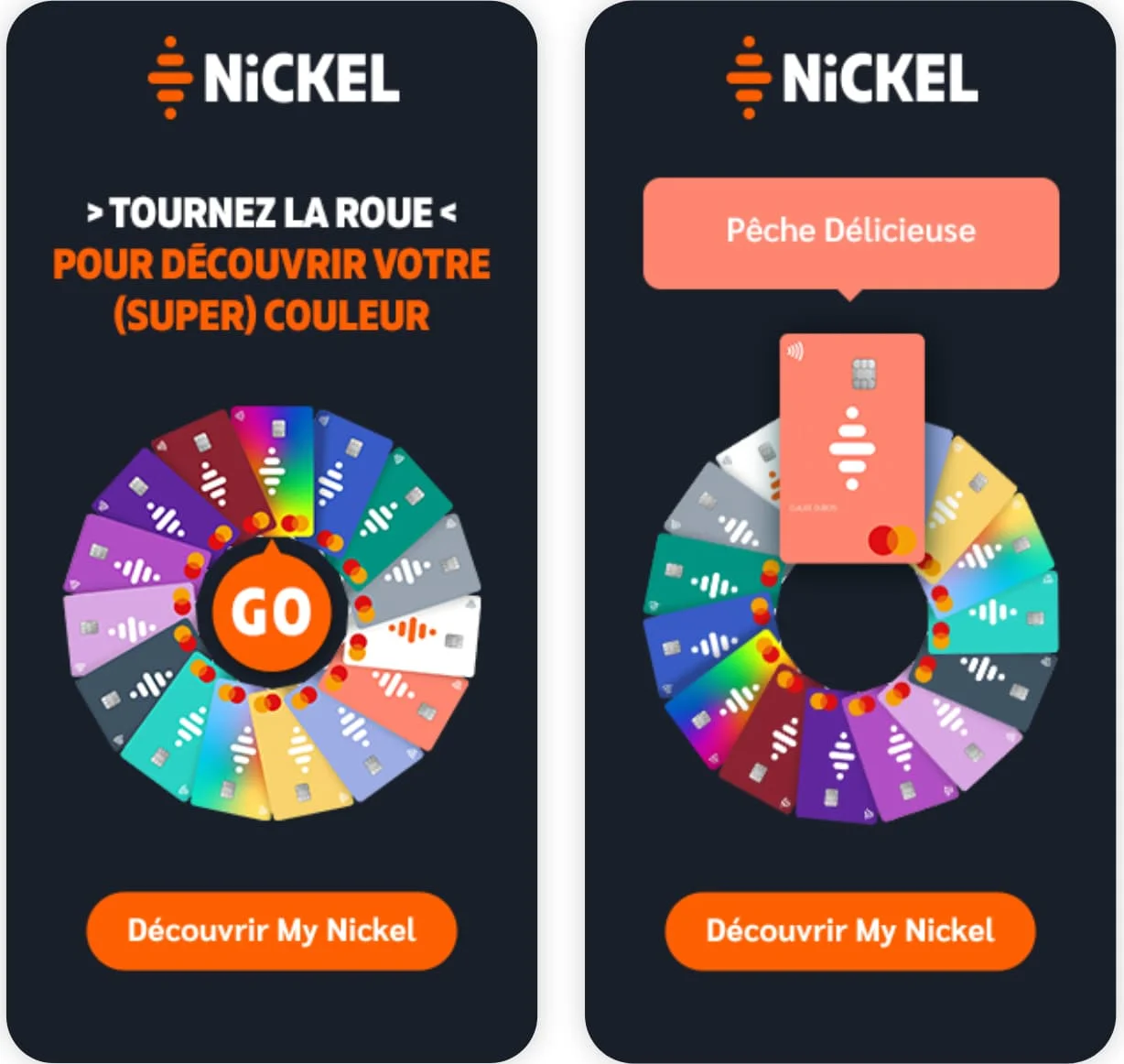
The example of Nickel is a case in point. To promote the personalization of its bank card, the brand used an interactive advertising format based on a Wheel of Fortune. Users choose a card color, then discover the offer through an adapted message.
The result: over 9 million impressions, a display rate of 85% and a click-through rate of 7.7%, well above the usual 0.46% traditional display formats. This immersive approach enabled Nickel to combine visibility, memorization and sales performance.
2. Boost awareness of banks and insurers through gaming
The game attracts attention by making communication more lively and participative. Unlike a traditional advertising message, it creates a moment of interaction that maximizes the time spent with the brand and improves the memorability of its message. In a world perceived as austere, this differentiation is a real lever for boosting branding.
The example of Corum L’Épargne perfectly illustrates this approach. To boost its brand awareness and recruit new leads, the brand has set up a mechanic combining forms and Customizer. The game allowed participants to immerse themselves in the world of the brand, while highlighting its commitment to sport.
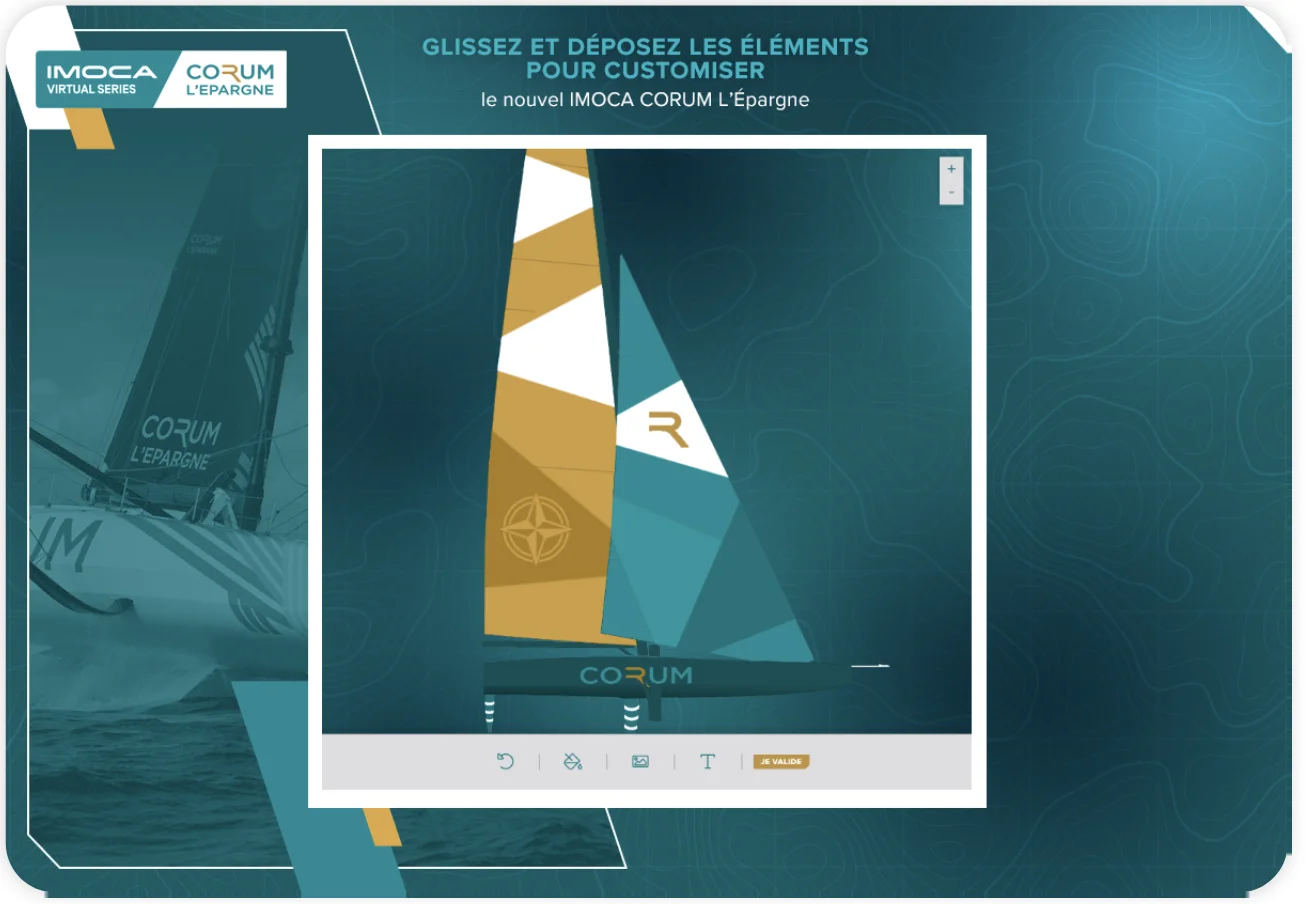
3. Animate your audiences and enrich your CRM to offer personalized customer experiences
Interactive games bring audiences to life by creating an entertaining and engaging experience. They facilitate the transmission of educational messages, which are often complex in the banking and insurance sector, while encouraging participation through attractive rewards.
At the same time, they pave the way for first-party. This information, gathered in a non-intrusive way, feeds the CRM and enables us to offer personalized, more relevant and therefore more effective customer paths.
The example of Corum L’Épargne illustrates this logic. Its campaign, relayed via Adictiz Ads, generated qualified traffic and enriched its CRM database. The activation was not limited to simply making contact: it provided useful data for getting to know prospects better and adapting communications. This strengthened link, built on a positive experience, improves conversion rates and long-term loyalty.
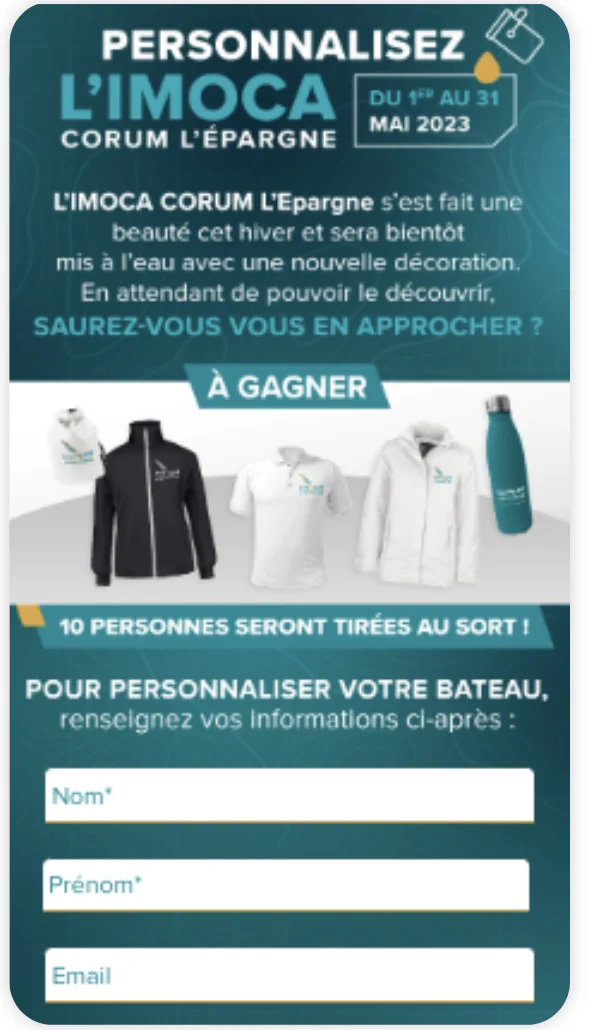
4. Playful mechanics to reactivate dormant customers and build loyalty
Many banking and insurance customers become inactive after opening an account or taking out a policy. Gamification enables them to be re-engaged through interactive experiences, attractive and non-intrusive.
A game linked to an exclusive reward or loyalty advantage encourages the return of dormant customers and rekindles interest in the brand’s services. These mechanics reintroduce an emotional bond and facilitate reactivation via CRM, by delivering personalized offers at the right time. The result: improved customer loyalty and reduced churn.
Why changes in the industry show the limits of traditional marketing
Traditional marketing in the banking and insurance sectors remains unengaging and is often perceived as austere. Messages are focused on security and compliance, lack pedagogy and don’t encourage users to interact with brands.
This lack of interactivity reduces players’ ability to collect useful data to personalize their users’ experience. At the same time, the multiplication of digital channels increases contact points, but without engaging mechanics, customer relations remain fragmented.
As a result, loyalty is limited, leaving room for growing volatility among new consumers, who are more inclined to turn to neobanks and insurtechs which are perceived as more responsive and innovative.
The game doesn’t undermine the banking or insurance message. On the contrary, it makes it more attractive, intelligible and memorable. Every interaction becomes an opportunity for activation, conversion and loyalty. By integrating our gamification mechanics, you can boost your marketing campaigns and communicate more effectively with your audiences.