

Faced with increasingly demanding patients and a system in flux, healthcare players must reinvent their engagement levers. What if gaming were one of the keys to activating, involving, and building loyalty.
Mutual insurance companies, laboratories, parapharmacy brands… more and more players are integrating gaming mechanics into their marketing campaigns. The objective: to inform, engage, and build loyalty, without compromising credibility.
In this article, we focus on the concrete uses of healthcare gamification. But also, the levers to activate at each stage of the customer journey as well as the keys to building an experience. One that is effective, relevant, and aligned with the sector’s challenges.
SUMMARY
- Gamification as a lever for activation and conversion in parapharmacy
- Interactive animations to gamify customer journeys in the mutual insurance sector
- Playful co-branding at the service of healthcare partnerships
- How to combine playful engagement and scientific posture in a healthcare gamification campaign?
Gamification as a lever for activation and conversion in parapharmacy
In a sector like parapharmacy, direct promotion must be reinforced by other marketing levers to perform. It becomes essential to offer useful and engaging experiences to capture attention, while highlighting product benefits.
Healthcare gamification can address this challenge. By integrating educational content, personalized advice, and commercial benefits into a single journey, it allows for the creation of a more qualitative link with the consumer.
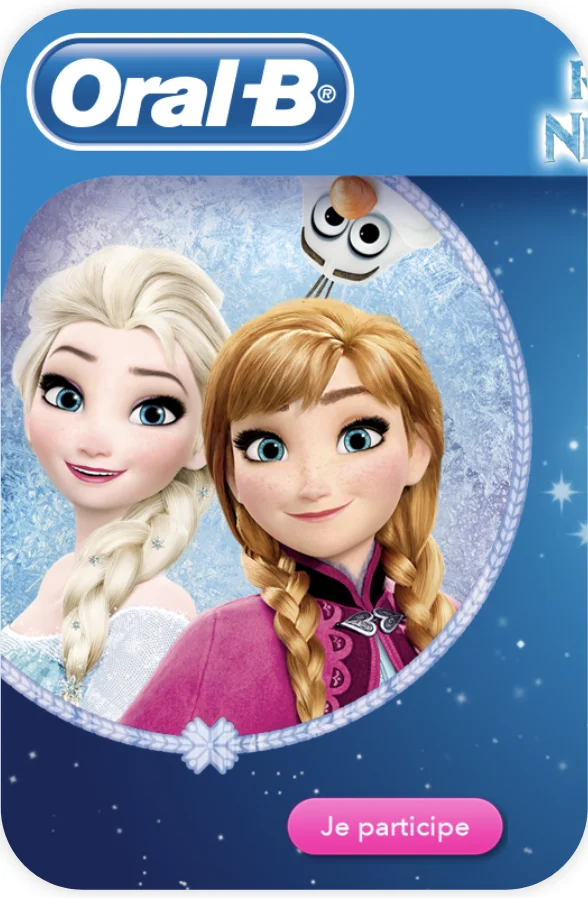
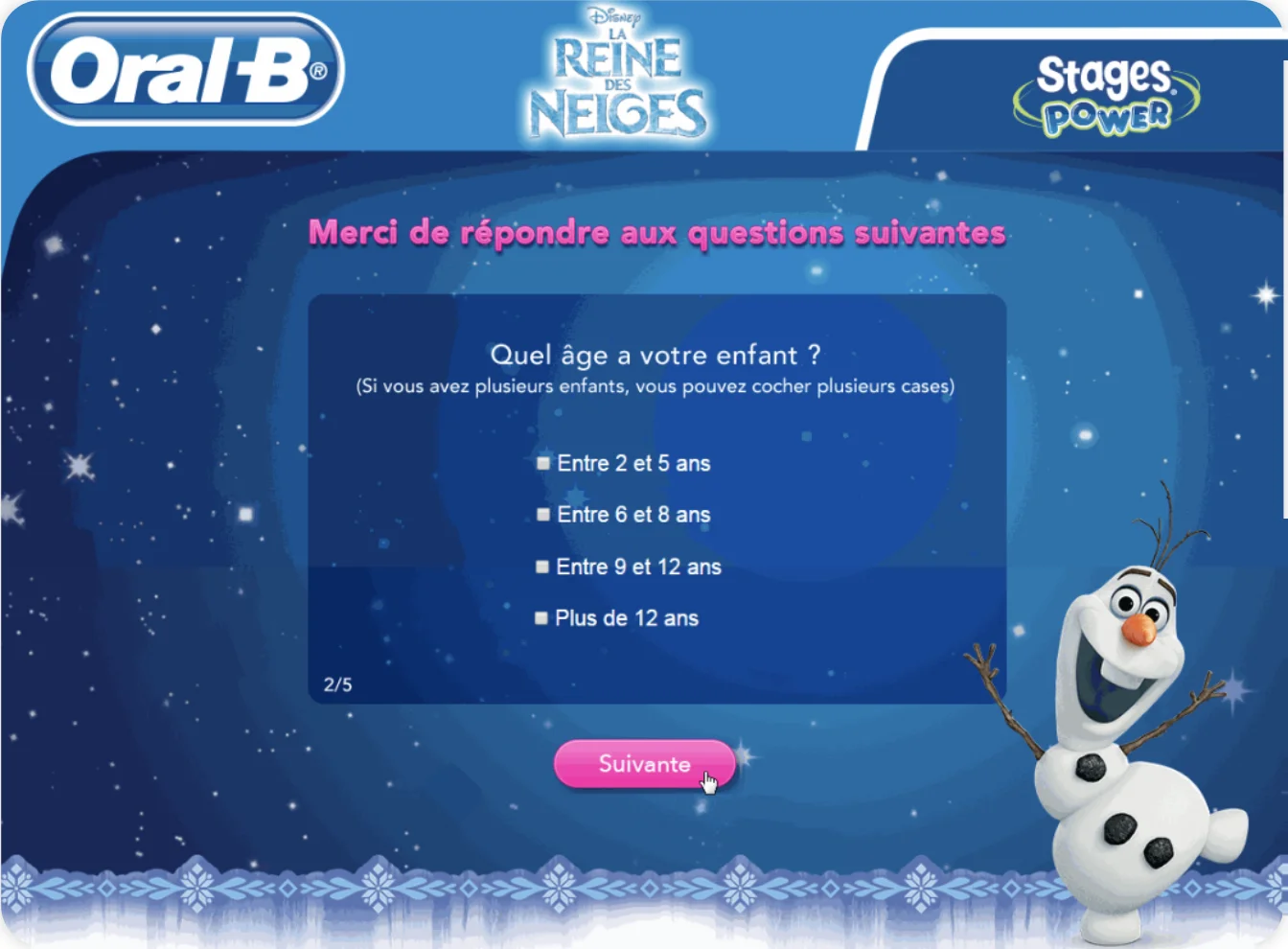
This is the choice Oral-B made with a co-branded interactive campaign focused on children’s oral hygiene. The system was based on a playful survey, designed to collect data on brushing habits. The result: targeted recommendations and adapted incentives (discount coupons, Disney gifts).
This type of activation makes it possible to strengthen customer knowledge and enrich the CRM for future activations. But also to generate qualified traffic to the e-commerce site or physical points of sale. Gaming then increases conversion, without harming the credibility of the healthcare discourse.
Interactive animations to gamify customer journeys in the mutual insurance sector
In a context of growing economic pressure and rising healthcare spending, mutual insurance companies face a double challenge: better controlling costs while strengthening relationships with increasingly volatile and unengaged members.
To address this, prevention is becoming a major strategic lever , not only to limit reimbursements linked to avoidable pathologies, but also to enhance their role in providing daily support. However, they must still succeed in capturing the attention of policyholders and encouraging them to adopt healthier behaviors.
Healthcare gamification is establishing itself as an effective lever for transforming journeys often perceived as restrictive into engaging and educational experiences.
Whether it involves enrollment journeys, health awareness campaigns, or loyalty programs, interactive mechanics make it possible to involve the user throughout the life cycle. Online quizzes, challenges, scoring, or rewards reinforce message retention and encourage virtuous behaviors.
This is the approach chosen by Alan with its Alan Play initiative. This playful platform brings together a series of games and interactive activities centered on mental health, nutrition, or sleep. The goal: to engage policyholders on complex subjects with an accessible tone, without ever sacrificing the rigor of the content.
By integrating game mechanics into their journeys, mutual insurance companies develop a more active relationship with their members. The result: more engagement, more effective prevention, and therefore better economic performance.
Playful co-branding at the service of healthcare partnerships
In an ecosystem where trust, education, and visibility are key, partnerships between healthcare brands allow for the pooling of strengths: scientific expertise on one side, and proximity to audiences on the other.
Gamification allows these campaigns to be transformed into true engagement levers. Indeed, it makes the user experience interactive, which allows for:
- better attention capture,
- simplifies transmitted messages,
- and boosts adherence to best practices.
This is the principle behind the “My health depends on my microbiota”initiative, conducted jointly by PiLeJe, GSK, and Biocodex. Centered around a contest and informative content, the campaign raises awareness about the importance of the microbiota while promoting products related to digestive comfort. All of this in a playful, accessible, and encouraging format.
Another example: the “Wake up in shape” game designed by Arkopharma with Giphar pharmacies. Through a short interactive experience, users learn to identify sleep disorders and receive personalized advice, combined with a product recommendation and an exclusive offer.
How to combine playful engagement and scientific posture in a healthcare gamification campaign?
In the e-health sector, an effective gamified campaign relies on a subtle balance: capturing attention without weakening the credibility of the message. Several levers can be activated to achieve this.
1. Understanding your audience’s needs
Before designing a gamified experience, it is essential to identify the expectations and motivations of your audience. Interactive mechanics such as Quizzes, Tests or Surveys allow for the collection of useful behavioral data: health concerns, awareness levels, and consumption habits. These insights guide the construction of a more targeted message, facilitate segmentation, and reinforce the consistency between the game and the communication objectives.
2. Setting clear boundaries for your e-health game
Healthcare gamification must neither downplay medical issues nor turn the user into a mere marketing target.
To achieve this, it is recommended to:
- Ban unjustified medical claims,
- Avoid overly directive mechanics,
- Not turn the game into a medical diagnosis.
These safeguards must be integrated from the design stage and at every step of the e-health game to ensure it respects the ethical rules specific to the sector, while also reinforcing the organizer’s credibility.
3. Adopting design best practices for a health related contest
For a health gamification campaign to be perceived as legitimate, every element must be thought out with rigor.
- The tone must remain neutral, factual, and educational, without falling into sensationalism.
- The visuals must clearly illustrate the messages without caricature or excessive simplification.
- The vocabulary used benefits from being accessible, while maintaining a certain level of precision to respect the health stakes involved.
It is also essential to ensure consistency between the graphic universe, the game mechanics, and the messages transmitted. For example, an animation on cardiovascular prevention should not be accompanied by overly playful visuals that could undermine the credibility of the subject. Integrating verifiable references, relying on recognized medical sources, or co-constructing content with industry professionals will also reinforce the perceived credibility.
Finally, thinking mobile-first, limiting the number of steps, and testing the journeys in advance make it possible to maintain a good level of engagement without sacrificing the clarity of the message.
4. Tracking the right indicators for a health gamification campaign
E-health game KPIs must go beyond mere participation volume. It is therefore recommended to also measure:
- the completion rate to evaluate the actual engagement of users until the end of the game journey
- the conversion rate (coupon, purchase, membership) to measure the direct impact on expected behaviors
- but also the opt-in rate to quantify the number of participants agreeing to stay in touch
- the data provided to analyze the richness and quality of the information collected
- qualitative feedback on the experience to gather user impressions, satisfaction levels, and suggestions to optimize future campaigns.
These indicators provide a complete vision of the effectiveness of the system, both on a marketing and educational level.
In the healthcare sector, gamification opens up new ways to activate, convert, and build loyalty without distorting the messages. When well thought out, it makes it possible to capture attention, enrich customer knowledge, and encourage good behaviors, all while strengthening your brand image.
If you are looking to engage your audiences with more interactive, educational, and memorable journeys, all that remains is to customize the playful mechanics offered by Adictiz. They will allow you to create campaigns that are compliant, high performing, and adapted to your e-health challenges.