
Bloom: the agentic AI reinventing your marketing games on Adictiz Box

Bloom: the agentic AI reinventing your marketing games on Adictiz Box

In the daily routine of a marketing team, designing a gamified campaign is often a logistical challenge. Between brainstorming original ideas, strictly adhering to brand guidelines, and inevitable back and forth with the creative studio, launch timelines easily stretch into days or even weeks.

To break down these barriers, we are unveiling a major innovation: Bloom, the very first agentic AI built directly into the core of Adictiz Box.

A true creative copilot, Bloom does not just align pixels. It understands game mechanics, adapts to your brand identity, and handles the most time consuming production tasks. Going from several days of design to just a few minutes finally becomes a reality.

Table Of Content

From brief to interactive game in three steps

Generating visuals tailored to Playable Marketing no longer requires advanced technical skills or mastering complex jargon. Where generic image generators demand long prompts for results that are often unusable, Bloom instantly adapts to your operational needs through an ultra smooth workflow:

1. Choose the asset to design

Hero, obstacle, immersive background, or bonus… Simply select the element you need directly within your game mechanic (Piñata, Match 3, Megajump, Scratch Card, Tiny Wings, Pinball…).

2. Enter your prompt with complete freedom

Forget the complexity. Three keywords are all Bloom needs to grasp the intent. You can also give it an ultra specific prompt to refine every detail. Within seconds, the AI generates one to four professional visual options consistent with your brand universe.

3. Integrate the result in 1 click

Select the visual of your choice. With a single click, it inserts directly into your workspace on our game editor, sized to the right dimensions and with no background removal needed.

« With Bloom, we wanted to eliminate all the technical friction slowing down marketing teams. The AI instantly translates creative intuition into a ready to use interactive game asset. » — Laurie, Adictiz Product Team

Graphic consistency and animations: no more creative compromises

Using artificial intelligence raises a common concern among art directors: a lack of visual uniformity and drifting off brand. Bloom has been specifically configured to safeguard these essential brand requirements:

1. Automatic movement variations: in a game, a character must run, jump, catch itemps, or celebrate a win. As soon as your main hero is selected, Bloom automatically creates all their postures and animation variations. You retain the exact same character, art style, and proportions, without any manual retouching.

2. Perfect alignment with your brand identity: connected to the Adictiz Box brand identity module, Bloom naturally applies your colors, typography, and visual codes. Every campaign strengthens brand awareness with your audience without any risk of inconsistency.

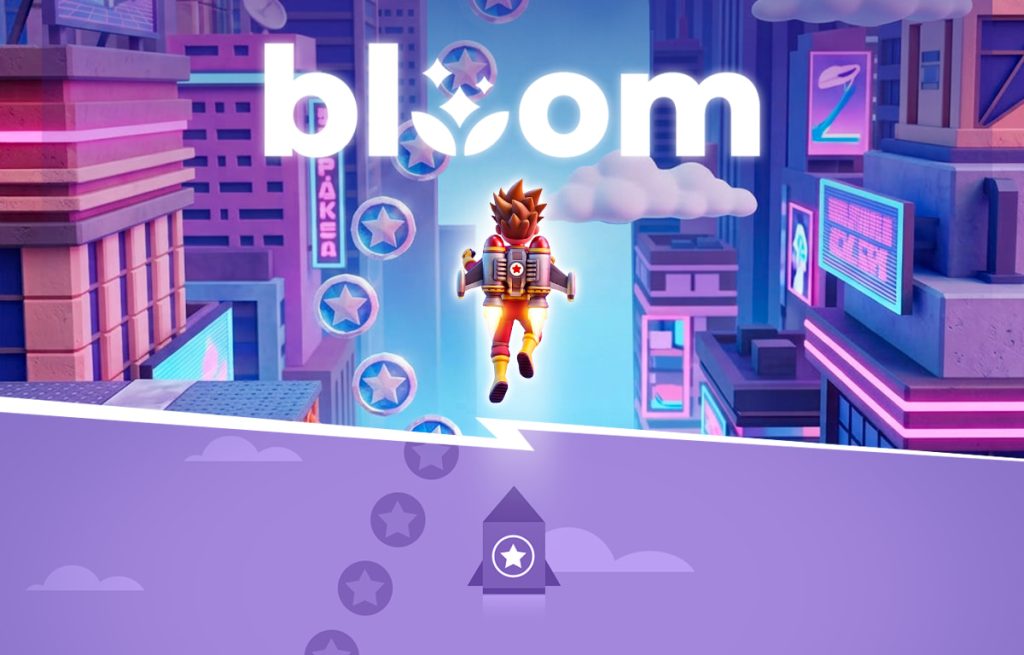
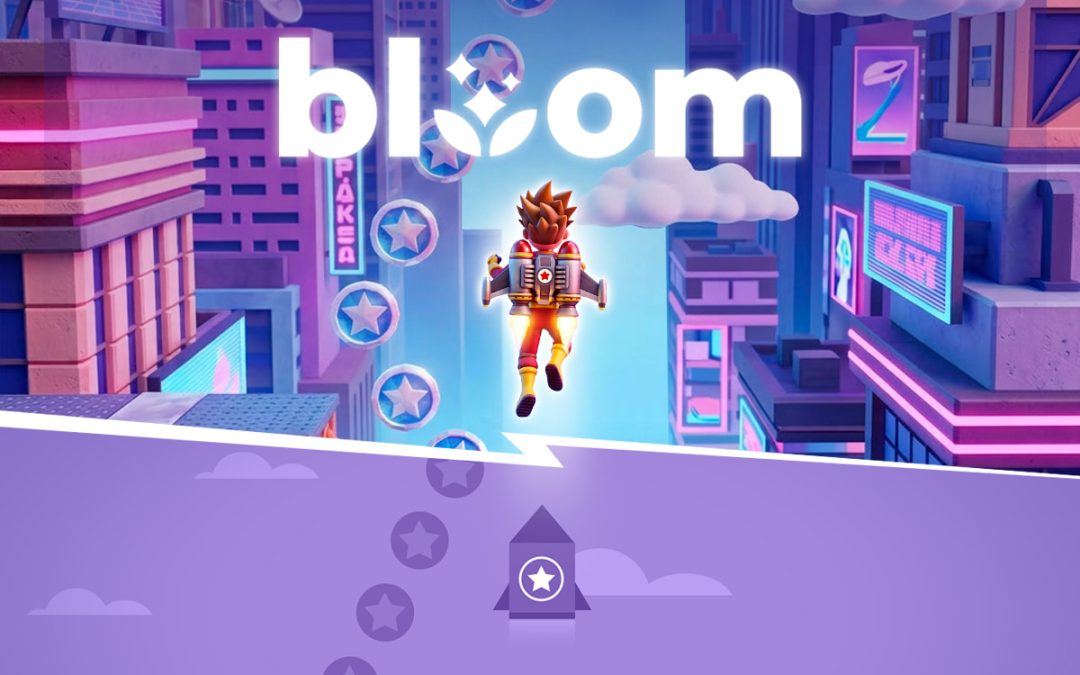
Bloom visual

Much more than an image generator: your future dedicated project manager

Visual generation is only the first building block of what Bloom can do. As an agentic AI, its role extends across the entire lifecycle of your marketing activations:

  • Effortlessly generated mobile version: over 80% of players participate on smartphones. Having to manually reorganize every block and button to switch from desktop to mobile is now a thing of the past. With a single click, Bloom rearranges your mobile view for a smooth and impactful touch experience.
  • Copywriting and legal compliance: Bloom handles writing your marketing hooks, crafts your form copy, manages multilingual translation across your interfaces, and even generates compliant official game rules to protect your campaigns.
  • Performance optimization: through real time analysis of your account consolidated metrics, Bloom will soon be able to suggest user journey adjustments (timer settings, button placement, or number of questions) to maximize your campaign completion rates.

Bloom opens a new chapter for creating interactive campaigns. By combining unprecedented execution speed, absolute adherence to brand guidelines, and native integration with Adictiz Box, your brand now has the ideal tool to engage its audience without technical constraints.

Bloom is now accessible to the public, activate your beta acces on Adictiz Box today.

👉 Try the Bloom beta

Adictiz, the platform to reach
your marketing goals

Engagement, activation, loyalty: how healthcare players use gaming to perform

Engagement, activation, loyalty: how healthcare players use gaming to perform

Faced with increasingly demanding patients and a system in flux, healthcare players must reinvent their engagement levers. What if gaming were one of the keys to activating, involving, and building loyalty.

Mutual insurance companies, laboratories, parapharmacy brands… more and more players are integrating gaming mechanics into their marketing campaigns. The objective: to inform, engage, and build loyalty, without compromising credibility.

In this article, we focus on the concrete uses of healthcare gamification. But also, the levers to activate at each stage of the customer journey as well as the keys to building an experience. One that is effective, relevant, and aligned with the sector’s challenges.

Gamification as a lever for activation and conversion in parapharmacy

In a sector like parapharmacy, direct promotion must be reinforced by other marketing levers to perform. It becomes essential to offer useful and engaging experiences to capture attention, while highlighting product benefits.

Healthcare gamification can address this challenge. By integrating educational content, personalized advice, and commercial benefits into a single journey, it allows for the creation of a more qualitative link with the consumer.

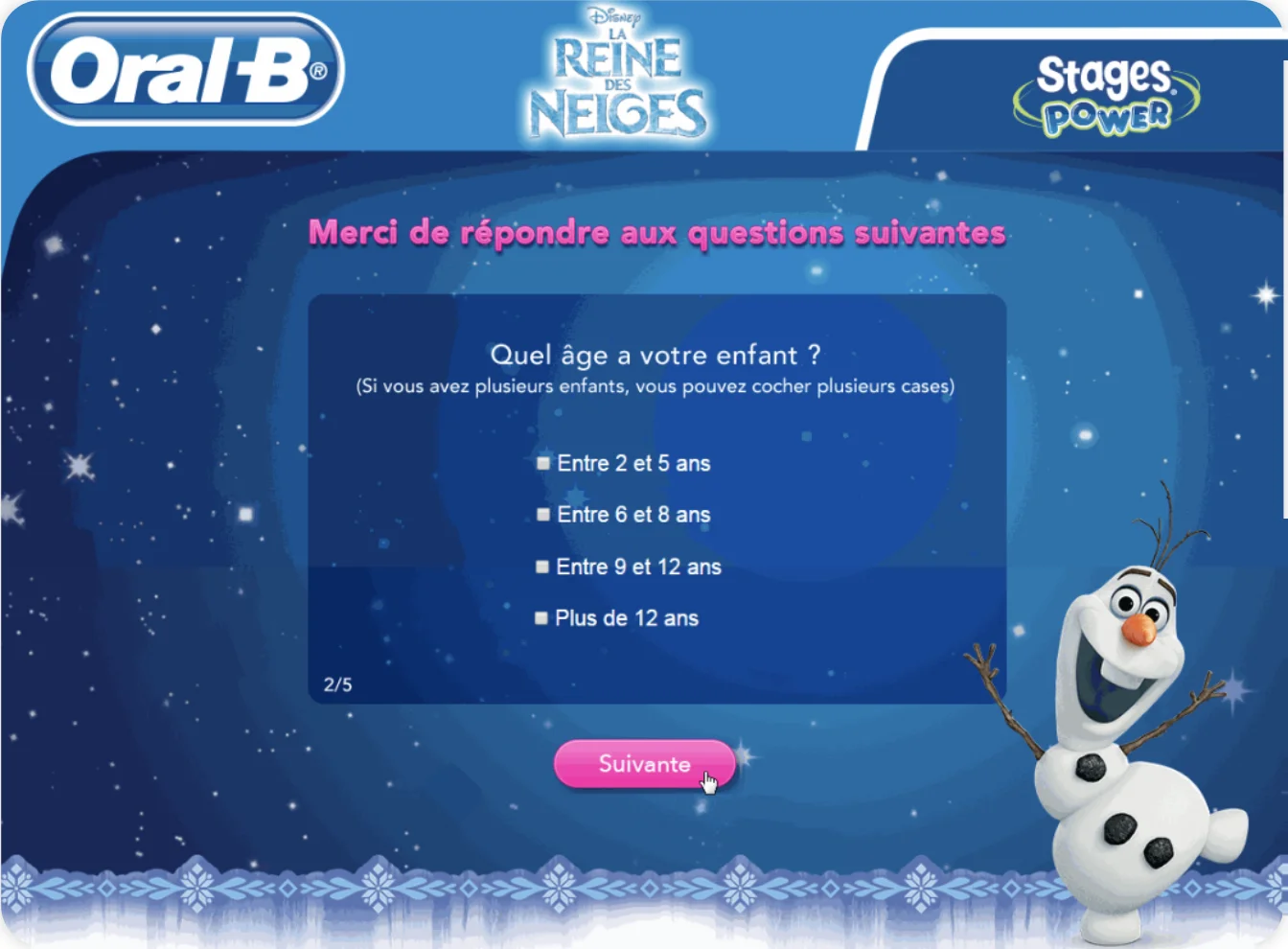
This is the choice Oral-B made with a co-branded interactive campaign focused on children’s oral hygiene. The system was based on a playful survey, designed to collect data on brushing habits. The result: targeted recommendations and adapted incentives (discount coupons, Disney gifts).

This type of activation makes it possible to strengthen customer knowledge and enrich the CRM for future activations. But also to generate qualified traffic to the e-commerce site or physical points of sale. Gaming then increases conversion, without harming the credibility of the healthcare discourse.

healthcare-gamification-Oral-B-mobile
healthcare-gamification-Oral-B-desktop

Interactive animations to gamify customer journeys in the mutual insurance sector

In a context of growing economic pressure and rising healthcare spending, mutual insurance companies face a double challenge: better controlling costs while strengthening relationships with increasingly volatile and unengaged members.

To address this, prevention is becoming a major strategic lever , not only to limit reimbursements linked to avoidable pathologies, but also to enhance their role in providing daily support. However, they must still succeed in capturing the attention of policyholders and encouraging them to adopt healthier behaviors.

Healthcare gamification is establishing itself as an effective lever for transforming journeys often perceived as restrictive into engaging and educational experiences.

Whether it involves enrollment journeys, health awareness campaigns, or loyalty programs, interactive mechanics make it possible to involve the user throughout the life cycle. Online quizzes, challenges, scoring, or rewards reinforce message retention and encourage virtuous behaviors.

This is the approach chosen by Alan with its Alan Play initiative. This playful platform brings together a series of games and interactive activities centered on mental health, nutrition, or sleep. The goal: to engage policyholders on complex subjects with an accessible tone, without ever sacrificing the rigor of the content.

By integrating game mechanics into their journeys, mutual insurance companies develop a more active relationship with their members. The result: more engagement, more effective prevention, and therefore better economic performance.

Playful co-branding at the service of healthcare partnerships

In an ecosystem where trust, education, and visibility are key, partnerships between healthcare brands allow for the pooling of strengths: scientific expertise on one side, and proximity to audiences on the other.

Gamification allows these campaigns to be transformed into true engagement levers. Indeed, it makes the user experience interactive, which allows for:

  • better attention capture,
  • simplifies transmitted messages,
  • and boosts adherence to best practices.

This is the principle behind the “My health depends on my microbiota”initiative, conducted jointly by PiLeJe, GSK, and Biocodex. Centered around a contest and informative content, the campaign raises awareness about the importance of the microbiota while promoting products related to digestive comfort. All of this in a playful, accessible, and encouraging format.

Another example: the “Wake up in shape” game designed by Arkopharma with Giphar pharmacies. Through a short interactive experience, users learn to identify sleep disorders and receive personalized advice, combined with a product recommendation and an exclusive offer.

How to combine playful engagement and scientific posture in a healthcare gamification campaign?

In the e-health sector, an effective gamified campaign relies on a subtle balance: capturing attention without weakening the credibility of the message. Several levers can be activated to achieve this.

1. Understanding your audience’s needs

Before designing a gamified experience, it is essential to identify the expectations and motivations of your audience. Interactive mechanics such as Quizzes, Tests or Surveys allow for the collection of useful behavioral data: health concerns, awareness levels, and consumption habits. These insights guide the construction of a more targeted message, facilitate segmentation, and reinforce the consistency between the game and the communication objectives.

2. Setting clear boundaries for your e-health game

Healthcare gamification must neither downplay medical issues nor turn the user into a mere marketing target.

To achieve this, it is recommended to:

  • Ban unjustified medical claims,
  • Avoid overly directive mechanics,
  • Not turn the game into a medical diagnosis.

These safeguards must be integrated from the design stage and at every step of the e-health game to ensure it respects the ethical rules specific to the sector, while also reinforcing the organizer’s credibility.

3. Adopting design best practices for a health related contest

For a health gamification campaign to be perceived as legitimate, every element must be thought out with rigor.

  • The tone must remain neutral, factual, and educational, without falling into sensationalism.
  • The visuals must clearly illustrate the messages without caricature or excessive simplification.
  • The vocabulary used benefits from being accessible, while maintaining a certain level of precision to respect the health stakes involved.

It is also essential to ensure consistency between the graphic universe, the game mechanics, and the messages transmitted. For example, an animation on cardiovascular prevention should not be accompanied by overly playful visuals that could undermine the credibility of the subject. Integrating verifiable references, relying on recognized medical sources, or co-constructing content with industry professionals will also reinforce the perceived credibility.

Finally, thinking mobile-first, limiting the number of steps, and testing the journeys in advance make it possible to maintain a good level of engagement without sacrificing the clarity of the message.

4. Tracking the right indicators for a health gamification campaign

E-health game KPIs must go beyond mere participation volume. It is therefore recommended to also measure:

  • the completion rate to evaluate the actual engagement of users until the end of the game journey
  • the conversion rate (coupon, purchase, membership) to measure the direct impact on expected behaviors
  • but also the opt-in rate to quantify the number of participants agreeing to stay in touch
  • the data provided to analyze the richness and quality of the information collected
  • qualitative feedback on the experience to gather user impressions, satisfaction levels, and suggestions to optimize future campaigns.

These indicators provide a complete vision of the effectiveness of the system, both on a marketing and educational level.

In the healthcare sector, gamification opens up new ways to activate, convert, and build loyalty without distorting the messages. When well thought out, it makes it possible to capture attention, enrich customer knowledge, and encourage good behaviors, all while strengthening your brand image.

If you are looking to engage your audiences with more interactive, educational, and memorable journeys, all that remains is to customize the playful mechanics offered by Adictiz. They will allow you to create campaigns that are compliant, high performing, and adapted to your e-health challenges.

In 30 minutes, we show you how to launch your own high-performance interactive marketing campaign

Regional marketing: how to develop the appeal of a place through gamification

Regional marketing: how to develop the appeal of a place through gamification

Le marketing territorial a le vent en poupe. Avec l’essor du tourisme de proximité, les collectivités et acteurs touristiques locaux cherchent à promouvoir leur destination auprès des voyageurs. Pour se faire connaître et donner envie de partir à la découverte de son territoire, les acteurs du tourisme peuvent faire appel à la gamification. Ce levier innovant leur permettra de capter l’attention de leur audience et de les engager avant et après leur voyage !

What is regional marketing?

Le marketing territorial (on parle aussi de marketing régional ou marketing du tourisme) correspond à l’ensemble des leviers de communication mis en place pour faire la promotion d’une destination (ou des services liés à sa découverte). 

Le principal objectif du marketing territorial est donc d’attirer les voyageurs en leur donnant l’opportunité de réserver des nuitées, des excursions sur place ou toutes autres prestations touristiques mettant en valeur le patrimoine culturel d’une localité.

The challenges of regional marketing

You can’t sell a tourist destination in the same way as you would a traditional product. The challenges of tourism marketing are specific, not least because they are part of a different timeframe. Interest in a destination will vary according to the season, but also according to holidays (particularly school holidays) and local events. The time between booking and departure is not the same either.

Companies therefore need to manage the wait before holidays start, by reassuring travellers and offering them resources to help them prepare for their stay.

Discovering a travel destination is also less tangible than a traditional product or service. That’s why it’s so important to create immersive marketing experiences that let you project yourself into a place you know nothing about. Territorial marketing also relies much more heavily on recommendations from previous travellers, who will play a key role in the appeal of a destination and the establishment of a relationship of trust.

Finally, those involved in tourism marketing also have to deal with increasingly intense competition. Destinations are vying with each other to capture the attention and arouse the curiosity of travellers who may be in the four corners of the world. Tourism operators must also adapt to the new expectations of travellers, who are looking for more authentic experiences and opportunities to mingle with the locals.

3 steps to strengthening your regional marketing strategy

Pour répondre à ces enjeux spécifiques au marketing territorial et se démarquer de leurs concurrents, les acteurs du secteur peuvent : 

1. Réaliser un diagnostic de leur territoire pour identifier sa proposition de valeur unique. Chaque destination a un attrait spécifique, des traditions et un terroir à mettre en avant auprès des voyageurs. Ce diagnostic permettra non seulement de créer un message marketing plus impactant, mais aussi d’identifier les cibles les plus pertinentes auprès desquelles le délivrer. 

2. Créer des expériences immersives incitant au départ. Pour donner envie de réserver ses vacances dans un territoire que l’on a souvent jamais visité, il faut pouvoir en partager un aperçu fidèle et attractif. La gamification peut être un excellent moyen d’immerger son audience dans un univers propre à son terroir afin non seulement d’inciter à la réservation, mais aussi de manager l’attente avant le départ. 

3. Concevoir une stratégie marketing omnicanale. Pour porter ses fruits, le plan de communication mis en place doit non seulement décliner les différentes promesses faites aux voyageurs (via des campagnes ciblées). Mais aussi être diffusé sur différents canaux marketing afin de toucher le public le plus large possible et multiplier les points de contact avec les voyageurs intéressés. Les acteurs du tourisme peuvent par exemple faire appel à des influenceurs ou encore créer des campagnes de co-branding avec des marques offrant des services complémentaires, etc. 

Gamification to boost regional marketing

Gamification, which involves incorporating playable interactions into marketing campaigns, is an excellent strategy for tourism operators. By offering immersive, playful experiences to their audience, they can help them discover their destination and make them want to set off to explore it.

1. Discover your destination

First and foremost, playable marketing is an excellent way ofraising the profile of your region. The game will give travellers the opportunity to immerse themselves in a new environment, maximising the time they spend with the company and therefore their desire to discover the destination.

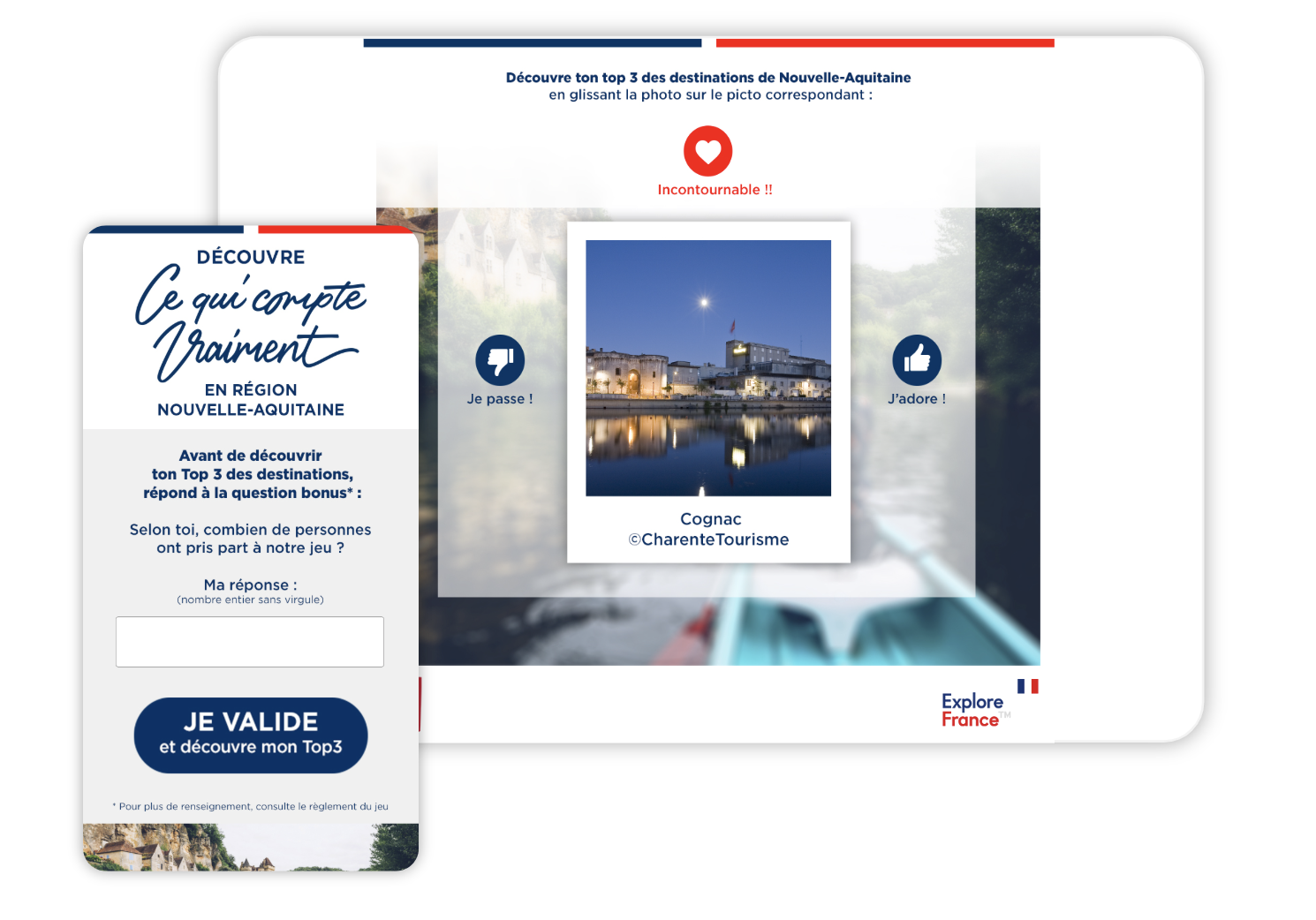
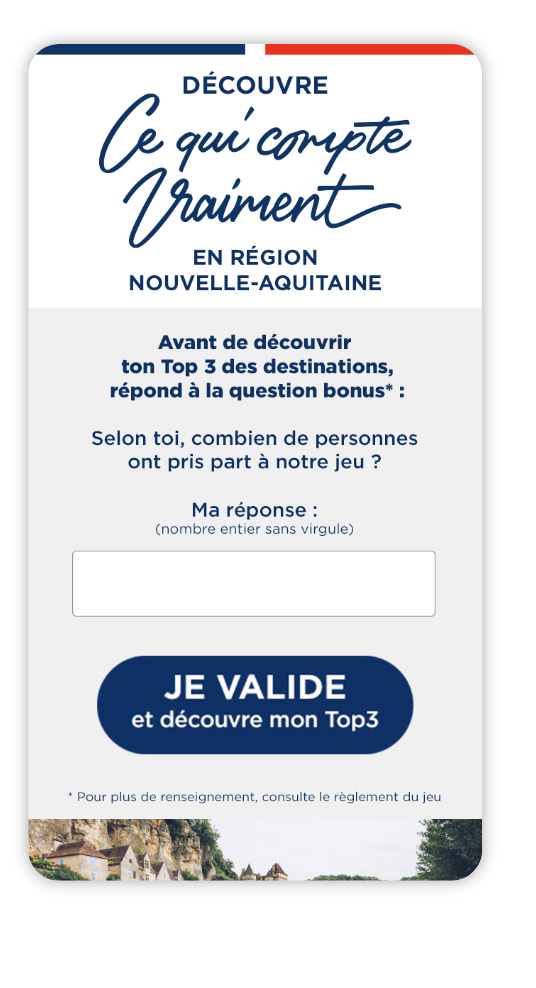
The Nouvelle-Aquitaine region, for example, launched a Swiper competition to promote its landscapes to travellers from neighbouring countries. Supported by a targeted media campaign, the aim of the operation was to encourage people to discover the region. The game highlighted the diversity of the region’s landscapes and enabled the region toidentify participants’ preferences. The region was then able to target its retargeting campaigns at the destinations most attractive to them.

Nouvelle-Aquitaine region - regional marketing
Nouvelle-Aquitaine-mobile

2. Engaging your audience with a marketing game

The challenge of regional marketing is to showcase your destination and capture the attention of travellers as they start to plan their next holiday. So there’s a real need to keep the audience entertained, all year round, to ensure that your region remains top of mind and attractive.

Interactive events, because they are fun and engaging, are an excellent way of generating curiosity among tourists and encouraging them to take action by giving them the chance to win attractive prizes (particularly discounts on their bookings).

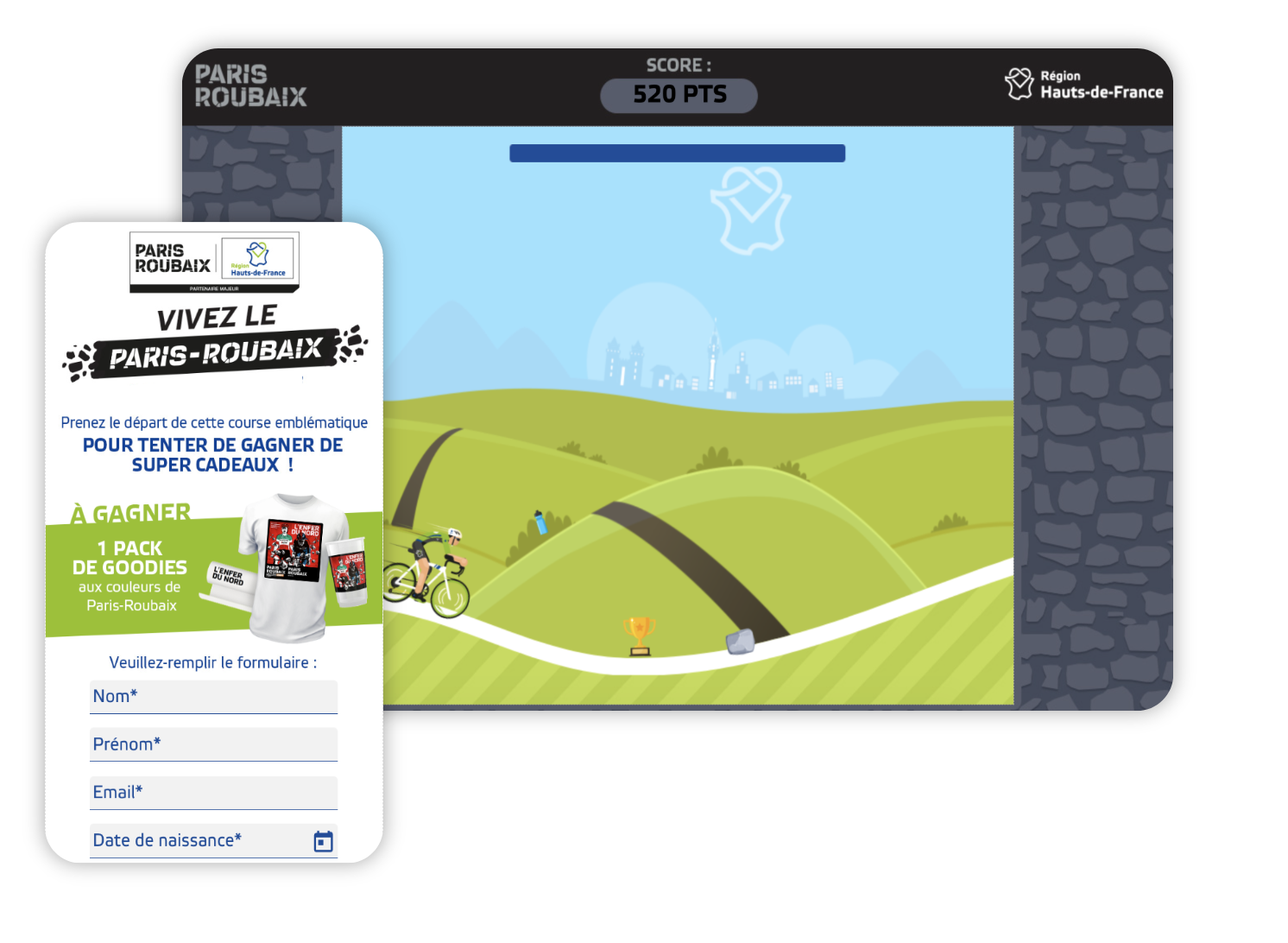
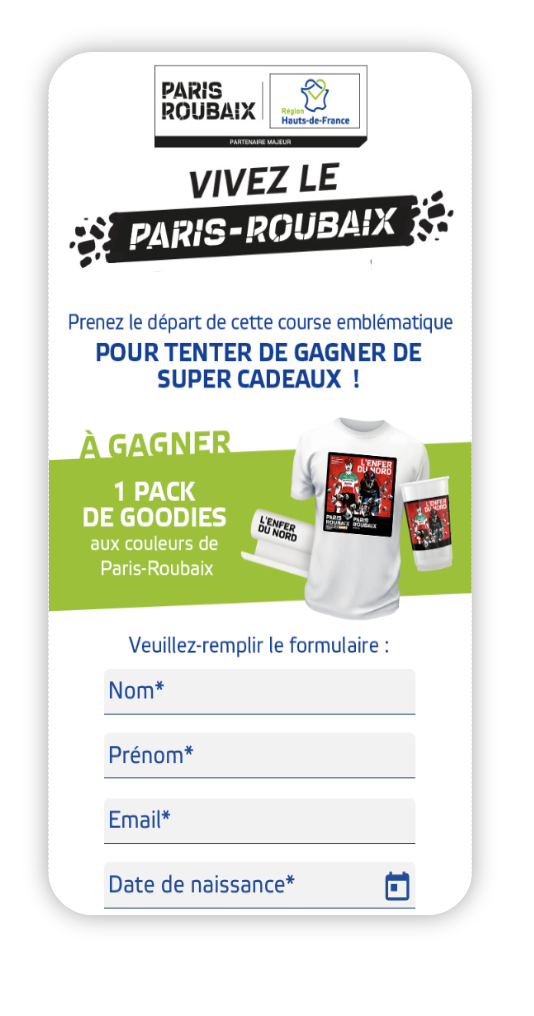
The Hauts-de-France Region, for example, launched a campaign around the Paris-Roubaix race to engage its regional audience by immersing them fully in this iconic event. The game raised the profile of the race, with a high level of engagement: on average, each player played 2.12 games and spent more than 5 minutes on the game.

Paris-Roubaix - regional marketing
Paris-Roubaix - mobile

3. Make tourists want to come back

Marketing games can be an excellent way of building loyalty among travellers and persuading them to return by strengthening their attachment to the destination. Gamification can, for example, boost the effectiveness of a loyalty programme, as the Marriot Bonvoy hotel chain is doing. With each new booking, travellers can unlock exclusive games and access unique benefits (to upgrade their room, be offered additional services, etc.).

Conclusion

La gamification est un excellent moyen pour les spécialistes du marketing territorial de booster l’attractivité de leur destination. Captez l’attention des voyageurs et donnez-leur envie de découvrir votre terroir en les engageant via des animations immersives. Adictiz vous propose un catalogue de jeux marketing à personnaliser pour générer plus de réservations !

In 30 minutes, we show you how to launch your own high-performance interactive marketing campaign