

Valentine’s Day Campaign: create engagement to boost your marketing performance

Valentine’s Day Campaign: create engagement to boost your marketing performance

Valentine’s Day remains a strategic occasion for all brands, even beyond traditional industries. Each campaign offers a unique opportunity to generate leads, boost conversions, and build customer loyalty.

By creating engaging and inclusive experiences
, brands can better capture the attention of highly sought-after audiences. Gamification amplifies this impact by making interactions more playful and memorable.

This article explains why gamifying your Valentine’s Day marketing campaign works and how to launch impactful contests aligned with your strategic goals.

SUMMARY

  • Why is Valentine’s Day a key marketing moment to leverage?
  • Why launch a contest for Valentine’s Day?
  • Which Gamified Formats Create an Engaging Valentine’s Day?
  • 3 tips to boost the performance of your Valentine’s Day campaign
  • Q&A – Valentine’s Day marketing campaign

Why is Valentine’s Day a key marketing moment to leverage?

Valentine’s Day represents a significant consumption peak in France. Last year, the French spent 154 euros on this party, across all sectors. Beyond the revenue generated, this period offers a unique opportunity for brands.

It is an ideal time in the marketing calendar to generate new leads and reactivate dormant contacts after the intensity of the holiday season. Valentine’s Day also allows brands to strengthen their image around positive values, such as generosity and sharing.

Gamified campaigns are particularly effective at engaging the community. They reward loyalty, encourage interaction, and collect precise customer data. This information helps to better understand audience expectations and refine marketing actions.

By combining engagement, data collection, and playful experiences, Valentine’s Day becomes a strategic lever to boost marketing performance and foster long-term customer loyalty.

Why launch a contest for Valentine’s Day?

Gamification works for Valentine’s Day because it transforms the interaction between the user and the brand into a memorable experience.. Contests capture attention through engaging mechanics such as challenges, progression, or the promise of an immediate reward. These formats encourage participation and extend the time spent with the brand, enhancing recall of its offerings.

By playing, participants willingly share information such as preferences, interests, or purchasing behavior. This data enriches the CRM database and allows for the personalization of future marketing actions. Contests also support the acquisition of new prospects. Social sharing and incentives like discount vouchers encourage participants to invite their network, increasing reach and the conversion rate of a Valentine’s Day marketing campaign.

When integrated into a complete marketing journey (teasing, activation on the day, post-game follow-ups), these initiatives create continuous and measurable engagement, strengthening loyalty and campaign performance.

Which gamified formats make Valentine’s Day engaging?

To effectively engage your audience on Valentine’s Day, certain game mechanics prove especially well-suited. According to the brand’s marketing objectives (lead generation, conversion, or loyalty), it’s possible to deploy formats that drive participation while collecting actionable data.

Lead generation: Memory game

The Memory game mechanic stimulates user curiosity while making it easier to collect qualified leads. For Valentine’s Day, Lux Airport launched a mobile Memory game accessible via a QR code. Passengers could win vouchers to use in the duty-free shops. This activation boosted conversions while enriching the brand’s CRM database.

valentines-day-lux-airport-cases
valentines-day-lux-airport-mobile

Conversion: Wheel of Fortune

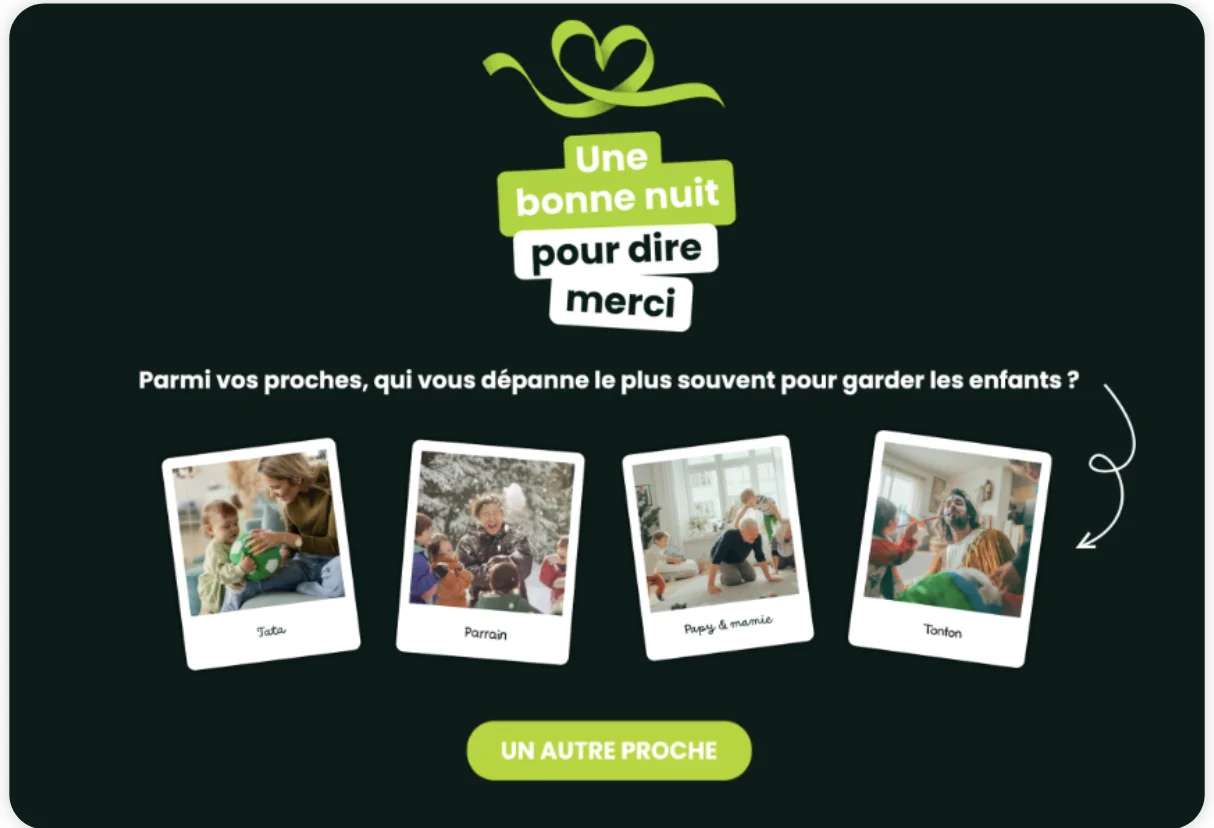
The Wheel of Fortune The Wheel of Fortune works by offering an immediate reward, motivating participants to engage for a chance to win. BZB used this mechanic to distribute vouchers for Valentine’s Day. This playful approach generated over 60% opt-ins, boosting conversion while actively engaging the community during the peak period.

valentines-day-mobile
valentines-day-wheel-of-fortune

Data collection and loyalty: Battle game

The Battle game mechanic involves asking participants to choose between two images, which represent products, services, or offers. This engaging format allows for the collection of precise data on user preferences (tastes, interests, or purchasing behavior). By incorporating this mechanic into a Valentine’s Day campaign, brands can enrich their CRM database with both qualitative and quantifiable information. This facilitates audience segmentation and offer personalization, thereby strengthening loyalty and post-purchase engagement.

3 tips to boost the performance of your Valentine’s Day campaign

To maximize the impact of a Valentine’s Day campaign, it is essential to combine visibility, engagement, and performance tracking.

  • Maintain a presence across all channels (web, mobile, social media, email, and physical stores). This presence multiplies touchpoints and increases the chances of capturing attention at the right moment.


  • Engage your audience throughout the journey : teaser before the event, activate participants on the day, and follow up after purchase. This continuity encourages immediate conversion and stimulates repeat purchases through more contextualized and personalized interactions. Brands can, for example, tailor campaign content (message, visuals) and personalize rewards based on previous user interactions or the stage of the customer journey.


  • Track KPIs and adjust in real time : for example, the click-through rate (CTR) on emails or participation forms, and the game completion rate. If the CTR is low, try new visuals or modify the call to action. If the completion rate is low, simplify the mechanic or highlight the rewards to encourage participation.


This approach allows you to get the most out of your Valentine’s Day campaign, maximizing performance in terms of engagement, conversion, and loyalty.

Q&A – Valentine’s Day marketing campaign

How to stand out for Valentine’s Day?

To stand out on Valentine’s Day, it’s essential to create an original marketing campaign. Interactive experiences or personalized offers help capture attention in a highly competitive context. Incorporating visually themed content and social mechanics (sharing, etc.) further amplifies the campaign’s impact.

What strategy can boost your conversion on Valentine’s Day?

An effective strategy to boost conversion on Valentine’s Day combines precise segmentation, personalized offers, and a multi-channel journey. Valentine’s Day marketing campaigns that use contests and tailored rewards drive engagement and increase purchase rates. Tracking KPIs allows for real-time campaign adjustments.

Which contest can engage your audience on Valentine’s Day?

The Memory game, Instant Win Contests or Battles, drive active engagement by encouraging participants to interact with the brand. These formats help strengthen audience engagement and enrich the CRM with first-party data, while boosting virality and, consequently, the campaign’s organic reach.

How to retain customers after a Valentine’s Day campaign?

After a Valentine’s Day campaign, marketing games help extend engagement with already converted customers. By leveraging the collected data (preferences, behaviors, interests), brands can offer personalized and more relevant promotions. This approach strengthens loyalty, encourages repeat purchases, and turns a one-time interaction into a long-term customer relationship.

Valentine’s Day is a key moment to engage your audiences and boost your performance. Gamification transforms your campaigns into interactive, captivating, and personalized experiences, while enriching your CRM. By designing contests tailored to your objectives and audiences, you stand out and maximize the impact of your communication during this peak period. Adictiz supports you in managing your game mechanics to generate more engagement and conversions.

In 30 minutes, we show you how to launch your own high-performance interactive marketing campaign

Can health be gamified? Awareness and prevention in the age of gaming

Can health be gamified? Awareness and prevention in the age of gaming

Health is a highly regulated field, sensitive, and sometimes taboo. Certain topics are delicate or complex to address. Prevention campaigns also have to engage diverse audiences, who are often difficult to reach.

To capture attention in prevention campaigns, relying on original and interactive formats can make a real difference. When used wisely, gaming is a powerful tool to inform, raise awareness, and motivate. It helps convey difficult messages, enhances retention, and fosters engagement on topics that are otherwise unappealing.

This article explores the issues and opportunities of gamification in health.
It examines how this approach can support prevention, therapeutic education, and the adoption of healthy behaviors. We also share practical advice for laboratories, health insurers, insurance companies, and e-health startups looking to energize their marketing and communicate more effectively with their target audiences.

Can a topic as sensitive as health be gamified? The paradox of gaming

Combining health and gaming may seem contradictory. The former evokes rigor, confidentiality, and life-or-death stakes. The latter suggests fun, entertainment, and fiction. Yet, it is precisely because it surprises that gamification works in health.

Gaming captures attention. It makes messages more accessible and helps simplify complex concepts. The playful formats such as Quizzes, Puzzles, or Contests also help to reduce anxiety around the topic, without downplaying its importance.

According to a study conducted by the University of Colorado Denver, a study conducted by the University of Colorado Denver found that serious games (whose primary goal is learning rather than entertainment) increase retention by 14% compared to passive methods. Gamification in health thus promotes learning through action, repetition, and reward, transforming information into a unique and therefore memorable experience.

Gamification also helps reach audiences who are difficult to engage: young people, for example. Less informed about their health and often more exposed to risks, they are generally unreceptive to traditional messages. Gaming can speak their language and also encourage adherence to prevention messages, whether related to mental health, addictions, or screenings.

In summary: gaming does not replace traditional campaigns; it complements them. In some cases, it even enhances their impact.

E-health serious games: which gamified formats really work?

Gaming can definitely be adapted to the health sector, but it must align with its specific issues. These include message reliability, fostering engagement without being patronizing, and compliance with regulations. Some formats, already tested, effectively meet these requirements. Here are three mechanics that have proven successful in the field.

1. Quizzes to test knowledge

The Quiz is a simple and straightforward format that allows clear messages to be conveyed while measuring participants’ knowledge levels. It can be adapted to any topic, including the most sensitive ones. In health, it promotes awareness without judgment by making the information interactive and personalized.

The Sauvegarde du Nord association used this mechanic in a prevention campaign aimed at young people. The quiz covered several topics: addictions, sleep, road safety, and nutrition. The goal was to: engage an audience that is difficult to reach and strengthen the impact of the messages. The campaign allowed organizers to assess participants’ knowledge and guide future field actions—a strategy useful for tailoring communication to each profile.

alcohol-prevention-sauvegarde-du-nord

2. Surveys to collect relevant data

The survey allows users to be directly asked about their health behaviors, expectations, and obstacles. It provides valuable data to segment the audience and thereby refine future prevention campaigns by delivering more targeted messages to each user.

The Wakamola initiative in Spain used an interactive survey to collect information on diet, physical activity, and BMI. The responses allowed participants to be segmented according to their health profile and receive tailored advice. A simple, effective, and replicable format for enhancing the personalization of awareness-raising actions.

3. Interactive tests for raising awareness

Interactive tests rely on engaging storytelling. By placing the user in a scenario, they place the user in a scenario, facilitating identification and enhancing retention of prevention messages. This format also captures attention longer than static content, allowing for deeper exploration of complex topics.

The Take‑Care serious game developed by France Assos Santé, raises awareness among 16-25 year olds about their health rights. The user embodies Farid, a young person seeking answers about their medical coverage, consent to care, or medical confidentiality. Through scripted choices, the test addresses complex subjects in a practical and educational way. An effective strategy for engaging a young and often poorly informed target audience.

5 tips for addressing the issues of gamification in health

Gamification can enhance the impact of health messages, provided certain balances are respected. The goal is not to entertain at all costs, but to use the game as an educational lever. Here are five best practices for designing an effective, engaging, and relevant campaign for the issues of the health sector.

1. Finding the Right Balance Between Playfulness and Information

The user experience must always serve the message being conveyed. In health marketing, it is therefore necessary to prevent the playful aspect from overriding essential information. Integrating clear, precise, and validated content enhances credibility.

Every element of the game must support the transmission of the message, without unnecessary distractions. For example, it is advisable to insert short explanations after each step to consolidate participants’ knowledge. The rhythm must alternate between moments of playful engagement and learning phases. This way, the game captures attention while facilitating memorization.

2. Respecting Medical Ethics and the GDPR

Any health gamification campaign must adhere to a strict framework. The messages disseminated must comply with medical recommendations and be validated by experts. Regarding data, the GDPR mandates transparency on their collection, processing, and storage. Responses must also be anonymized if statistical analysis does not require identification. In case of nominative data collection, explicit consent is essential.

3. Choosing the Right Gamification Format Based on Campaign Stakes

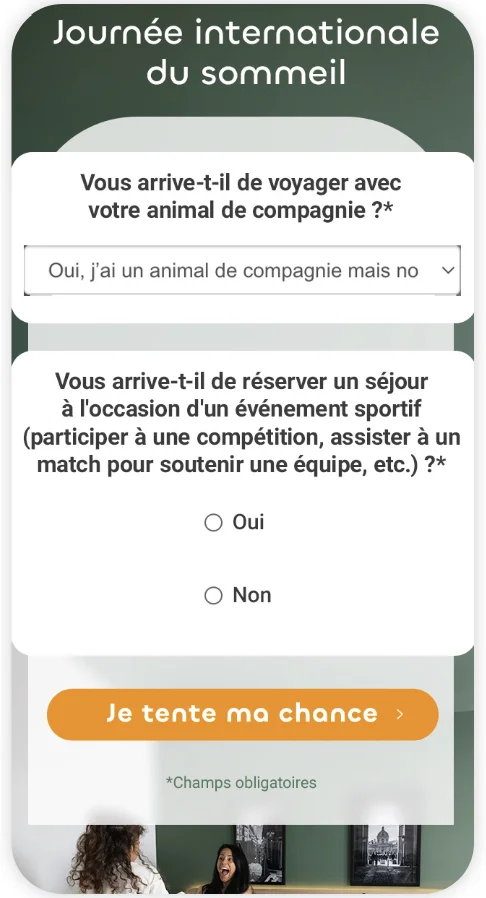
The choice of format must be adapted to the objectives and the target audience. To raise awareness about screening, an interactive quiz will make it possible to test knowledge while providing information. For nutrition, a simulation or a choice-based game (such as a Swiper for example) will encourage an awareness of the impact of behaviors. Sun prevention, on the other hand, will benefit from simple mechanics such as Memory to attract attention and deliver quick prevention messages or advice.

4. Relying on Co-branding to Strengthen the Credibility of Your e-Health Serious Game

Co-branding associates several recognized stakeholders, such as laboratories, associations, or foundations. This collaboration provides essential scientific endorsement for the credibility of the serious game e-health. It reassures users about the reliability of the content and the rigor of the messages. Furthermore, it facilitates dissemination through partner networks. In health marketing, this legitimacy strengthens the impact of campaigns and encourages public adoption.

5. Tracking a Mix of Health and Marketing KPIs

To evaluate a gamified health campaign, several key indicators must be combined.

  • Adhesion measures the number of engaged participants.
  • Progression tracks advancement through the playful journey, demonstrating interest.
  • The conversion rate analyzes the impact on concrete actions, such as making an appointment or subscribing to a health offer.
  • Finally, offline behaviors (modification of habits, medical consultations) reflect the real effectiveness of the campaign on health.


This mix of KPIs allows for campaign adjustment and maximization of benefits, both for the health of the target audience and for the strategic benefits for the organization disseminating it (awareness, trust, engagement, etc.).

Gamification is therefore a powerful lever for maximizing the impact of health marketing campaigns. It captures attention, facilitates access to complex topics, and engages audiences who are often unreceptive. Discover our playful mechanics and easily create your e-health serious game while ensuring compliance with the regulatory requirements of your sector.

In 30 minutes, we show you how to launch your own high-performance interactive marketing campaign

2026 marketing calendar: key moments for high-performing campaigns all year long

2026 marketing calendar: key moments for high-performing campaigns all year long

In 2026, marketing performance cannot be left to chance. The brands that will succeed are those that have managed to plan and pace their communication consistently throughout the year.

A well-planned 2026 marketing calendar ensures you engage your audience at the right time while aligning your budget with business goals. Each key event then becomes an opportunity to drive concrete results: data collection, engagement, conversion, loyalty, and more.

In this article, we highlight the key dates in the upcoming marketing calendar and explain how to make the most of their commercial potential.

SUMMARY

  • Why the 2026 marketing calendar is essential for your marketing performance?
  • Gamification to better engage and convert during key moments
  • 3 examples of interactive mechanics to deploy throughout 2026
  • Measuring and improving the business impact of your marketing campaigns
  • Q&A – 2026 marketing calendar

Why the 2026 marketing calendar is essential for your marketing performance?

A 2026 marketing calendar is not just a simple list of dates. It is a strategic tool to anticipate the upcoming year’s highlights: sales, holidays, industry events, or key dates. This clear vision helps brands identify the moments that matter to their audiences and ensures they never miss an opportunity to engage and convert them.

Planning ahead also ensures greater consistency. Campaigns fit seamlessly into the year and revolve around clear, quantifiable business objectives. The result: more fluid, effective, and memorable communication.

The 2026 marketing calendar finally plays a key role in managing your marketing budget. By allocating budgets wisely over twelve months, it becomes possible to maximize each investment and avoid inefficient spending peaks.

2026 Highlights calendar

Gamification to better engage and convert during key moments

Gamification involves incorporating playful mechanics into a marketing strategy. It relies on interactivity and game elements to capture the attention of a highly distracted audience. By making the experience more immersive, it drives engagement and encourages action, whether signing up for a mailing list, sharing an offer on social media, or purchasing a product with a discount code.

Another advantage of gamification for activating your marketing calendar
: is its flexibility. Game mechanics (quizzes, instant-win games, battles, prize wheels) can be adapted to any key moment. Each format can be designed to fit the context of an event and the strategic objectives associated with it. A quiz to mark the back-to-school season, a wheel for Black Friday, or an Advent calendar at the end of the year.

This variety allows for communication that is always relevant, aligned with current expectations, and keeps campaigns engaging throughout the year without ever tiring the audience.

3 examples of interactive mechanics to deploy throughout 2026

Each key moment has its own specifics: consumer expectations, purchasing context, and level of competition. Adapt the gamification mechanic allows addressing these challenges while maximizing business results. Here are three effective formats to deploy depending on the nature of the key moment and the objective pursued.

1. Collect customer data with a Quiz

The Quiz captures attention by sparking the curiosity of audiences eager to test their knowledge or learn more about themselves. For brands, it is an excellent data collection tool, with each answer enriching customer insights with precise information about participants’ preferences, habits, or purchase intentions. The first-party data then feeds into the CRM, refines customer segmentation, and enables the optimization of future campaigns.

Examples:

  1. a “What’s the perfect gift for your partner?” quiz for Valentine’s Day,
  2. “which destination suits you best?” quiz before the holiday season,
  3. “what gift idea for Mom?” quiz for Mother’s Day.

2. Engage your audience with a contest

Contests help reactivate your audience and boost participation by challenging them to complete a task for an attractive reward. It maintains brand engagement and generates regular interactions during slower commercial periods.

Examples:

  1. a digital Easter Egg Hunt (Hidden Objects)
  2. a costume Photo Contest for Halloween
  3. a back-to-school story Contest

3. Drive conversions during a key moment with an Instant Win game

The Instant Win game leverages the immediacy of the reward. It turns curiosity into quick action and fits perfectly with a promotional key moment in the 2026 marketing calendar. This format is ideal for driving impulse purchases and boosting short-term sales.

Examples:

Measuring and improving the business impact of your marketing campaigns

To boost the performance of their 2026 marketing calendar, brands need to rely on rigorous campaign tracking and content adjustments.

Here are three levers to use for measuring and improving the impact of marketing actions:

  • Build on the results of previous years
    Track metrics such as the number of leads generated, conversions, re-engagement rate, or CRM impact. This data will help optimize new campaigns throughout the year.
  • Select the most relevant key moments
    There’s no need to focus on every date. It’s better to choose those that resonate with your audience to reduce ad fatigue, optimize your marketing budget, and ensure campaign visibility, especially through paid media.
  • Maintain annual consistency
    Establishing a regular schedule for publishing and engagement encourages immediate conversions and drives repeat purchases. This consistent thread enhances the impact of each activation and supports long-term revenue.

Q&A – 2026 marketing calendar

What are the key marketing highlights to integrate in 2026?

Key highlights to anticipate in your 2026 marketing calendar include major holidays (Valentine’s Day, Mother’s Day), sales events (summer/winter), Black Friday, Christmas, as well as industry-specific or ephemeral events like « Veganuary » or Earth Day.

What strategies can be used to engage audiences throughout 2026?

To energize your 2026 marketing calendar, use gamification at every stage: quizzes, instant win games, and interactive wheels. Adapt the format based on the objective (acquisition, conversion, loyalty) and use it for every highlight to maintain constant engagement.

How to choose the relevant thematic days for your brand?

Select dates that align with your brand universe and your customers, and do not position yourself exclusively on the most visible ones. This ensures good budget usage, avoids over-solicitation, and reinforces the coherence of your marketing strategy, with priority given to high-potential commercial events.

How to leverage unexpected or emerging events in 2026?

Stay on the lookout for trends (e.g., Awareness Day, viral phenomenon) to integrate them into your 2026 marketing calendar. These opportunities bring freshness to your communication and encourage spontaneous, agile, and engaging content.

Boost your sales performance in 2026 by planning your marketing calendar in advance. Adictiz supports you in setting up and deploying your campaigns throughout the year. Discover our interactive campaigns, which can be adapted to every highlight, and boost the visibility of your messaging thanks to our media promotion offer!

In 30 minutes, we show you how to launch your own high-performance interactive marketing campaign