

CRM Performance: how gamification boosts your results

CRM Performance: how gamification boosts your results

CRM (Customer Relationship Management) is an essential tool for structuring customer relationships. On average, each euro invested in a CRM generates 8.71 euros in return. Moreover, 85% of users report a significant improvement in their customer experience.

However, CRMs have evolved significantly in recent years. Once a simple contact register, they have now become complete marketing platforms. As a result, their use has become more demanding. Today, CRM performance directly depends on data quality and regular updates.

In this context, introducing gamification marketing becomes a strategic lever for brands. By introducing game mechanics into customer journeys, it becomes possible to better engage the database, enrich profiles, build customer loyalty, and increase open and click rates of marketing campaigns.

This article explores how gamification concretely improves CRM performance and the key strategies to use this lever as effectively as possible.

What is the purpose of a CRM?

A CRM centralizes customer and prospect data to better track their interactions, preferences, and purchasing paths.
It helps brands understand behavior and personalize their marketing actions.

Moreover, these platforms are no longer limited to storing contacts: they are becoming real activation levers. CRM makes it possible to trigger the right message, at the right time, via the right channel, and to nurture the relationship over the long term through targeted loyalty campaigns. It also facilitates the reactivation of dormant profiles, based on behavioral data (e.g. recommendations, personalized promotions, birthday offers).

Segmenting, scoring, enriching, measuring… CRM structures all marketing actions. But to remain effective, it must rely on reliable, up-to-date customer data — often difficult to collect without engaging incentives.

How to measure CRM performance?

CRM performance relies on a set of precise indicators. These CRM KPIs allow the evaluation of the effectiveness of activation, re-engagement, and loyalty actions carried out by the brand.

Among the key metrics to monitor are:

  • Open rate and click-through rate.

They measure an email marketing campaign’s ability to capture the audience’s attention. The conversion rate, meanwhile, indicates whether the user takes action (purchase, sign-up, download, etc.) after opening the email.

  • Tracking the volume of opt-in leads

Their share in the database is also essential for assessing the growth of usable data. Conversely, the inactive or dormant profile rate informs the company about reactivation opportunities.

  • Customer lifetime value (LTV) or repurchase rate

These KPIs help measure the impact of marketing campaigns on revenue in the medium term. Re-engagement at 30/60/90 days also provides valuable insights into the company’s ability to retain customers.

Finally, a CRM becomes more effective when it is fueled by accurate and up-to-date data. This involves creating or refining CRM segments, that is, groups of contacts defined by specific criteria (purchase behavior, preferences, history, etc.). The more precise these segments are, the more targeted and effective the marketing campaigns will be. It is also important to monitor the customer enrollment rate in loyalty programs, as this reflects user engagement and satisfaction.

These indicators help align CRM campaigns with the company’s business goal and marketing performance challenges.

Why are my CRM campagins no longer as engaging?

Traditional CRM campaigns are losing momentum. Email alone is no longer enough to sustain lasting engagement. Open rates are stagnating, clicks are declining, and unsubscribe rates are rising. Audiences are saturated, exposed to intense marketing pressure, and becoming increasingly unresponsive.

For example ,81% of consumers unsubscribe when they receive too many messages. 35% of adults also consider email to be the most intrusive marketing channel.

This loss of effectiveness of classic levers limits companies’ ability to activate, retain or re-engage customers. It also slows down the enrichment of CRM data, which is essential for the personalization and segmentation of future marketing campaigns.

To improve these relational KPIs, it becomes crucial to explore new, more engaging formats.. This is where gamification comes into play: integrated into the CRM journey, it captures attention, encourages interaction, and promotes the collection of voluntary data. By relying on playful mechanics, brands can better reactivate their contacts, enrich their customer base, and boost overall CRM performance.

The benefits of gamification to boost CRM performance

The effectiveness of CRM campaigns directly depends on audience engagement. The more recipients interact with messages (by opening emails, clicking links, or responding to offers), the higher the chances of conversion.

However, traditional journeys struggle to generate interaction. Faced with more solicited and less receptive consumers, the user experience must evolve.

It is in this context that gamification becomes a strategic lever to boost CRM performance. Marketing games are no longer one-off actions aimed at increasing engagement on a highlight. Connected to the CRM, they help energize and optimize all marketing actions undertaken by the brand.

Gamified campaigns continuously feed the CRM by enabling companies to:

This integration paves the way for Playable Marketing: playful experiences designed to serve concrete CRM objectives. The game then becomes a relational activation tool, as well as a driver of overall marketing performance.

A paradigm shift is happening: gamification no longer just supports CRM, it strengthens it.

Better KPIs through gamification

Game mechanics stimulate action. They trigger behaviors that traditional CRM formats struggle to achieve.

For example, a game captures attention right from the email subject line or social media post. It promises immediate interaction and a clear reward. The result: more higher open rates, click-through rates, and multiplied engagement.

The playful experience also creates a favorable environment for data collection. The user is active, willing, and more focused on the shared message. They are more likely to complete a form, share their preferences, or disclose their plans.

Marketing games thus transform CRM performance at every stage of the funnel. and becomes an integral part of the relationship strategy.

The campaign run by Cuisine Plus perfectly illustrates how gamification can boost CRM performance. The main objective was to generate qualified leads while faciliting commercial follow-up. To achieve this, the brand implemented a slot machine-style game mechanic, offering household appliance prizes as well as a €2,500 voucher.

This approach enabled the collection of over 3,500 qualified prospects, with 370 expressing genuine interest in being contacted. Thanks to the information gathered about their kitchen projects, the CRM segmentation was refined, thereby enhancing the conversion funnel.

This setup thus enabled targeted follow-ups throughout the year.…maximizes the long-term commercial impact of the campaign. This initiative demonstrates how gaming serves as a powerful lever for rapid activation, data enrichment, contact reactivation, and loyalty building, by making interactions more engaging and consistent. Importantly, gamification does not replace CRM; rather, it enhances it by injecting precise interest signals that can be leveraged in both the short and long term.

cuisine-plus-anniversary-grand-game
cuisine-plus-anniversary-grand-game-mobile

The role of the connector in CRM performance

Connecting a gamification tool to the CRM allows for automation of data processing and maximizes the impact of collected information. Indeed, without a CRM connector, companies often underutilize the data they possess.

Thanks to technologies such as JWT (JSON Web Token) or SSO (Single Sign-On), data is synchronized in real time, securely and without any risk of duplicate entry.

As a result, every game interaction becomes an actionable signal:

  • The collected data automatically enriches CRM profiles.
  • Participation scores, preferences, and project information are fed back to refine segments.
  • The responses feed automated journeys: emails, notifications, and follow-ups.
  • Behavioral scoring becomes more precise and predictive. Brands can thus focus their marketing efforts on the profiles with the highest potential for conversion and loyalty.

CRM integration thus creates a virtuous cycle: better data collection → better activation → better conversion.

Using gamification to drive CRM adoption

A CRM is useless if it is poorly used. Yet, it is sometimes perceived as a complex, time-consuming, or low-value tool by sales and marketing teams. Gamification acts as a a lever for adoption by making its use more engaging. By integrating playful mechanisms (challenges, badges, rankings, rewards), it stimulates data entry, customer file enrichment and rigorous campaign follow-up.

According to a Centrical study, companies that have gamified their CRM see a 30 % increase in active use by their teams and a 12% improvement in conversion rates, thanks to higher data quality.

Therefore, a better-fed CRM thus becomes a true accelerator of marketing and sales performance.

5 best practices for gamifying your CRM strategy

To sustainably improve CRM performance
, gamification must be part of a strategic approach to sustainably improve CRM performance. Launching a standalone game without connection to marketing or sales objectives is ineffective. Each initiative should address a specific need: collecting opt-in leads, reactivating an inactive segment, enriching the CRM database, or improving click and open rates.

Here are five concrete levers to effectively integrate gamification into your CRM strategy.

1. Set measurable objectives

Before launching a gamified campaign, assess the state of your CRM. What are the friction points? Where are performance drops occurring: low open rates, many inactive customers, low LTV, or overly generic segmentation?

This assessment allows aligning game mechanics with business objectives. For example:

  • Generate qualified leads if the database is shrinking,
  • Reactivate inactive users with a highly engaging campaign,
  • Collect preferences through a mini-game to refine segmentation.

Each objective should be quantified and tracked with clear KPIs Such as the number of new CRM opt-ins, participation rate, post-game conversion rate, volume of enriched data, and so on. A well-defined objective leads to a more targeted, higher-performing campaign with measurable ROI.

2. Promote seamless integration with existing CRM tools

To maximize the impact of gamification on CRM performance, it is essential to ensure seamless integration with the tools already in place.


  1. Connect the gamification platform to the CRM
    This connection enables automatic synchronization of collected data, preventing manual entries and errors.

  2. Automate marketing workflows
    Thanks to the integration, it is possible to automatically trigger targeted campaigns based on player actions: follow-ups, personalized offers, and dynamic segmentation.

  3. Ensure data consistency
    Proper integration ensures that data collected through games enriches the CRM database without duplicates or losses, thereby improving the quality of customer profiles.

  4. Facilitate overall reporting
    Teams can track gamification performance directly from their CRM dashboard, simplifying decision-making.

3. Choose the right mechanics based on CRM performance objectives

The success of a CRM gamification campaign depends largely on the choice of mechanics. Each game addresses a specific challenge and can boost a key metric: reactivation, click-through rate, LTV, and so on.

For instance, here are some examples of game mechanics suited to CRM objectives:

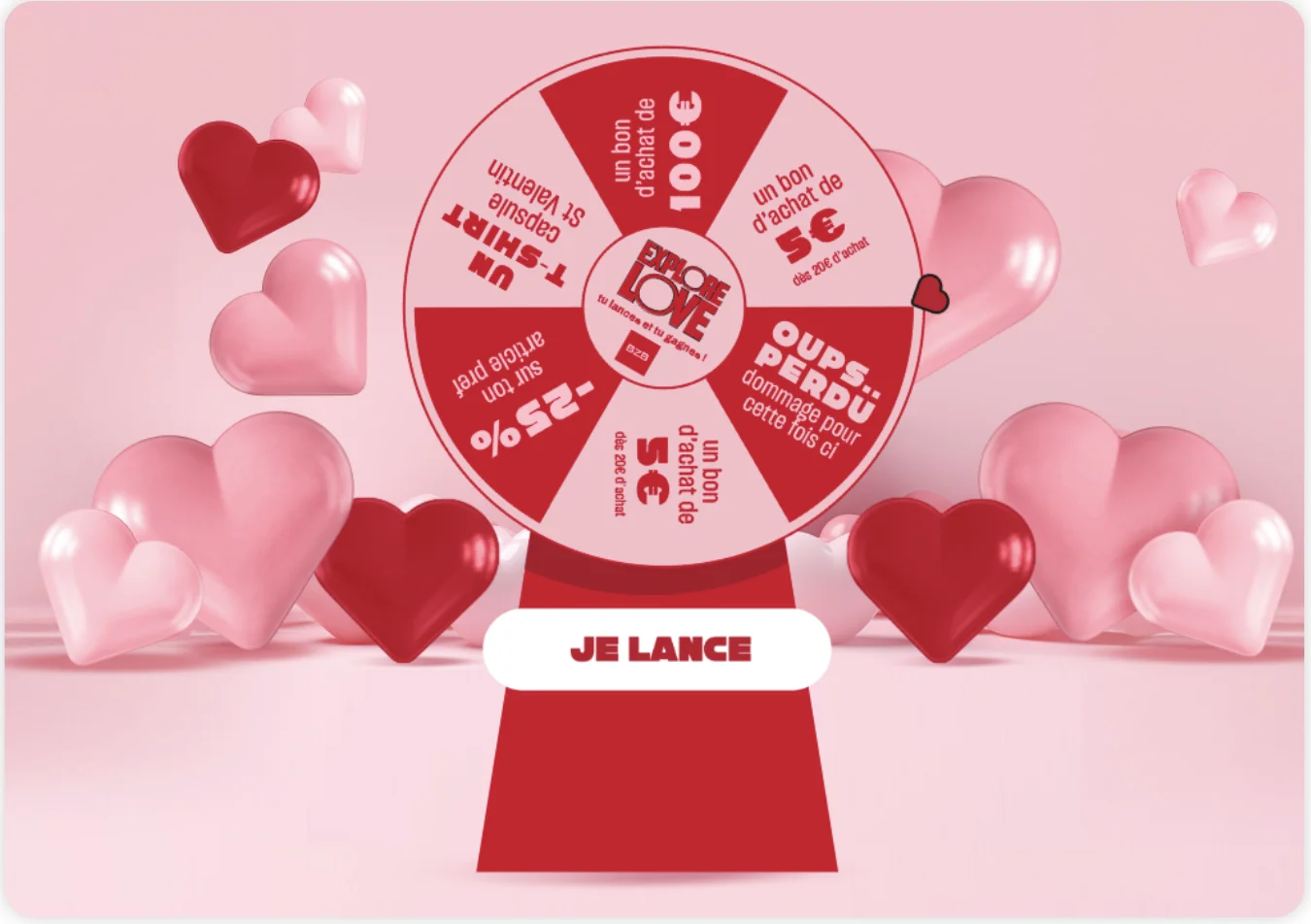
  • Instant-win games (like a Wheel of Fortune) Ideal for reengaging an inactive database. The sense of urgency and immediate reward encourages action. This mechanic often achieves open rates significantly higher than traditional campaigns.
  • Winning Calendar or recurring game Perfect for increasing engagement duration and boosting LTV. It encourages frequent returns, fostering regular interactions and the gradual collection of CRM data.
  • Slot Machine Highly effective for lead collection and CRM activation. Its simplicity and addictive nature attract users, delivering strong click-through rates.
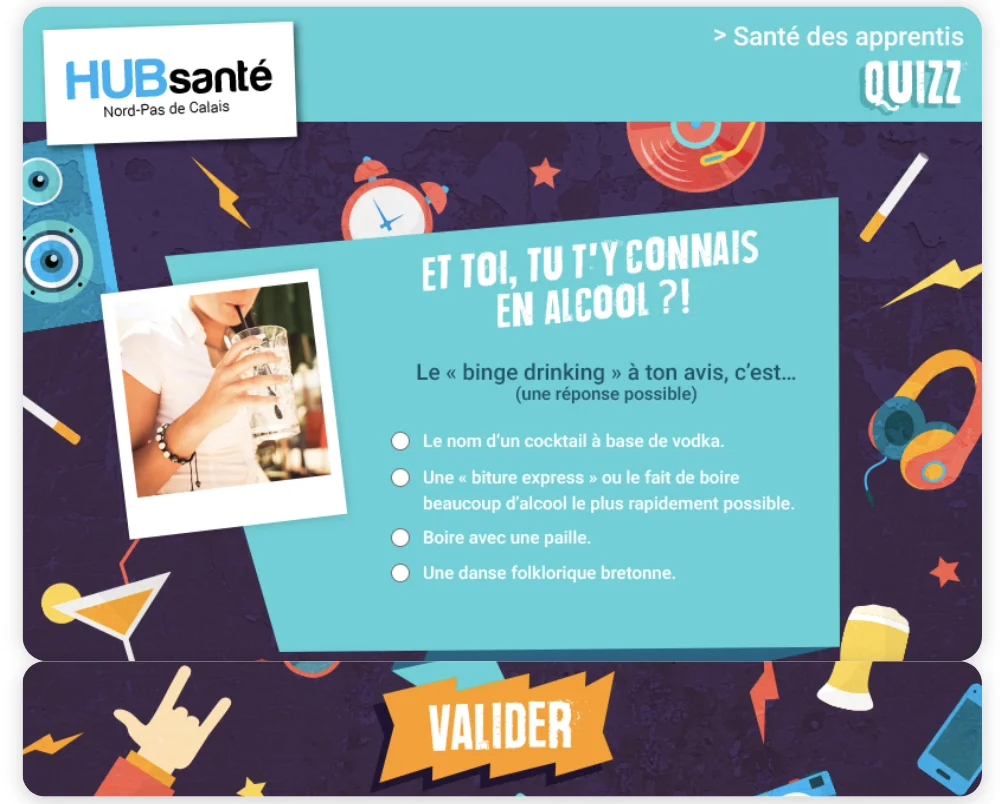
  • Personalized quiz Ideal for enhancing segmentation. By asking playful questions related to preferences or projects, it populates CRM fields that can be used for targeting or scoring.

4. Use gamification to better qualify your CRM data

Gamification is not limited to engagement; it also enables the collection of more precise data, better completed and directly usable in the CRM. Unlike traditional forms, often seen as cumbersome or intrusive, game mechanics naturally encourage users to share information.

For example, a personalized quiz or a step-by-step story-driven game can include targeted questions about user preferences, needs, or purchase intent. This information feeds the CRM database with useful data for segmentation, personalization, and scoring (the evaluation and rating of prospects or customers).

The playful approach reduces dropout rates and improves the quality of responses. It also promotes explicit consent, which is essential tocomply with GDPR As a result, the database becomes richer, more up-to-date, better-segmented database, making it more effective for activation, retention, and conversion.

To better qualify CRM data through gamification, it is recommended to:

  • Incorporate visual mechanics such as the Swiper. This format allows collecting preferences or intentions intuitively. For example, by asking users to “like” or “skip” products or topics, you can qualify their interests without asking intrusive questions.
  • Structure data collection within the game. Use a step-by-step quiz or a mini-journey where each answer enriches the CRM record: project type, estimated budget, timeline, etc. The more useful the data is for segmentation, the more subtly it should be introduced.
  • Limit the required fields in initial forms. It is better to capture a small amount of data initially and complete it through the game, reducing friction and improving completion rates.

5. Analyze your CRM metrics and optimize your strategy

A gamified CRM strategy is only effective if its results are measured and leveraged. Each campaign should feed a continuous improvement loop.

  1. Track the right indicators. Focus on CRM KPIs directly related to performance: post-game email open and click rates, participant conversion rates, number of opt-in leads, and qualification rates, among others.
  2. Compare the results obtained with usual benchmarks. Gamified campaigns often deliver results 2 to 3 times higher than traditional campaigns. Analyzing them helps identify what works best depending on the audience or channel.
  3. Optimize the strategy. Game mechanics, timing of messages, tone, and incentives can be adjusted to boost performance. Regular analysis of CRM performance also helps anticipate slow periods and design recurring activation scenarios.

Gamification is no longer just a simple customer engagement tool. Today, it is a natural extension of your CRM. When well integrated, it allows you to collect qualified leads, enrich your data, reactivate contacts, and better score your audiences. Therefore, to optimize your CRM strategy and achieve your business goals, all that remains is to activate the Playable Marketing lever. Incorporate effective playable mechanics designed for performance.

In 30 minutes, we show you how to launch your own high-performance interactive marketing campaign

Gamification marketing: adapting mechanics to each target

Gamification marketing: adapting mechanics to each target

Long perceived as targeting a young audience, gamification in marketing is still subject to stereotypes. Yet, marketing campaigns that include interactive elements see an increase in user engagement of 100 to 150 % compared to traditional approaches. A figure that shows the potential of this lever for all marketing targets.

Game-based marketing is now recognized as a powerful tool for activation, engagement, and loyalty. But to effectively reach each segment, the challenge is to adapt campaigns to the marketing target you want to reach.. Storytelling, mechanics, visuals, rewards: each element can be designed according to the expectations, habits, and barriers specific to each consumer category and industry sector.

This article provides you with the keys to adapt a gamification strategy to different profiles. The goal: activate the right lever, at the right time, for the right audience.

Why gamification works for all marketing targets

Contrary to popular belief, gamification marketing is not only aimed at young people or the general public. Many premium brands, B2B companies, and those targeting seniors now use gamification to boost engagement. Indeed, the effectiveness of this approach, regardless of the audience, lies in its ability to engage universal cognitive mechanisms.

First, the game captures attention. In a content-saturated environment, capturing interest becomes a challenge. However, playful mechanics activate the brain’s reward system, especially through dopamine, which boosts motivation and enhances focus. This neurological activation explains why gamified content holds attention longer than traditional formats.

Beyond attention, this approach stimulates curiosity. It introduces an element of mystery and interaction, two factors that boost user interest and enable interactive formats to outperform traditional advertising content.

In addition, Playable marketing helps generate positive emotions.. According to a TalentLMS study, 83% of users feel more motivated when a process includes playful elements. These emotions promote memorization and brand attachment.

Lastly, such experiences encourage action. Whether it’s completing a form, visiting a point of sale, or sharing an offer, interactive mechanics multiply conversions. Gamification is therefore not just a simple distraction or a tool for brands to diversify their content. It is a powerful engagement driver, provided it is tailored to the targeted marketing audience.

In summary, gamification marketing is effective thanks to the following elements:

    • Capturing attention (through reward and dopamine)


    • Stimulating curiosity (mystery and interaction)


    • Generation of positive emotions (motivation and attachment)


    • Incentive to action (increased conversions)

A gamification marketing strategy tailored to each audience

Not all marketing targets play for the same reasons. Some audiences, often considered less receptive to gaming (seniors, high-income professionals, B2B), can still be fully engaged with the right levers.

The challenge is to understand their specific expectations and adapt the game mechanics accordingly.

Through concrete examples, we will demonstrate that gamification knows no age, status, or industry.

1. Gamification for seniors

Often seen as distant from digital technology, seniors are wrongly considered to be unreceptive to game mechanics. However, their appetite for useful, simple, and interactive content makes them a perfectly targetable marketing audience through gamification, provided the experience is adapted. Clarity, accessibility, and usefulness should guide the design of gamified campaigns aimed at seniors.

The example to follow: Christine Laure

The ready-to-wear brand launched a game called “Vote your shopping list” aimed at its predominantly senior female customers. The goal: to engage the community in selecting the products to highlight, while gathering information about their preferences.

Result: over 28,000 registered participants, with half taking part in the voting. An effective campaign to engage this target audience, refine product recommendations (and enrich the brand’s CRM), as well as strengthen brand loyalty.

christine-laure-game-marketing-targets
christine-laure-game-marketing-targets-mobile

2. Gamified B2B marketing

Often seen as too serious for gaming, the B2B target is nevertheless an audience receptive to gamification. Indeed, decision-makers are often overwhelmed. To capture their attention, Playable marketing can inject emotion into campaigns that are often too rational and help improve the memorization of the advertising message.

A well-designed mechanic helps stand out while collecting qualified data.

The goal: to add value at every step. Playful content (shared, for example, through a serious game) should enrich thinking, simplify the discovery of a service or solution, and refine the diagnosis of needs.

Key takeaway:

  • The approach must remain understated and premium in style.
  • The game must serve a clear objective: lead nurturing, qualification, or appointment scheduling.
  • The call-to-action must be naturally integrated into the playful journey.
legrand-celiane-game-marketing-targets
legrand-celiane-game-marketing-targets-mobile

3. Reaching premium targets through Playable marketing

Often seen as less receptive to gaming, the premium target primarily expects experiences consistent with luxury standards : exclusivity, elegance, sophistication. To engage this audience, gamification must prioritize subtlety over excess.

Immersive formats that emphasize storytelling or stimulate curiosity help increase memorization while respecting brand image expectations. Here, the game offers access to exclusive rewards to extend the brand experience.

The example to follow: Moser & Cie

Moser & Cie has designed a digital campaign in the form of a playful quest.
Internet users had to find clues hidden on the site to answer an exclusive quiz.
The result: a high rate of engagement and an enriched database of qualified users attracted by the brand’s unique universe.

moser-cie-game-marketing-targets
moser-cie-game-marketing-targets-mobile

4. Institutional marketing with a gamification twist

Institutional marketing is often seen as too serious to incorporate gamification elements. However, gamification helps humanize communication and engage audiences that are often less receptive.

By adapting the mechanics to educational content, it is possible to make knowledge more accessible and even raise awareness about complex or sensitive topics.

Local authorities can, for example, rely on serious games such as educational quizzes or simulations to raise awareness within their community about waste sorting or risky health behaviors. In addition to conveying valuable information, the game also becomes a data collection lever that allows the organization to better understand its audience and needs.

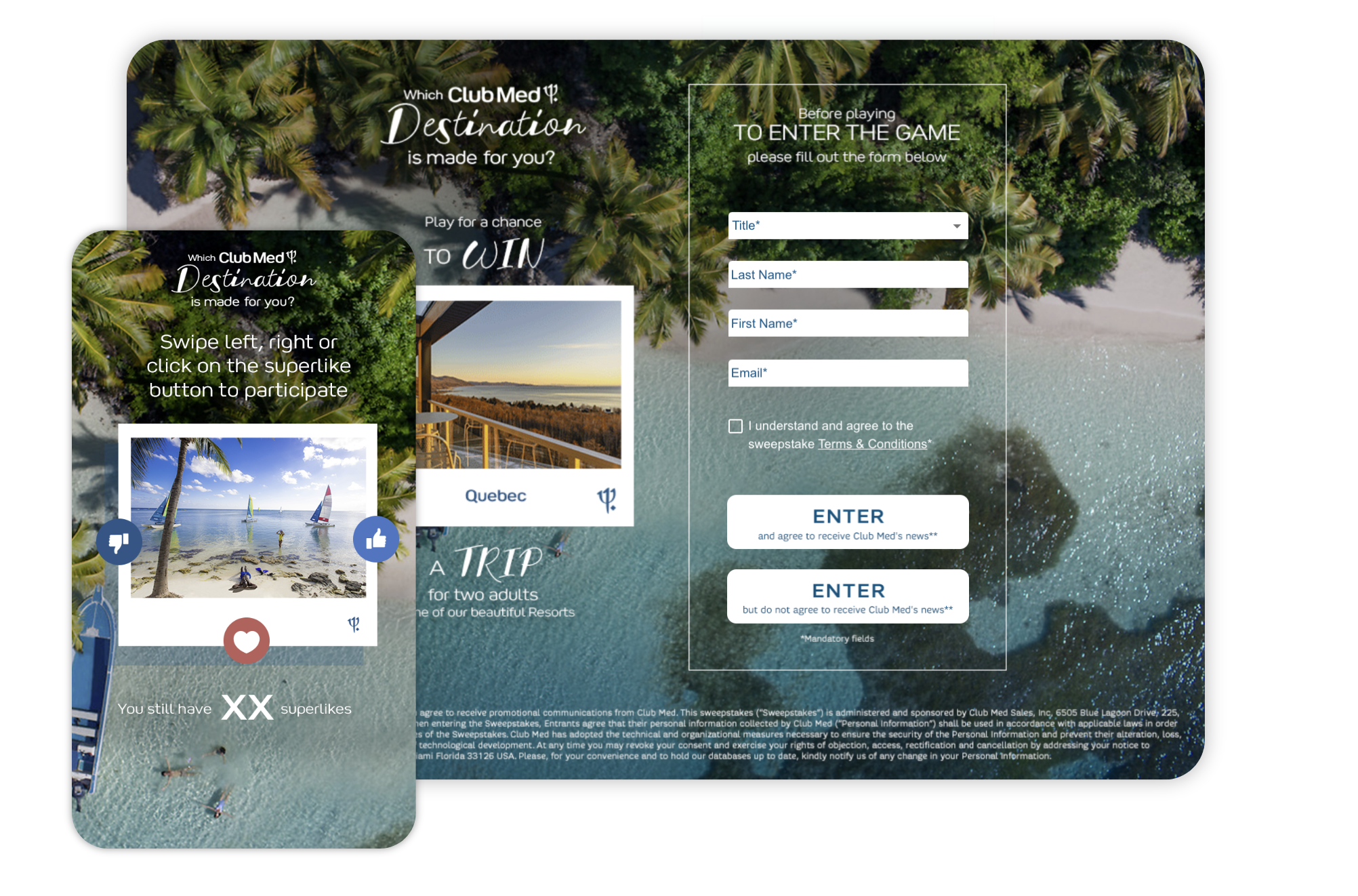
club-med-game-marketing-targets
club-med-game-marketing-targets-mobile

How to tailor a gamified campaign to your marketing target

No magic formula: success relies on strategic adaptation to each marketing target. Here are the key elements to adjust to maximize the performance of a playable campaign depending on the audience you want to reach:

Identify the specific barriers and expectations of the marketing target.

Each audience has its own specific barriers and expectations that must be identified beforehand. For example, some targets prioritize simplicity, while others focus on interactivity or social engagement. The choice of mechanics should address these specificities to maximize the impact of the gamified campaign.

Choose mechanics suited to the audience profile.

Simplicity for seniors, challenge for high-income audiences, immediate rewards for families. A platform dedicated to gamification such as Adictiz will make it easier to personalize the message, visuals, and game journey.

    Adapt the advertising message and tone

    The advertising message must speak the language of the target, with an appropriate tone and content. A B2B audience expects useful or value-driven content; a younger audience prefers a more friendly tone focused on shared values.

    Carefully time the release

    The right timing is also a key factor to effectively engage your marketing target. Launching a campaign at the right moment enhances its relevance and audience receptiveness. For example, it should coincide with a strategic peak period (commercial event, product launch) or follow seasonality (back-to-school, summer holidays, etc.)

    Simplify the game journey as much as possible

    Finally, the game journey should remain smooth and simple to avoid any frustration. Intuitive design and clear rules make participation easier and increase conversion chances, especially for audiences less comfortable with digital.

    The power of the game lies in its ability to adapt. A tailored approach transforms gamification into a powerful marketing lever. The challenge is to personalize each playable experience according to the expectations and behaviors of your audiences. Discover Adictiz’s solutions and activate each marketing segment with precision, creativity and efficiency.

    In 30 minutes, we show you how to launch your own high-performance interactive marketing campaign

    Black Friday: why gamified mechanics boost your marketing performance

    Black Friday: why gamified mechanics boost your marketing performance

    In France, Black Friday week generated 7.5 billion in online sales — an impressive year-over-year growth of +18.9%. In this highly competitive context, brands struggle to stand out. To capture attention and drive purchases, they need to launch impactful and distinctive campaigns. Among the most effective marketing strategies they can rely on, gamification stands out.

    Why gamification works during Black Friday:

    • First, it transforms a simple promotional offer into an engaging experience.
    • Next, a Black Friday contest triggers a positive emotional response and holds the audience’s attention longer.
    • Finally, interactivity offers instant gratification, helping to drive purchase decisions.

    In this article, we’ll explore how gamified mechanics can boost brand performance during Black Friday and how to integrate them into your campaigns to maximize impact.

    Black Friday: winning the battle for attention and conversions

    Black Friday brings unprecedented marketing pressure. Consumers receive dozens of offers, sometimes as early as October with pre-Black Friday campaigns. Competition intensifies, making it harder for brands not only to capture attention but also to hold it until the purchase is made.

    As a result, piling up promotions is no longer enough. The shopping experience must be seamless: easy navigation, personalized recommendations, secure checkout, and fast delivery. These elements have become decisive factors in the customer’s final choice.

    Moreover, trust and customer understanding also play a key role. Brands that leverage their CRM data to anticipate expectations and tailor their messages maximize their chances of turning interest into conversion. Black Friday is no longer just about price, it’s a battle for experience and relationship.

    Gamification: a winning strategy to boost the performance of your Black Friday campaigns

    During Black Friday, internet users are overwhelmed with solicitations. That’s why marketing gamification helps cut through the noise by directly stimulating the cognitive mechanisms related to play.

    When playing, the brain releases dopamine, enhancing attention and motivation. At the same time, the challenge triggers a sense of progress, while the anticipated reward values the effort made.

    In the context of a Black Friday contest:

    1. the user experiences a positive interaction,
    2. they more easily remember the brand they engage with,
    3. they are more willing to share their data or click on a link directing them to the online store where they can complete their purchase.

    3 examples of Black Friday contests that work

    For a Black Friday contest, effectiveness relies on choosing a game mechanic suited to the event and the brand’s goals. In this context, brands often favor formats that are quick to understand, accessible to everyone, and directly linked to a reward. Here are three concrete examples that have already proven their impact.

    Capture and retain attention with a points-based game

    These simple formats (such as Slicer or Shooter) capture attention from the very first second and encourage repeated play. The further the player progresses, the stronger their desire to discover the associated rewards, maintaining engagement throughout the campaign.

    Highlight your promotions with a Memory

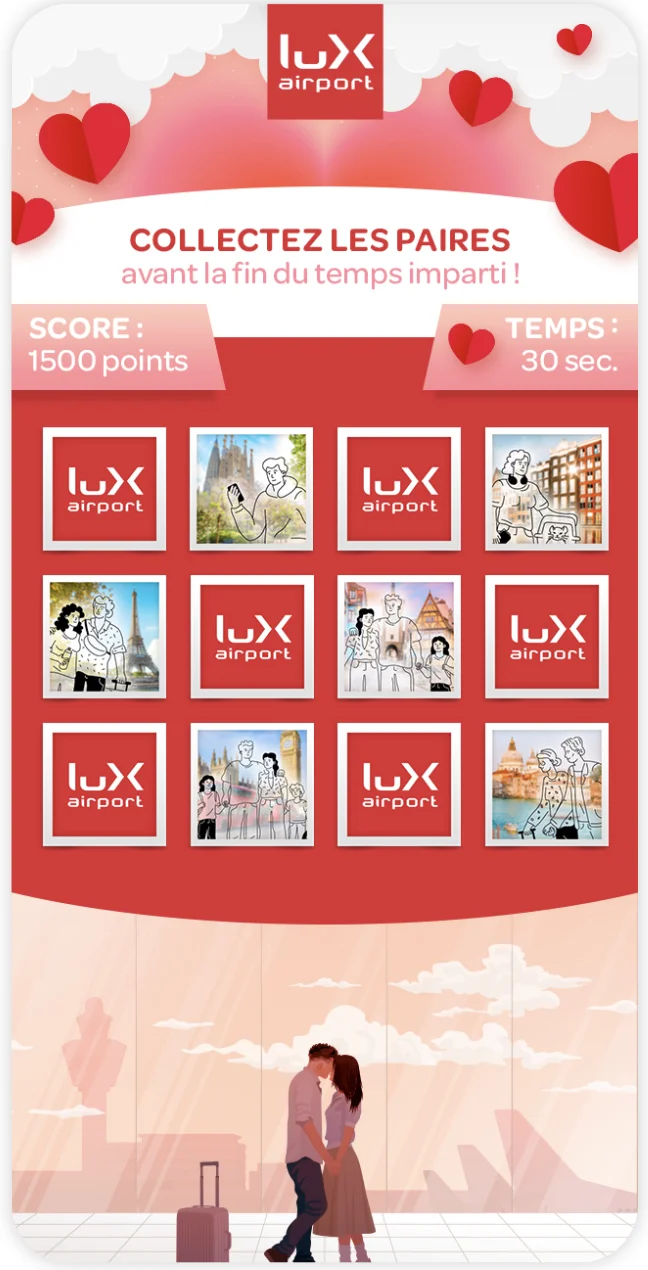
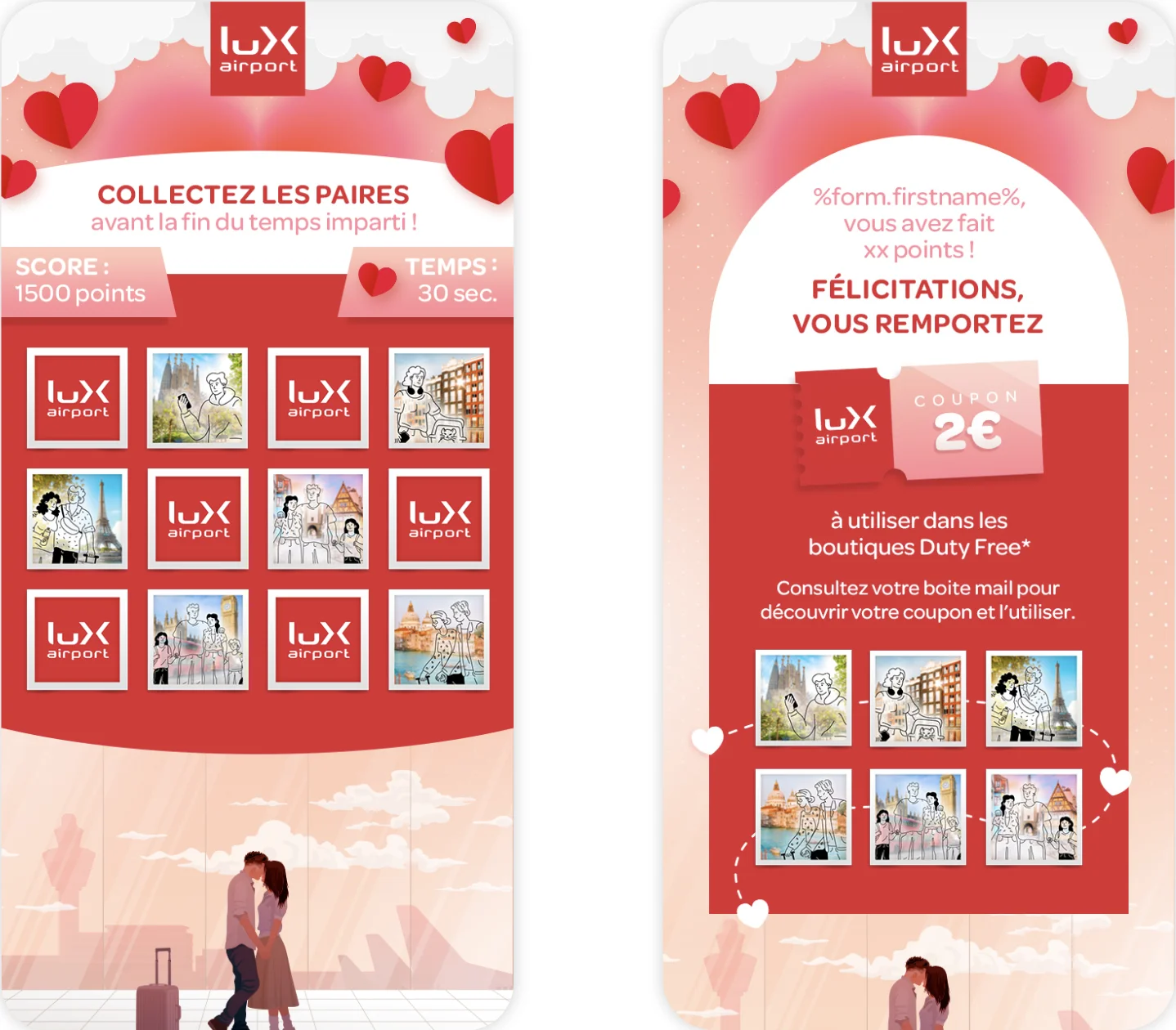
    The Memory highlights specific offers while stimulating visual memory. For example, SFR Réunion relied on this mechanic to promote its Black Friday deals.

    black-friday-campaign-sfr

    Boost conversion with a 100% Instant win

    Instant win games work perfectly for Black Friday because they turn the anticipation of a reward into immediate motivation to act. Users are encouraged to interact quickly to receive a tangible gratification, which increases conversion rates and encourages repeat purchases.

    Example of an Instant win for Black Friday: Maisons du Monde launched a contest combining Scan & Play with a Wheel of Fortune. This setup encouraged customers to scan their receipts to instantly receive a discount voucher.

    Result: over 9,000 tickets scanned, as many vouchers distributed, and a stronger repeat purchase dynamic—even after the initial sale.

    Black Friday contest organized by Maisons du Monde, illustrating a gamified marketing campaign
    black-friday-contest-game-maisons-du-monde

    Performance focus: KPIs to monitor

    Measuring the performance of a Black Friday contest is essential to quickly adjust campaigns and maximize return on investment. Key performance indicators help understand user behavior and identify friction points.

    Key KPIs to monitor for a Black Friday contest include:

    • Click-through rate (CTR): a low CTR may indicate that the game or offer isn’t attractive enough. Testing new mechanics or rephrasing the call to action can improve results.
    • Conversion rate: if few users complete their action, simplifying the process or enhancing incentives (rewards, bonuses) can boost conversions.
    • Behavioral data: time spent, game progression, drop-offs… These metrics reveal where attention wanes and help adapt content in real time.
    • CRM reactivation: measuring how many inactive contacts re-engage helps evaluate the effectiveness of remarketing efforts.

    In summary, tracking these KPIs helps manage Black Friday campaigns and continuously optimize ROI.

    3 practical tips to boost your conversion rate for Black Friday

    To maximize sales during Black Friday, it’s essential to combine creativity, engagement, and reach. In this sense, gamification fits perfectly with these goals when deployed strategically.


    • Multiply formats: using multiple channels (display, in-app, in-store, email) allows you to reach consumers at different touchpoints and increase campaign visibility.
    • Engage at every stage: create teasers before Black Friday, optimize conversion on the day itself, and implement post-purchase re-engagement actions to drive repeat purchases and extend customer relationships.
    • Leverage virality and social mechanics: contests, sharing features, and referrals encourage organic campaign reach. Consumer participation strengthens engagement and attracts new prospects to the brand.

    Q&A – Black Friday Contest

    How can you increase sales during Black Friday?

    Combine attractive promotions with interactive experiences, such as a marketing game, to boost engagement and drive immediate purchases. A multichannel approach and personalized messaging further enhance the impact of your offers.

    How can you capture attention during Black Friday?

    Offer playful or interactive content that sparks emotion and curiosity. Game mechanics and instant rewards help increase attention span and boost consumer engagement during Black Friday.

    When is the best time to launch a Black Friday campaign?

    Start early with a pre-Black Friday phase to tease offers and reach consumers before the promotional overload begins. Maintaining a steady pace up to the big day helps maximize conversions.

    Which marketing game mechanic should you choose based on your objectives?

    Points-based or memory games generate engagement and visibility, while Instant win boost conversion and repeat purchases.

    How to collect data during a Black Friday campaign?

    Integrate a gamification system linked to your CRM to track interactions, encourage newsletter sign-ups, and re-engage prospects throughout the campaign to boost conversion rates.

    Gamification transforms your Black Friday campaigns into interactive experiences that capture attention and drive conversion. By incorporating playful mechanics, you stand out from the competition while effectively re-engaging your customers. Adictiz supports you in designing and managing highly engaging, measurable, and optimized gamified campaigns to maximize the impact of your offers and strengthen audience loyalty!

    In 30 minutes, we show you how to launch your own high-performing interactive marketing campaign