

Disappearance of barcodes, uses of QR codes in marketing

Disappearance of barcodes, uses of QR codes in marketing

First introduced in the USA in 1074, barcodes are now found on all our consumer products. From food packaging to the labels on the clothes we buy. For many years, this sequence of 24 bars and 13 digits has enabled us to easily obtain an item’s reference number and price.

But its days are numbered, and barcodes are soon to disappear, to be replaced by a more powerful and comprehensive solution: the QR code, a veritable marketing tool. In this article, we take a look at this programmed disappearance and the main reasons behind the replacement of barcodes.

Barocdes, a practical solution for product identification

The barcode revolutionized consumer goods 50 years ago. Known in the US as GTIN (Global Trade Item Number), barcodes make items easily identifiable. We were able to find them at a glance (or thanks to a scanner at the checkout) on clothing labels or packaging.

The purpose of barcodes was to enable supermarkets to structure themselves. They facilitate the storage and marketing of a larger catalog of products. First introduced in the U.S., barcodes quickly made their way across the ocean to our shelves. Not least via GS1 France, the French branch of the organization responsible for the identification system.

Despite these years of service, the barcode is destined to disappear. It is due to be replaced over the years, to disappear in 2027. But to what identification solution.

The QR code: a more modern and complete version of the bar code

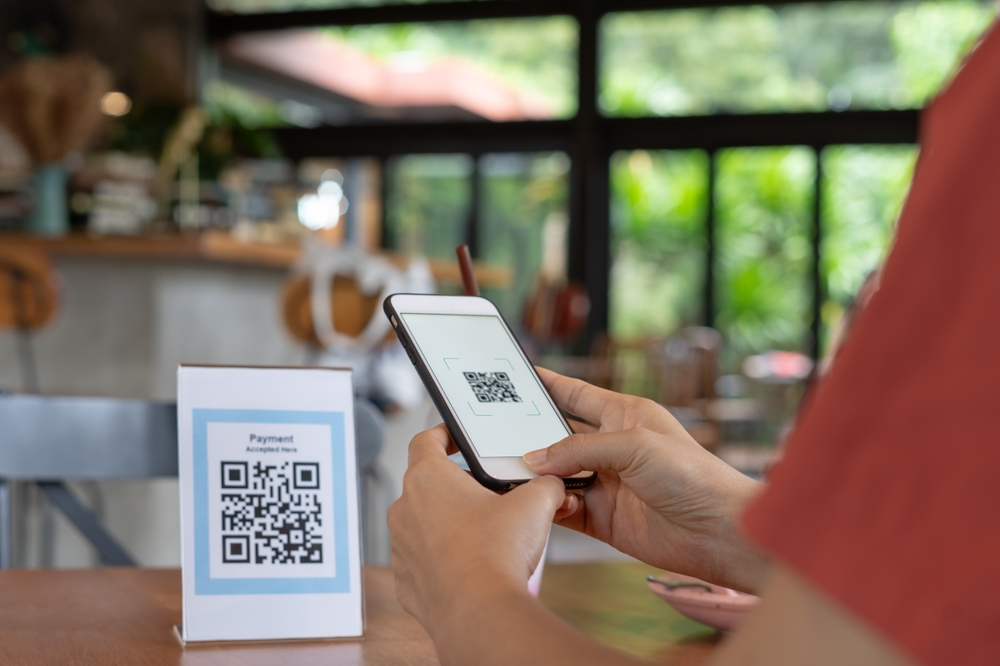
If barcodes are bowing out, it’s because they’re being replaced by a more efficient identification solution. Goodbye 24 bars and 13 digits, hello QR code. This modern-day cousin stands for Quick Response Code. In concrete terms, it’s a type of two-dimensional barcode made up of black square modules set in a square with a white background.

The QR code can be used to encode more than 4,000 alphanumeric characters, a considerable advance compared to the few numbers contained in their counterparts. Thanks to this technology, it is possible to encode in a QR code :

  • a URL: such as a website address, documentation download link, etc.
  • an e-mail address;
  • a business card ;
  • free text.

Why replace barcodes with QR codes?

The main advantage of QR codes is precisely that this technology makes it possible to encode more information about a product and the brand that markets it. In addition to an item’s reference number and price, QR codes make it possible to find out where it comes from, how it was made, and so on.

Take a food product like meat, for example. Thanks to the QR code, all players in the chain, from the breeder to the end customer, can find out where the animal was raised, to which batch it belongs, the use-by date, and so on. A small feat that was not possible with the barcode. For consumers, this means easier access to information that can be vital (in the event of allergies, for example), but also to ensure that their values are respected (by favoring Made in France or organic products, for example).

For institutions and retailers, the QR code is an effective lever for preventing dangerous products from finding their way onto shelves. Brands will be able to offer their customer greater transpareny, as well as access to more varied and relevant resources and services.

Marketing uses ofr QR codes

Overall, the QR code provides access to more information about the product and the brand that markets it. It’s therefore an opportunity for companies to distribute content tailored to consumers, depending on the context of purchase or use. The QR code will be used by shoppers during their shopping trips. It can help them choose products and brands that correspond to their needs (carbon footprint, level of plastic used, origin, etc.)

But for brand’s, it’s also an opportunity to engage their prospects in a more targeted and effective way.

The Scan&Play

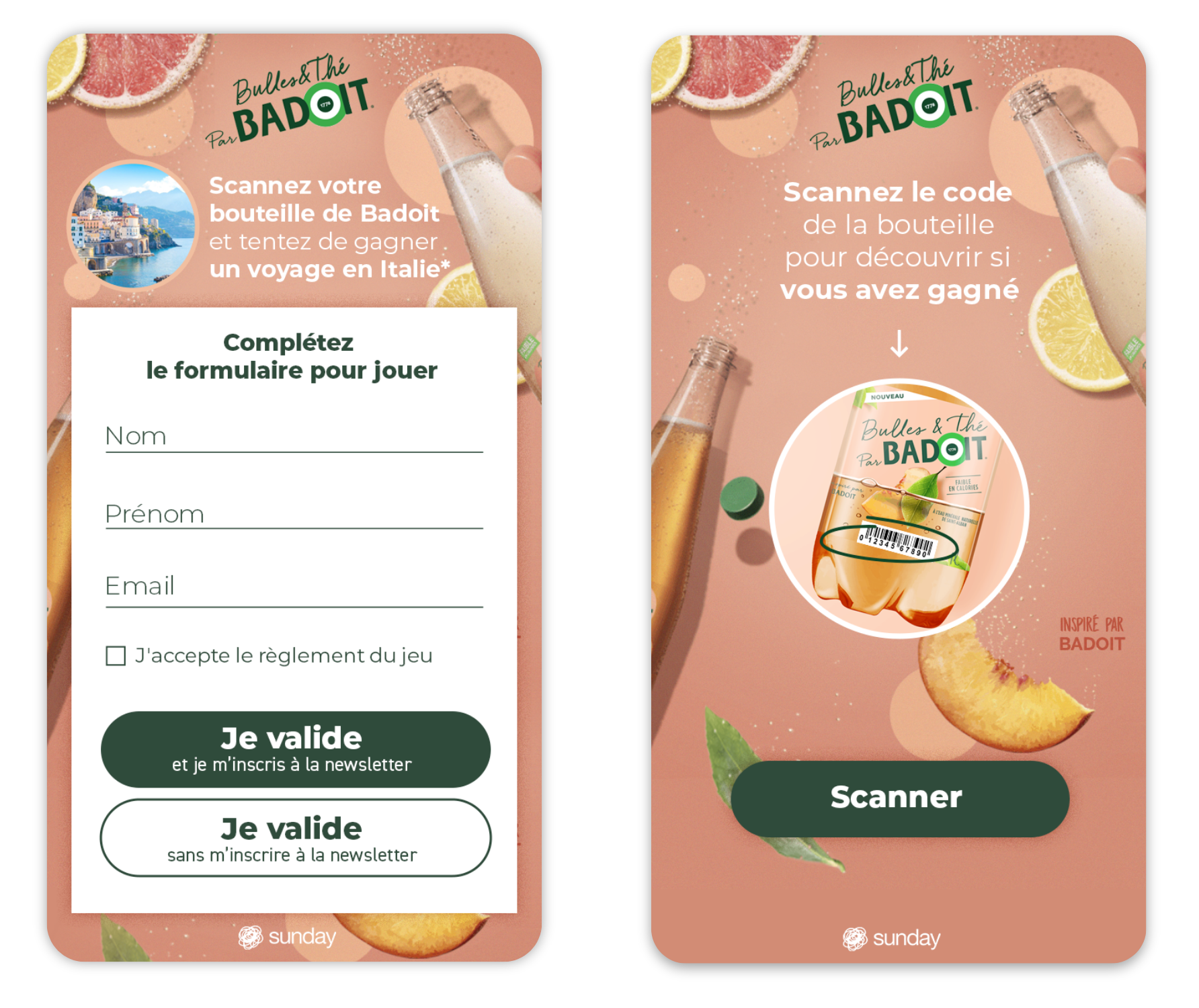
The Scan&Play is the use of QR codes as part of a playable marketing campaign. Printed on a product or label, the QR code, once scanned, redirects shoppers to interactive experiences, such as competitions, instant wins and so on.

These marketing games enable participants to win discount vouchers, in exchange for brand-relevant data (product preferences, contact information) shared via a form.

In the awareness phase, Scan&play can also make information sharing fun, and therefore likely to lead to conversion, via mechanics such as polls or quizzes. These formats enable companies to use QR codes to help people discover their world and their offering in an engaging way.

Sunday - Scan&Play

Conclusion

Barcodes are on their way out, long live the QR Code. This more modern and comprehensive replacement is an opportunity for brands to interact more effectively with their customers, offering them not only more information on their products, but also opportunities to win rewards bu taking part in marketing games. Adopt Scan&Play and discover our catalog of interactive mechanics!

In just 30 minutes, we’ll show you how to launch your own high-performance interactive marketing campaign.

Store opening: attracting and engaging with gamification

Store opening: attracting and engaging with gamification

The opening of your shop is a unique moment in the life of a brand.. Qu’il s’agisse de son premier point de vente physique ou d’une boutique dans une nouvelle ville/pays, cela représente non seulement un énorme investissement, mais aussi beaucoup de travail.

In a context where consumers are increasingly making their purchases online, brands need to redouble their creativity to attract them to the shop. This is especially true in the case of a shop opening, as shoppers are not yet familiar with the new address.

Preparing to open a store is not something to be taken lightly. On the contrary, it’s an event that you need to prepare for and plan your speeches carefully to attract maximum traffic to your shops.

In this article, we share with you some practical advice and strategies for successfully opening a physical point of sale. In particular, we’ll be looking at gamification, i.e. incorporating playable elements into your communication materials or during the inauguration to boost the appeal of the launch for the audience!

The challenges of a store opening

The inauguration of a new shop represents a considerable investment for a brand. While retail allows you to create a special bond with your customers, it also means a significant budget (whether for the purchase of the doorstep, rent, furnishings, staff, etc.)

The first challenge of a store opening is therefore to boost its visibility with the brand’s customers , but also of its target audience. And this in a territory that is sometimes different from its online clientele. As with a traditional drive-to-store strategy, the first objective is to ensure that the point of sale is well known to its target audience and to attract as many potential customers as possible to the site.

But the inauguration of a store also presents specific challenges. It’s an opportunity for the company to boost its image by organising a unique event, during which prospects and customers can interact personally with the teams. The opening must also effectively engage the target audience and build loyalty so that they not only want to make a purchase, but also want to come back.

The company can also take advantage of this opportunity to gather feedback and thus get to know their audience better (with whom they have sometimes only interacted online). By offering tools for collecting opinions and preferences, the company can then better reactivate its customers by offering them personalised content and offers that are more likely to engage them!

How to gamify a store opening

Traditionally, gamification is a highly effective lever for boosting a brand’s drive to store strategy. By incorporating playable elements into their campaigns, companies can more easily capture the attention of their audience, encouraging them to visit their shops and encourage them to make purchases.

Gamification is therefore an interesting tool to mobilise as part of a shop opening. The interactivity and promise of attractive rewards are two powerful assets to encourage consumers to come to the inauguration (potentially accompanied by other potential customers) and to create a strong connection with the brand.

Here are 3 ways to gamify your shop opening

1. Create media hype around your online store opening

Digital marketing is a powerful tool for extending the reach of your message and attracting a wider audience. Particularly if it is used creatively and strategically, notably through gamification. On social networks, brands can capture the interest of their audience and create a buzz around the opening of their shop by organising an online competition. An instant win, such as a Wheel of Fortune for example, can be used to give away discount vouchers that can only be used on the day of the opening.

It’s also much easier to make the most of consumer expectations with gamification. This is known as teasing, or the art of gradually revealing clues in order to capture and maintain the attention of your audience. The brand can imagine a digital treasure hunt through which its community can gradually guess the location of its future shop.

Gamification also enhances the effectiveness of other web marketing strategies for creating media hype around your event. This is particularly the case with influencer marketing. The brand teams up with a content creator to communicate about the opening and encourage consumers to attend (to meet the influencer in the flesh, for example). It can gamify its campaign by offering additional rewards (such as an in-store personal shopping session, vouchers, backstage access with the designer, etc.).

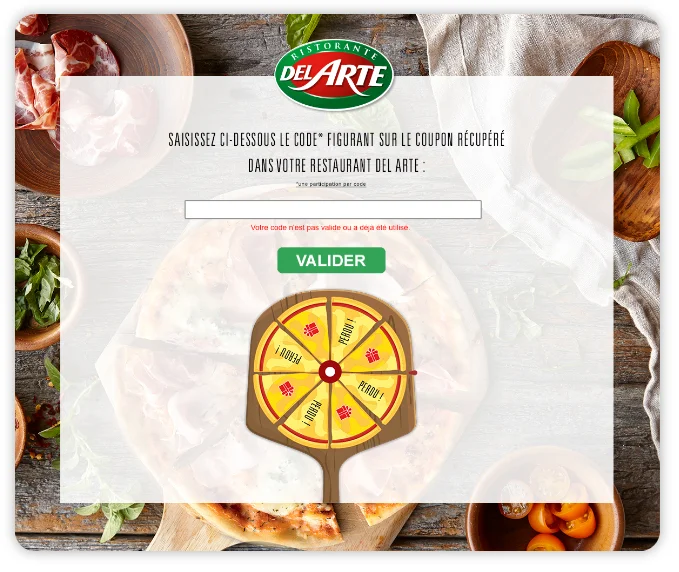
del arte wheel of fortune

2. Gamify your store opening to better engage and convert consumers

Once on site, gamification can enable the company to liven up the opening of its shop and effectively engage visitors. To make the event more interactive, for example, it can install digital terminals where customers can take part in marketing games. These activities make the inauguration more dynamic and bring customers back into the shop, increasing the amount of time spent with the brand.

It’s also a highly effective way of converting more customers. Marketing games are a good way of distributing coupons that encourage purchases by offering participants attractive discounts.

Interactive games can also be used to highlight products by presenting them (and their competitive advantages) in an original and fun way. In this way, the brand can offer Quizzes to make it easier to discover its catalog and better communicate its value proposition.

3. Collecting and exploiting customer feedback to boost loyalty

Finally, marketing games offered at shop openings are a very effective way of collecting customer feedback and data. Before being able to access a marketing game (on an interactive terminal or after scanning a QR code on a label via Scan&Play, for example), the customer will have to fill in a form. This enables the brand to find out not only about the customer’s demographic profile (and better identify its audience), but also to ask them about their product preferences.

This data will enable them to create drive-to-store and conversion campaigns (online and physical) that are more personalised and therefore more effective. This is an essential step in building customer loyalty and ensuring stable, long-term revenues for your shop.

Conclusion

Gamification is a powerful lever for boosting traffic at shop openings. It can also be used to generate more sales and build loyalty among retail customers. To make your inauguration more interactive and engaging, discover our marketing games that are easy to deploy in-store.

In just 30 minutes, we’ll show you how to launch your own high-performance interactive marketing campaign.

What is influencer marketing? Benefits, techniques

What is influencer marketing? Benefits, techniques

In a context where consumers are constantly exposed to promotional messages, brands need to redouble their creativity to engage their audience and stand out from their competitors. Influencer marketing offers many effective ways of doing this.

To the question of what is influencer marketing? The first obvious answer is that this digital strategy is unavoidable. According to a recent study, the global influence market is now worth more than 16 billion dollars. Et collaborer avec des créateurs de contenu est donc un levier indispensable pour humaniser sa marque, créer une connexion authentique avec son public et toucher une audience plus large.

However, this strategy also presents a number of challenges. Influencer marketing is constantly evolving to meet consumers’ expectations of proximity and interaction. But it also needs to equip itself with more powerful tools to better measure the performance of campaigns and personalise them as much as possible.

Gamification, the integration of playful elements into influencer marketing, is an excellent way of meeting these challenges.. Dans cet article, on s’intéresse donc aux avantages de cette stratégie et aux différents outils interactifs pour en booster les performances.

What is influencer marketing?

Influencer marketing is a strategy in which brands collaborate with content creators, mainly on social networks. Influencers are personalities who have managed to build up an online audience, generally by specialising in a particular content niche and creating links with their followers.

This closeness to their audience and ability to create native content on social networks are two particularly strategic levers for companies. By co-creating campaigns with influencers, brands can reach a wider audience that is potentially interested in their products or services. Content creators also act as ambassadors, embodying the brand and its values, giving it an image that is more authentic and closer to its audience.

An integral part of any influencer marketing strategy is therefore to identify content creators whose interests, tone and values are close to those of the company (as in a co-branding strategy). In this way, companies can ensure they are reaching the right audience, maintaining consistency in their communications and highlighting their world and value proposition.

The benefits of influencer marketing for brands

Influencer marketing can be an incredibly powerful marketing tool for brands, whatever their reputation, sector of activity or objectives. According to a recent report on the subject, almost half of consumers (49%) make a purchase at least once a month after being exposed to influencer publications. And almost all shoppers (86%) say they make a purchase following recommendations from a content creator at least once a year.

The main reasons for influencer marketing include :

Increase brand awareness

Working with influencers enables companies to reach a wider, highly qualified audience. By sharing campaigns about a brand, content creators help to raise awareness of the brand among new people or improve its image. This is how, for example, influencer Léna Situations has modernised the image of the Jennyfer brand.

Target the audience for your marketing campaigns more effectively

Influencer marketing helps brands to precisely target their audience. The key is to work with a creator whose community matches the characteristics (demographic or behavioural) of the company’s target audience. So it’s an excellent way of ensuring that your message reaches the right people and is delivered in a way that resonates with your audience (making the campaign more impactful).

Achieve higher conversion rates

Social proof is a powerful conversion factor. Consumers are more likely to buy a product if it has been recommended to them by someone they trust (and not by the brand itself, through traditional advertising). What’s more, influencers have mastered the codes of content creation on social networks. As a result, their publications are better integrated into users’ news feeds, making them more likely to capture their attention and generate conversions.

Create a more authentic and trusting relationship with your audience

Influencers also enable brands to humanise their communications and create a more authentic connection with consumers. They will create credible content that will enable their followers to better understand their brand. identify the strengths of a product or service and the different ways in which it can be used. Their shared experience, which is less formatted and more spontaneous, is also more likely to generate trust (and therefore conversion and loyalty) than a traditional promotional campaign.

benefits of influencer marketing

How to gamify influencer marketing campaigns

Le marketing d’influence est une stratégie puissante pour atteindre et convertir son public cible. Mais c’est aussi devenu une arène publicitaire ultra compétitive dans laquelle les marques doivent redoubler d’efforts pour convaincre les créateurs de collaborer avec elles et capter l’attention de leurs abonnés. 

La gamification en marketing est un levier qui permet de booster les performances d’une campagne de plusieurs manières. Cette technique peut par exemple être utilisée pour motiver les influenceurs et valoriser leur contenu. Les entreprises peuvent ainsi gamifier leur programme d’influence (ou d’ambassadeurs) de la même manière qu’un programme fidélité. Les créateurs qui génèrent le plus de vente peuvent ainsi cumuler des points, atteindre de nouveaux paliers et bénéficier d’avantages spécifiques (goodies, une commission plus élevées sur chaque vente, des accès aux backstages de la marque). 

Exemple recrutement gamification

Mais la gamification permet surtout de capter plus facilement l’attention des audiences et de stimuler leur engagement. En créant des campagnes plus ludiques, sous forme de concours créatifs ou de jeux marketing, les entreprises et les influenceurs peuvent en effet encourager les utilisateurs à interagir avec eux et booster la viralité de leur contenu.

Les mécaniques jouables propres à la gamification sont aussi un excellent moyen d’augmenter les interactions des abonnés avec la campagne. C’est donc un puissant levier pour collecter plus de données zéro-party et ainsi mieux comprendre les besoins et attentes de son audience. A partir de cette data, l’entreprise pourra ensuite créer des campagnes encore plus personnalisées, et donc beaucoup plus engageantes !

Conclusion

Gamification is an excellent way of creating even more effective influencer marketing campaigns. To engage the creators you work with and their audience, don’t hesitate to integrate interactive mechanisms into your content. Discover our catalog of marketing games and boost your influencer strategy!

In just 30 minutes, we’ll show you how to launch your own high-performance interactive marketing campaign.