

Events are an extremely powerful marketing lever for capturing attention and building connections. In fact, 80.4% of organizers declare that in person events are their most impactful marketing channel.
For a brand, the challenge goes beyond on site entertainment. You need to turn visitors into active participants, then extend engagement beyond the event to turn them into loyal customers. Event games are among the best tools to achieve this: they generate opt ins, increase time spent with the brand and drive word of mouth.
This article presents five simple to deploy interactive game ideas to make a trade show, pop up or brand activation unforgettable.
Table Of Content
Event games: a powerful marketing lever
Event games encompass all playful activities integrated into an event marketing strategy. Their role goes beyond simply entertaining participants. They make it possible to actively involve visitors and turn a one time presence into a true brand experience.
Where traditional speaking stays top down, a game establishes a two way interaction. The audience experiences a memorable moment with the brand and potentially wins attractive rewards, which strengthens engagement and loyalty. These mechanics also create opportunities for exchange between participants. They thus encourage the building of a brand community, united by a shared experience.
5 concrete benefits of event games
Event games generate tangible results, both on visitor experience and brand marketing performance.
- Stronger engagement : an animated booth captures more visitors than a booth without interaction. The game creates a fun moment and encourages people to stay longer.
- Better recall: 74% of participants remember a brand more easily after a playful experience. An event activity therefore increases the likelihood of conversion and recommendation.
- Qualified data collection : the game registration form, opt in sharing and even interactions with playful mechanics allow you to enrich the brand CRM database. The game is therefore transformed into a tool for collecting useful information such as age, gender or visitor product preferences.
- Increased traffic to a booth or website: the game acts as a crowd puller, attracting passersby and directing them to a specific marketing channel (a website via a QR code, checkout thanks to an e-coupon, etc.).
- An amplifying effect via social media: original activites are often shared online, amplifying campaign reach beyond its physical footprint.
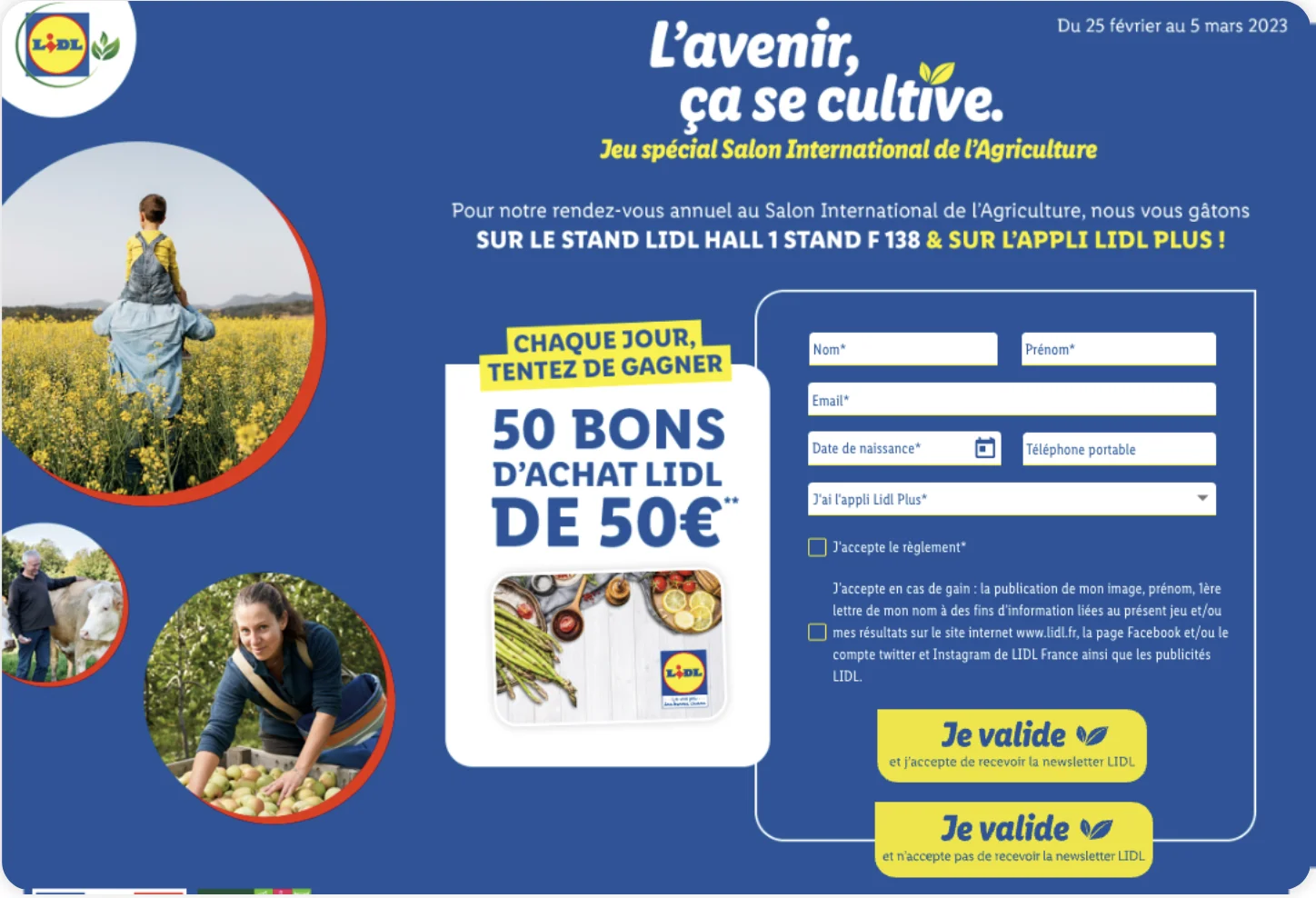
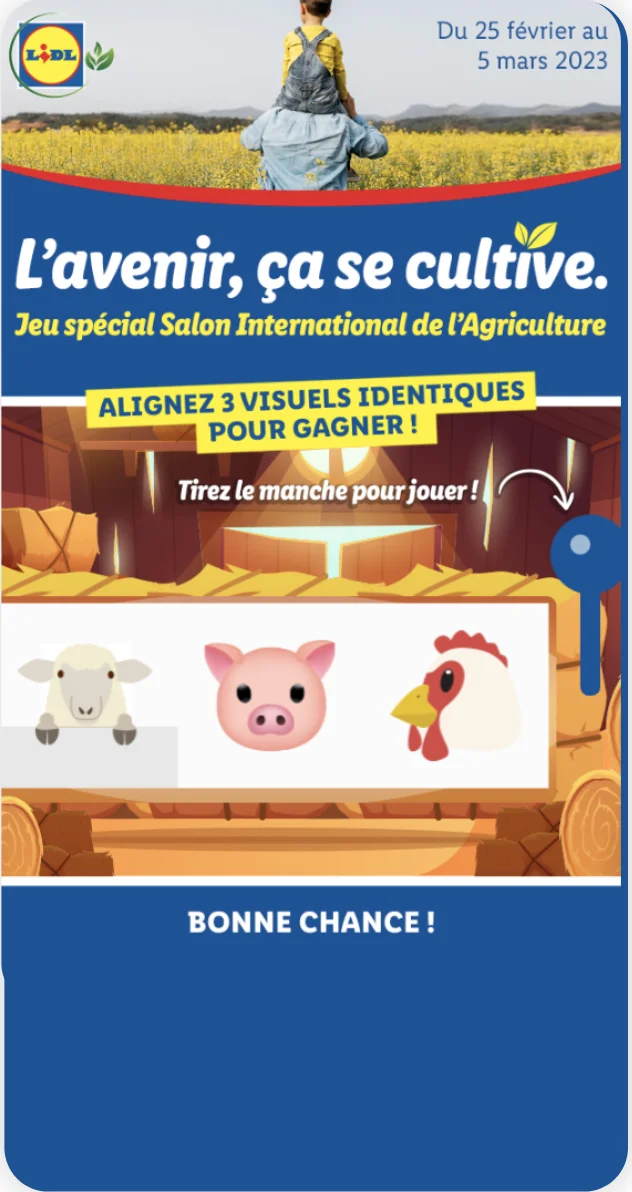
Example: at the Salon de l’Agriculture, Lidl offered a slot machine to increase brand awareness and collect leads. Result: over 7,000 social shares and a strong drive toward its Lidl Plus app, combining on site engagement and extended customer relationship.
Which gamification mechanics to choose for an event game
The choice of mechanic determines the effectiveness of an event game. A suitable mechanic attracts more participants, captures their attention and directly serves the brand marketing goals.
- The Wheel of Fortune is ideal for distributing discount coupons or instant gifts. It is therefore an excellent choice to attract and instantly convert visitors.
- The Quiz highlights products or brand history while collecting valuable data on customer preferences.
- Digital Treasure Hunt is perfect for encouraging visitors to explore a point of sale, a booth or a pop up store in a fun way.
- The interactive Photobooth generates UGC (authentic content created by users), boosts social media sharing and amplifies brand visibility.
These mechanics adapt to all event contexts: trade shows, internal seminars, public events, retail or festivals. Their strength lies in their flexibility and their ability to respond equally well to awareness, entertainment or data collection challenges.
Our tips for a successful event activity
A successful event activity does not rely solely on creativity. It requires precise planning, from choosing the mechanic to tracking performance. Well designed, it attracts visitors, fosters engagement and directly serves marketing goals. Here are four best practices along with contest game ideas for an event to maximize their impact.
1. Clearly identify your marketing objectives
Before designing a game mechanic, you must define the expected role of the activation. Objectives can vary: driving traffic, increasing awareness, building community loyalty, boosting sales.
However, event games are primarily a powerful lever for collecting qualified data and enriching CRM. Form registrations, game participation or choice of rewards make it possible to gather precise information on customer preferences and behavior. This data then feeds CRM campaigns and facilitates the personalization of future marketing actions, which strengthens the relevance and effectiveness of brand communications.
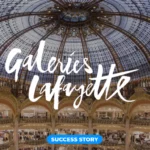
Example: Galeries Lafayette
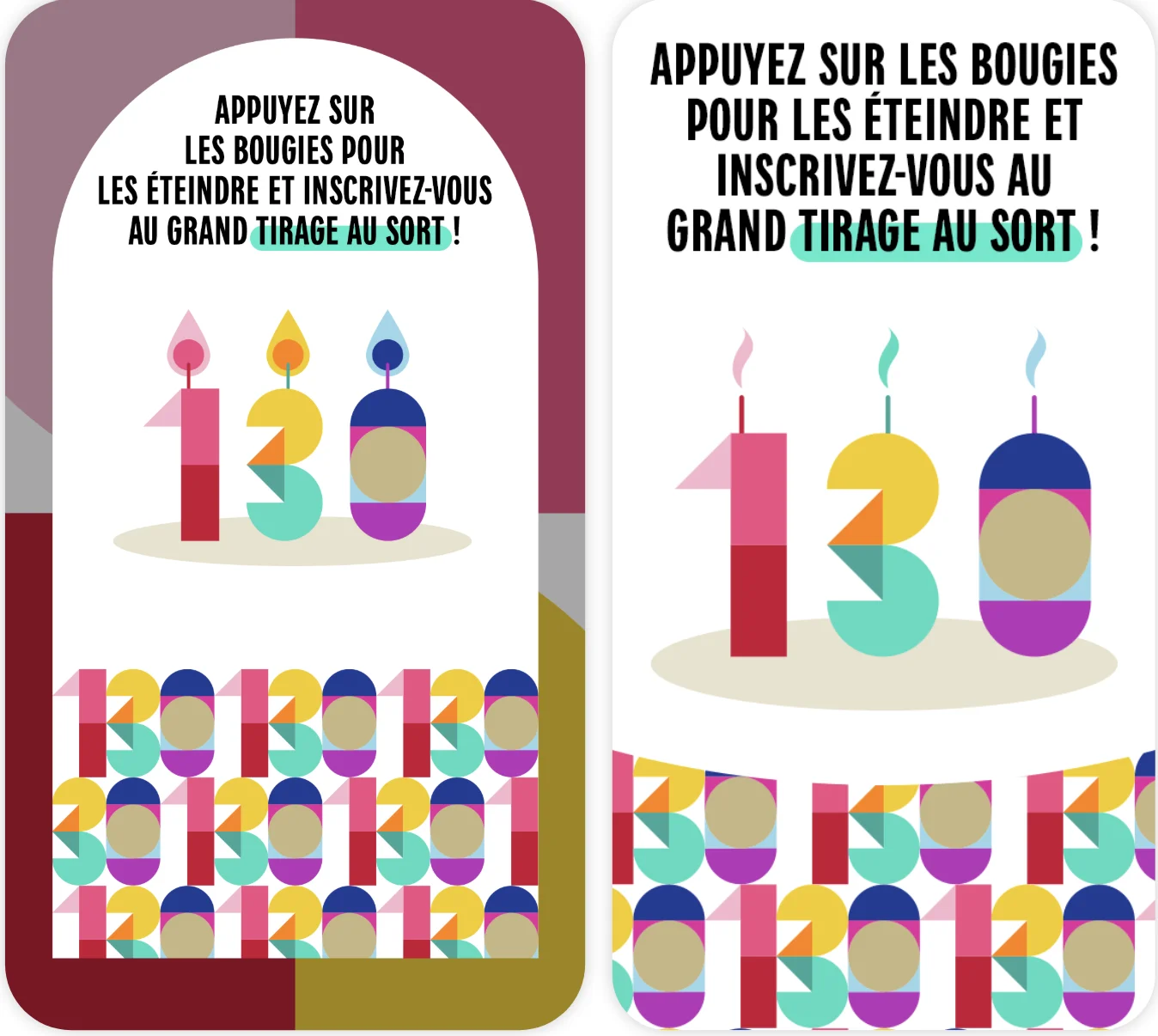
To celebrate its 130th anniversary, the brand installed a digital Piñata on kiosks in 10 stores. An exceptional prize reinforced the game appeal. Result: high store participation and the collection of qualified opt ins, later reused for CRM activation.
2. Adapt the mechanic and the game journey to the event and the target audience
Every event has its audience and its codes. The journey must be designed according to the context: a fast, intuitive experience for a trade show booth, more immersive for an inauguration or an internal seminar. A seamless journey will limit friction and increase the participation rate.
Connection with seasonal highlights: Christmas, back to school, sales or brand anniversaries offer the opportunity to adapt the event activity design as well as the prizes at stake. Visual and thematic consistency strengthens player immersion and message recall.
3. Implement an omnichannel strategy for your event games
An event game lives beyond the physical location. Integrating a phygital logic makes it possible to extend the experience and reach a broader audience. QR codes, tablets or interactive kiosks easily connect the physical event to digital. On site, the game captures attention; online, it extends the relationship.
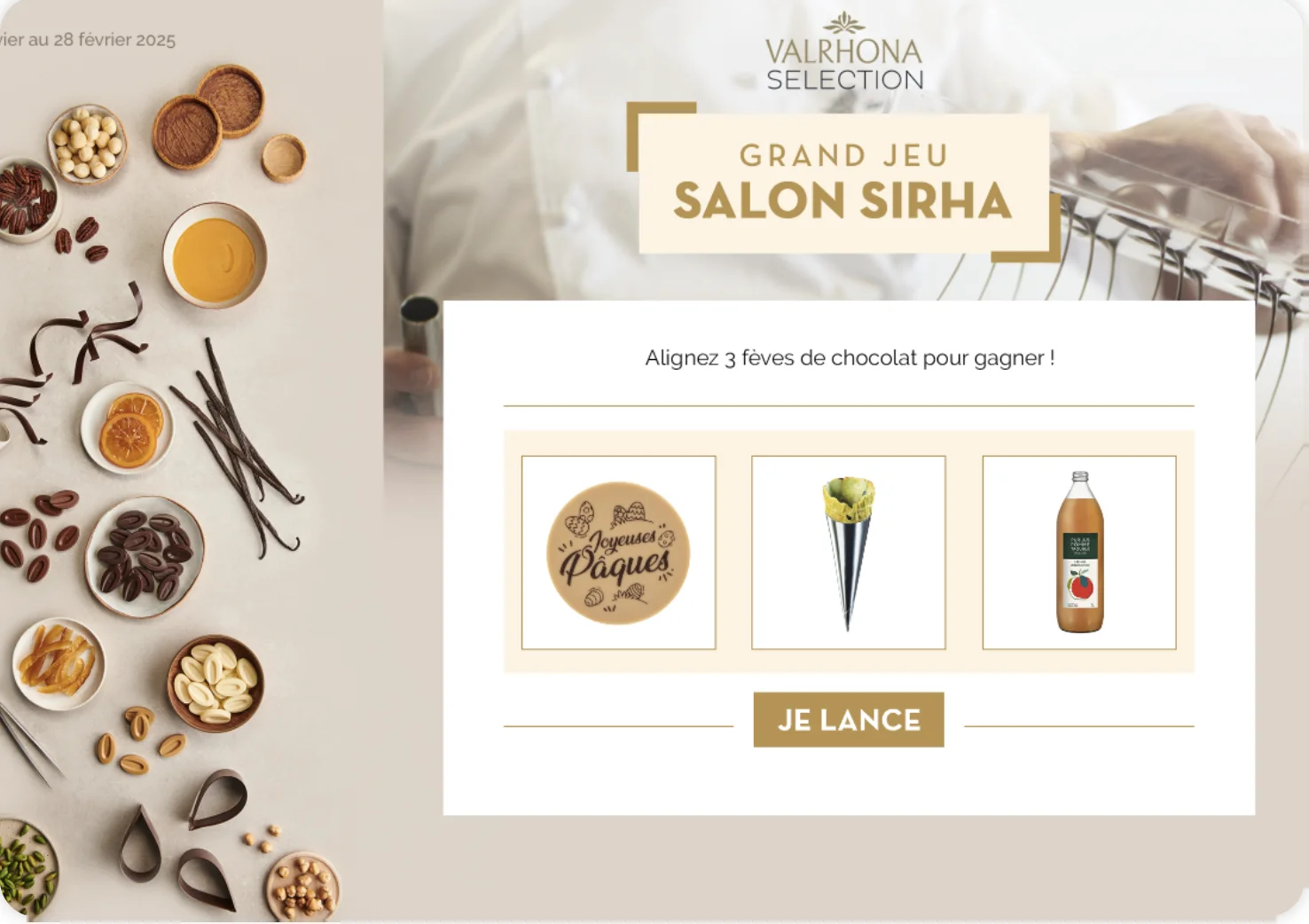
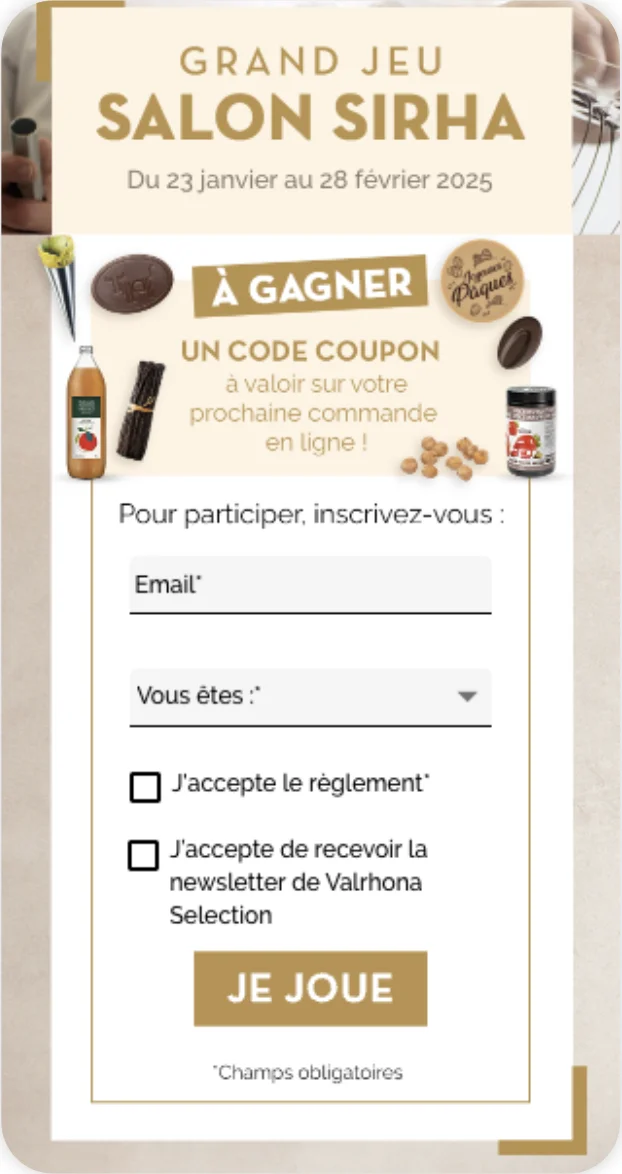
Example: Valrhona at the Sirha trade show
The brand deployed a slot machine designed as a traffic generator for its e commerce website. Participants discovered the game on site and were then encouraged to place an order online. An effective omnichannel strategy to transform event visibility into measurable conversions.
4. Facilitate tracking with the right tools
Performance tracking is often underestimated. Yet, it determines the real value of an event game. Using a SaaS platform simplifies the design, deployment and especially KPI tracking of a playful activity (such as the number of participants, conversion rate or collected opt ins). Combined with interactive kiosks or tablets, it enables rapid setup of the interactive game and reduces the logistical burdens organizers typically face.
Event games transform your events into real marketing levers: they capture attention, build connection and generate useful data. At Adictiz, we help you design impactful activities thanks to our large catalog of interactive mechanics, our connected kiosks and our SaaS platform integrated with your CRM.
Adictiz, the platform to reach
your marketing goals