

In a context where every marketing campaign must prove its impact, measuring marketing performance becomes essential. KPIs do not just serve to fill out spreadsheets: they show what works and what needs to be optimized.
Gamification is a marketing technique that maximizes the results of a traditional marketing campaign. By making interactions more fun and engaging, it encourages the audience to take action. It also facilitates data collection that can be reused in future communications.
This article explores how gamification can boost marketing KPIs at every step of the customer and employee journey, for campaigns that are both impactful and measurable.
Table Of Content
Performance marketing: beyond reach and visibility
Marketing performance is not limited to reach or visibility. While these indicators remain useful for measuring a brand’s exposure, they are not enough to evaluate the real impact of communications on business results (and therefore their commercial ROI).
Truly meaningful KPIs go further : engagement, conversion, customer retention, and satisfaction measure the concrete effectiveness of marketing actions. Focusing on these indicators forces a rethinking of every touchpoint: every piece of content must create interaction, drive action, and generate tangible results.
This approach prioritizes quality over quantity and maximizes long-term campaign value. With audience attention fragmented, performance is built on measurable interactions and concrete actions, rather than vanity metrics.
Brands that manage to align visibility and impact create sustainable campaigns that drive real business value.
Gamification: a powerful marketing performance driver
Gamification involves integrating game mechanics into interactions with your audience to boost engagement and guide behaviors.
It directly impacts the KPIs that matter: engagement, conversion, customer retention, and satisfaction. Here, we focus on the impact of gaming across every stage of the customer or employee journey, and how it strengthens their relationship with the brand.
1. Gamification as a lead generation tool
Gaming enables the collection of qualified leads by combining interaction and reward. Potential customers interested in the brand’s offering interact through a fun game that helps better target their needs in exchange for attractive incentives (free quotes, discounts, etc.).
Impacted acquisition KPIs include:
- volume of leads collected,
- email opt-in rate
- and revenue generated from targeted offers
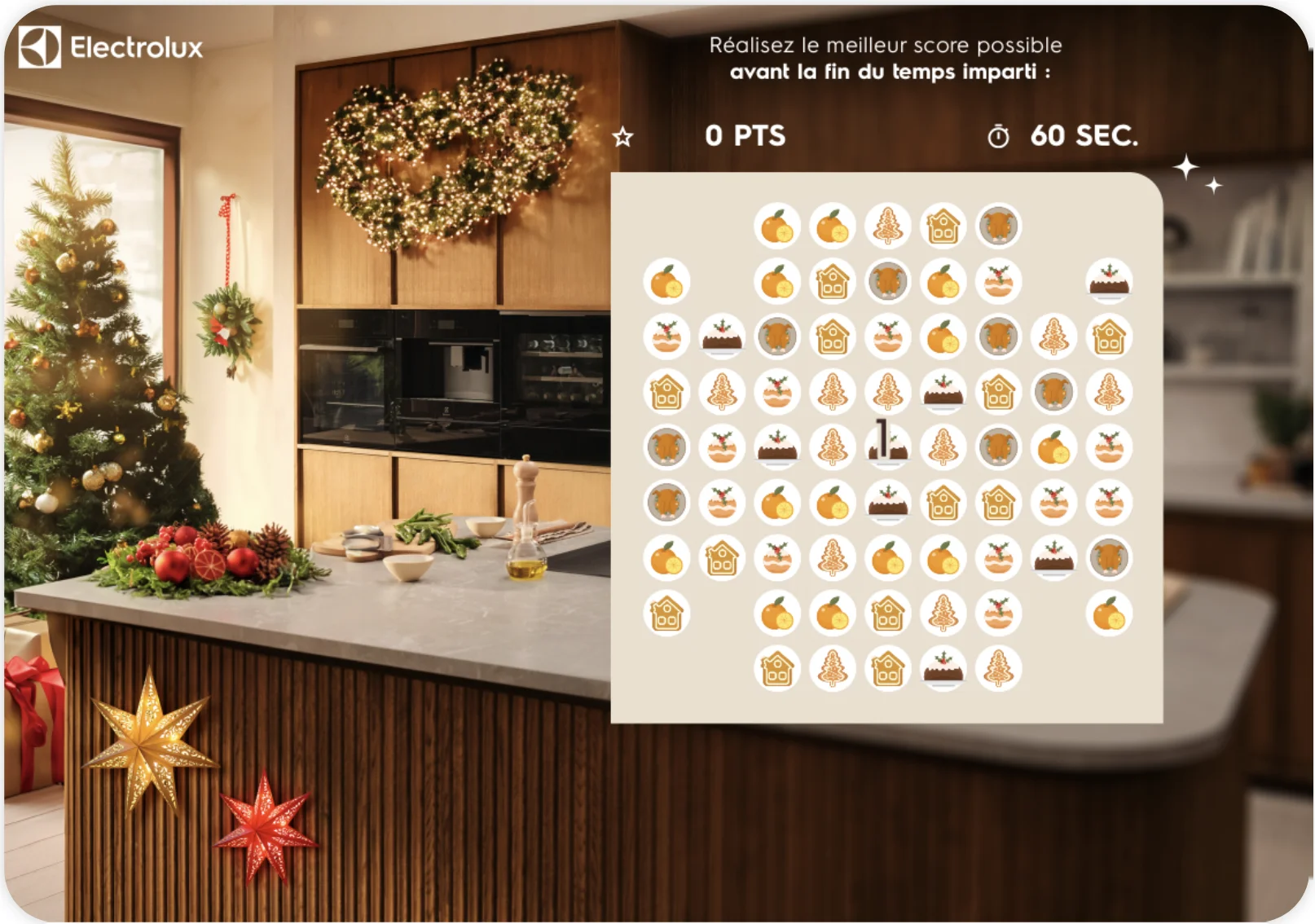
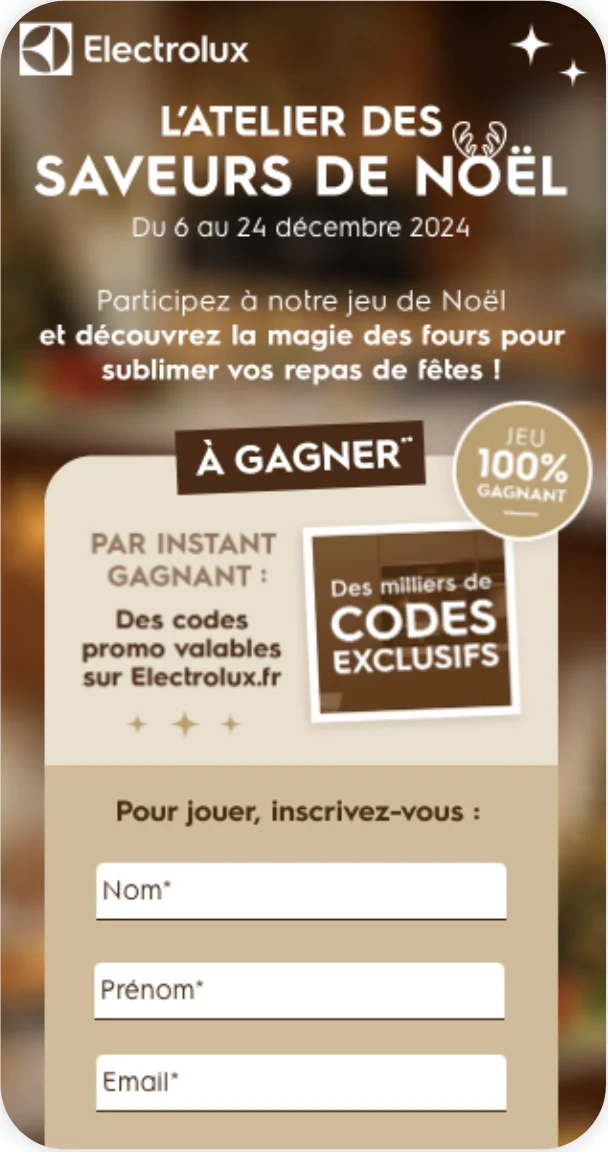
Example: For its Christmas campaign, Electrolux implemented an engaging Match-3 game Each participant played an average of two games, with an opt-in push to maximize data collection. This first-party data made it possible to segment the audience and personalize messaging. Distribution via Adictiz Ads reached high-affinity segments, optimizing prospecting performance.
2. Gamification as a driving force for engagement and conversion
Gaming keeps the brand community engaged throughout the year, especially during key promotional moments (Christmas, Halloween, Valentine’s Day, Black Friday, etc.). It engages users by transforming standard content or offers into memorable experiences. Once attention is captured, the activation encourages users to take action with compelling incentives (personalized recommendations, discounts, etc.).
Impacted KPIs include:
- Engagement rate: active participation and prolonged interactions
- Time spent with the brand: increase in average time spent on the website or application
- NPS (Net Promoter Score): measurement of satisfaction and likelihood to recommend
- Conversion rate: proportion of users taking action after the campaign (purchase, sign-up, download)
- Average customer value: impact on average order value (AOV) or evenue generated by participants
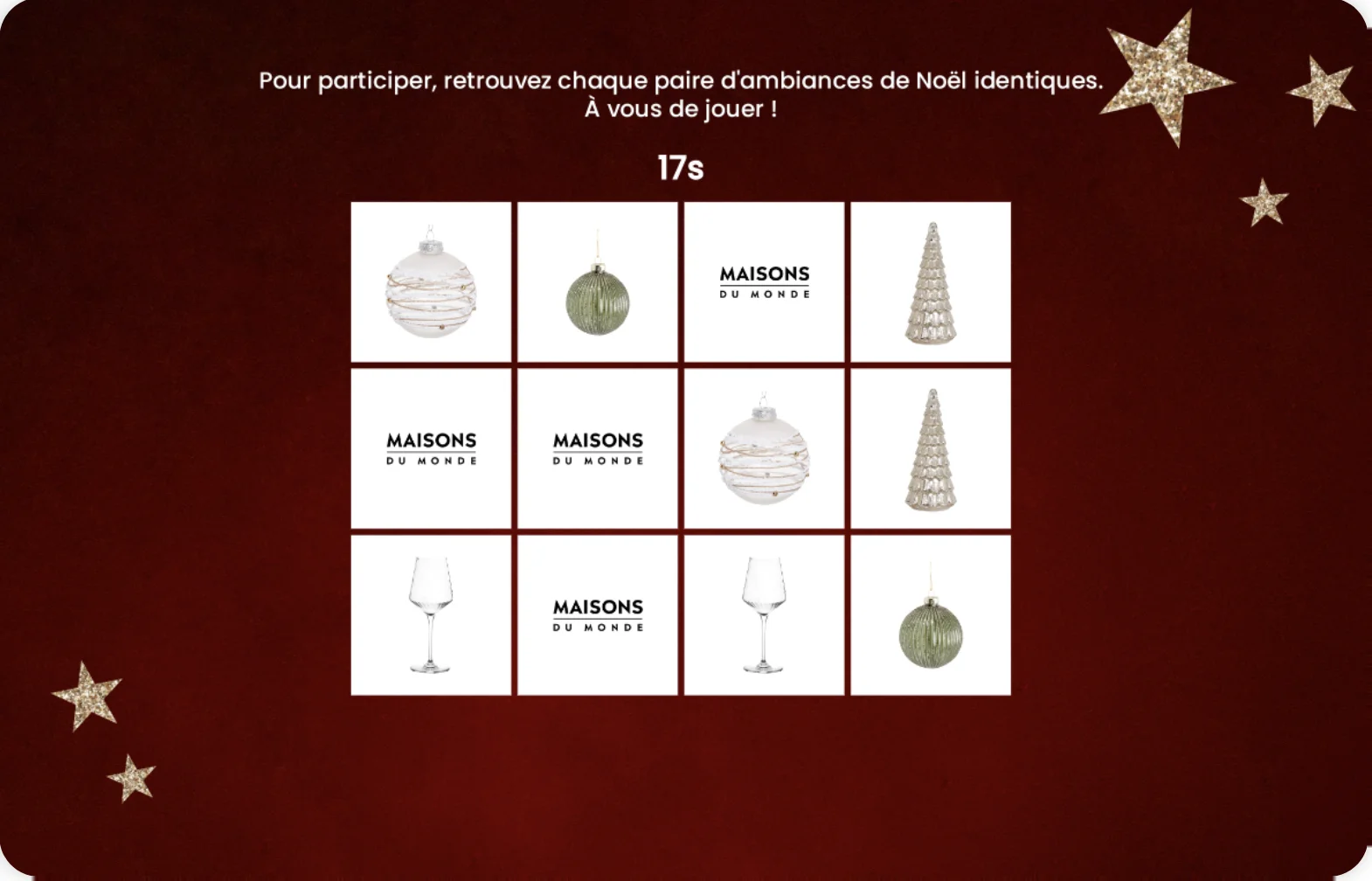
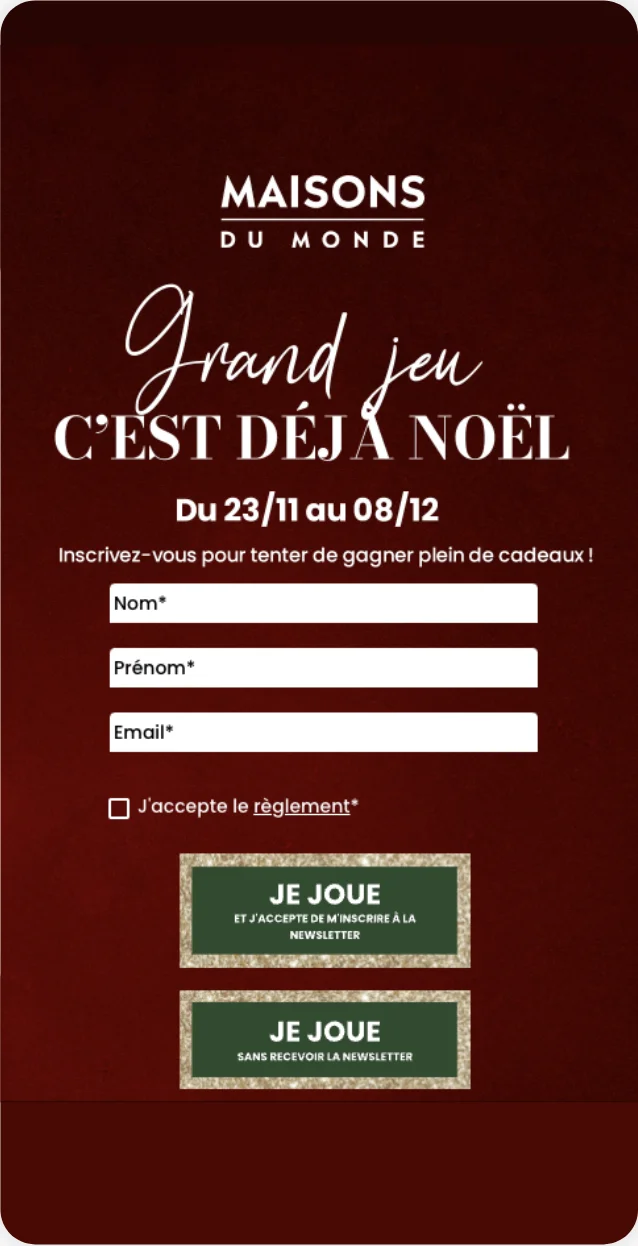
Example: Maisons du Monde rolled out an international campaign across four countries, combining a Memory game with a final grand prize draw. Attractive incentives (gift vouchers and items) along with promotion via newsletters and social media captured attention and drove targeted traffic: 37% of participants continued their journey online. This end-to-end campaign measurably boosted engagement, visibility, and conversion.
3. Gamification as a CRM outperformance driver
Gamification transforms CRM into a true performance tool. Interactive gaming experiences make it possible to collect first-party data and enrich customer profiles in real time via a CRM connector. This information enables audience segmentation and personalized communications, thereby boosting customer loyalty and reactivating dormant customers.
Impacted KPIs include:
- Open rate: increase in email opens driven by perosnalized and interactive content
- Click-through rate: more clicks on targeted links and offers
- Enriched data rate: volume of customer profiles completed and refined using the collected data
- Reactivation rate: return of inactive customers through gamified campaigns
- Retention rate: increased engagement and repeated interactions
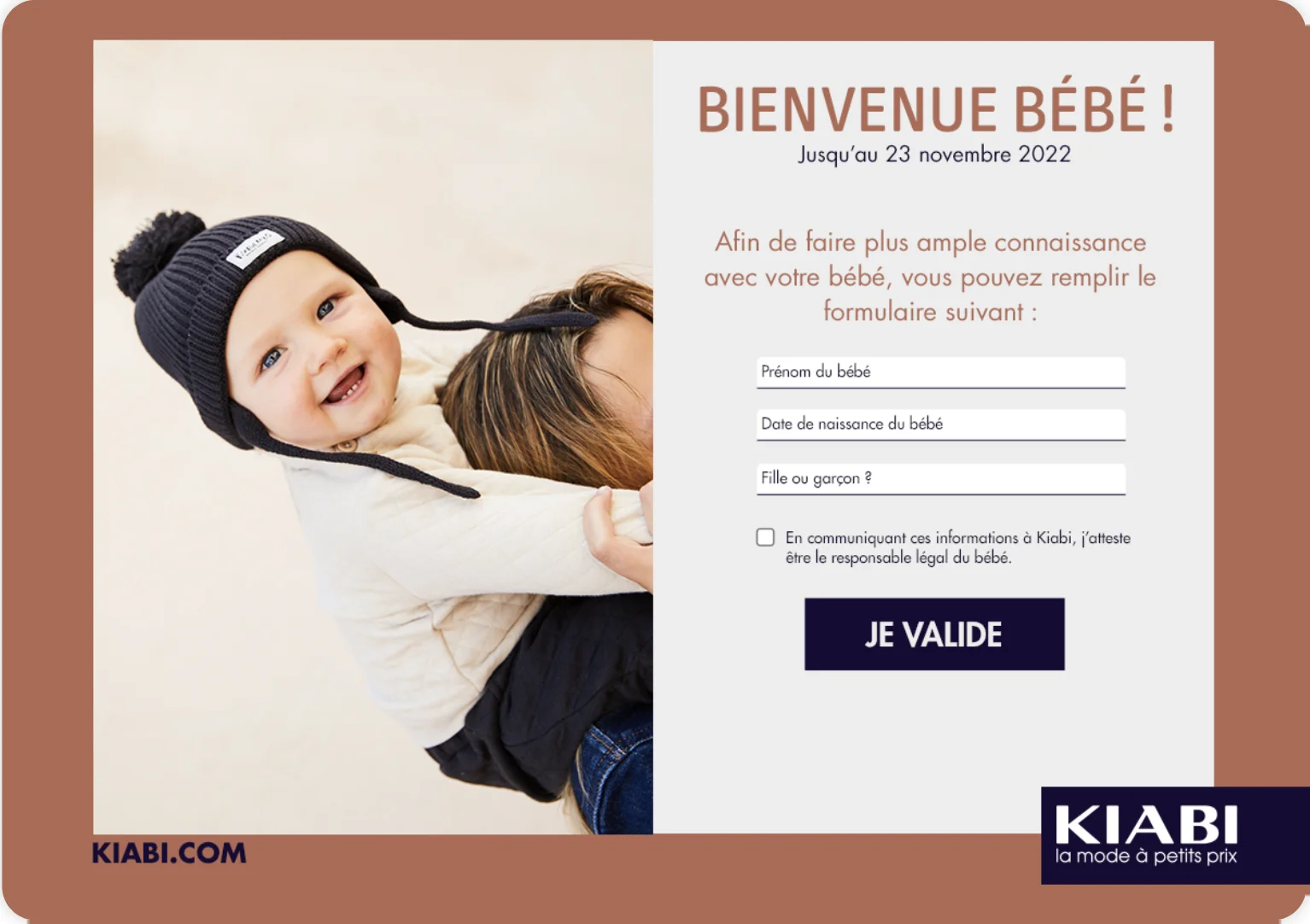
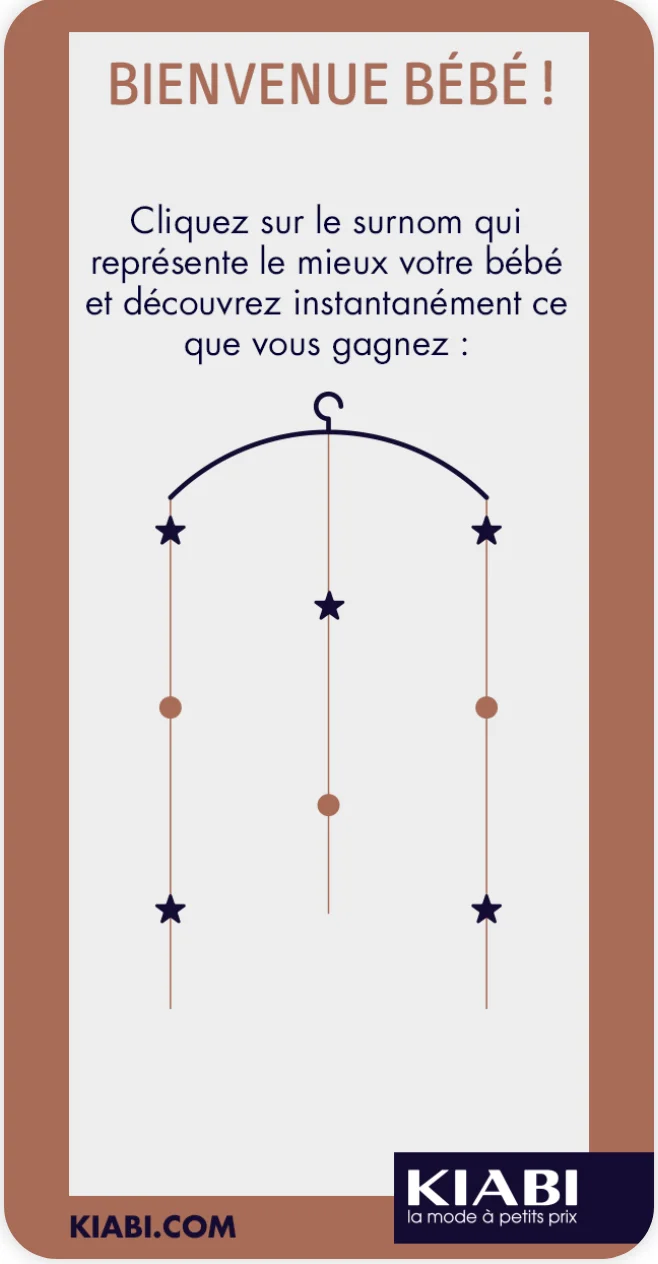
Example: Kiabi launched a campaign combining game mechanics with distribution via Adictiz Ads to recruit qualified leads. An enriched form enabled the collection of key data, audience segmentation, email personalization, and stronger proximity with the audience.
4. Gamification as an internal engagement tool (employee engagement, participation)
Gamification also proves effective for mobilizing and engaging employees over the long term. Game mechanics foster active employee participation (for instance, by encouraging them to create content that boosts employer branding) and strengthen the sense of belonging within the company. They also serve to highlight individual contributions and foster a more collaborative, dynamic internal culture.
Impacted KPIs:
- Participation rate: proportion of employees taking part in initiatives
- Employee engagement: interactions, contributions and spontaneous initiatives
- Employee satisfaction: measurement of buy-in and internal motivation
- Employer brand: visibility and attractiveness to talent and prospective candidates
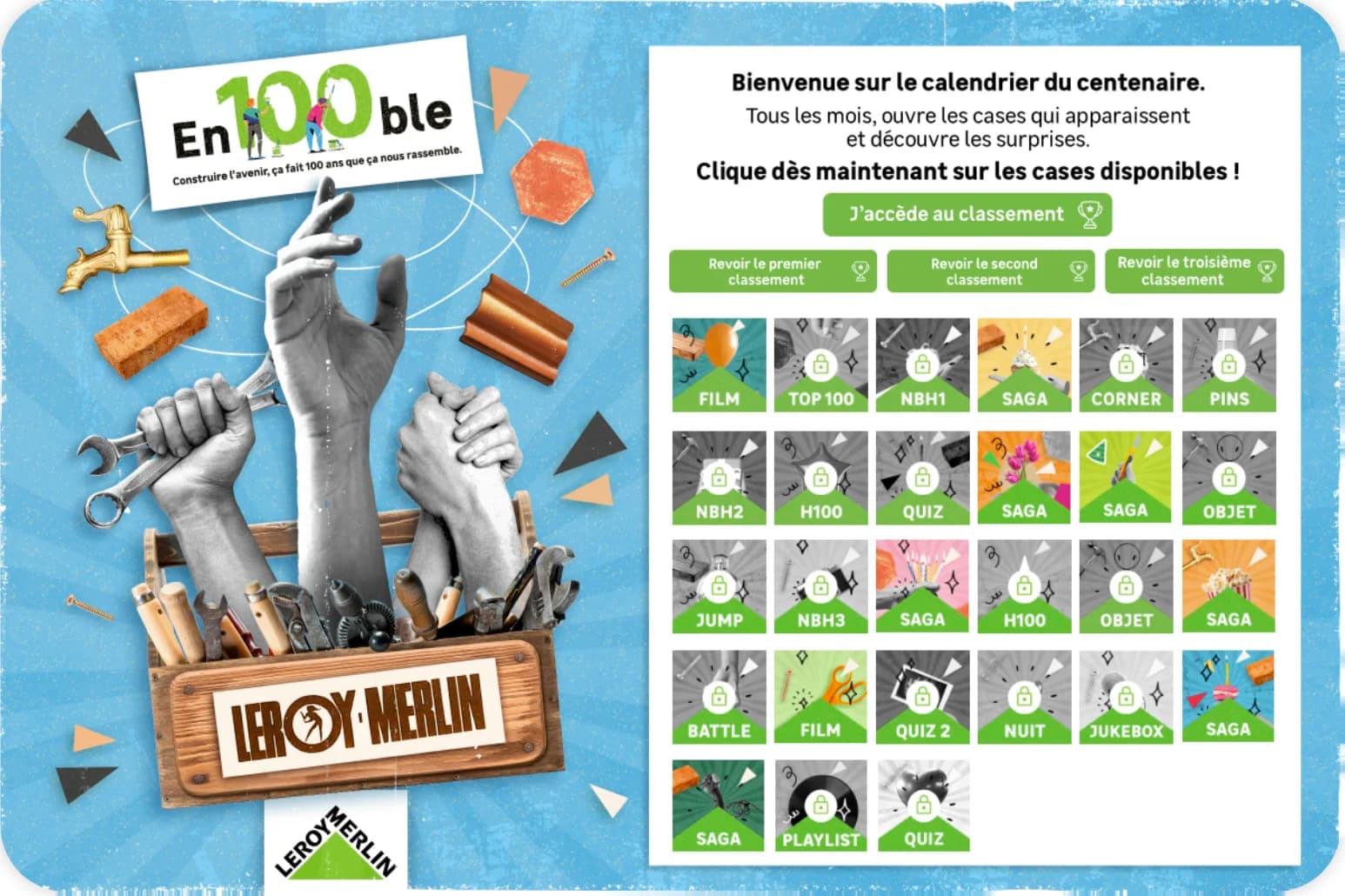
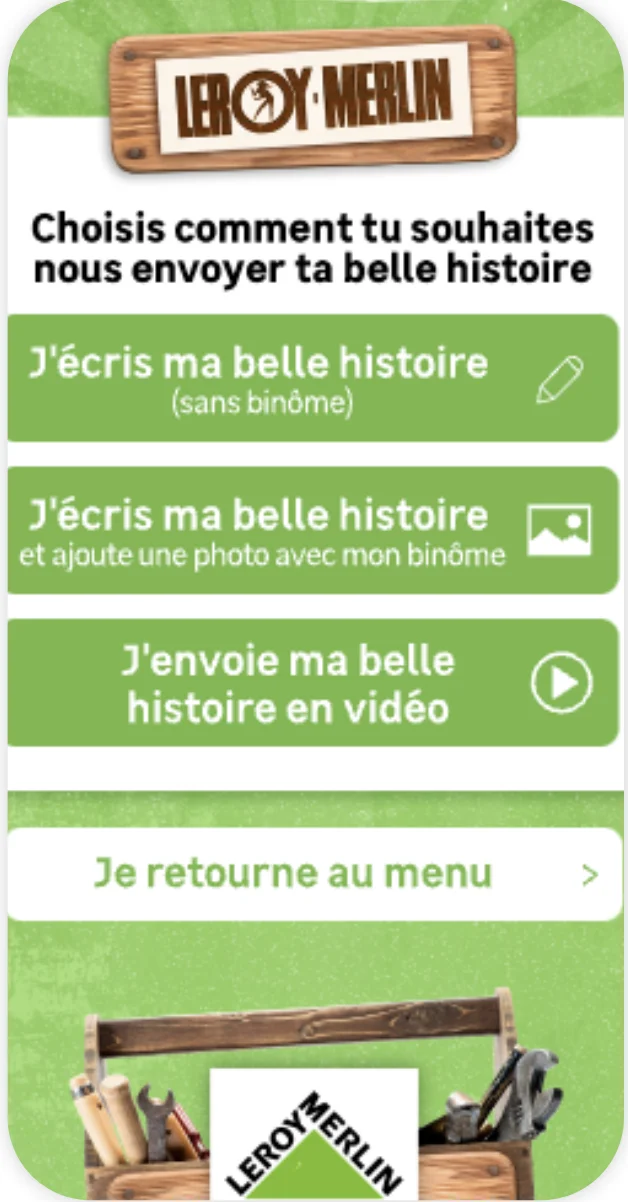
Example: To mark its 100th anniversary, Leroy Merlin launched a 9-month internal campaign combining quizzes, challenges and collaborative content creation (photo contests, videos, testimonials) via a dedicated platform. The gamification project generated an exceptional participation rate and culminated in an anniversary book compiling team contributions, thereby strengthening employee engagement and employer branding.
English Gamification is establishing itself as a tangible performance driver in marketing, impacting all your strategic KPIs: lead generation, engagement, conversion, loyalty, and CRM efficiency. By making every interaction playful and memorable, it turns your campaigns into truly impactful, high-performing experiences. Discover Adictiz’s mechanics, seamlessly deploy marketing games, and achieve lasting improvements in your strategic results!
Adictiz, the platform to reach
your marketing goals