

In the retail industry, every visit counts and margins leave no room for error.
Fierce competition, constant promotions, and volatile customers increase the pressure on companies in the sector.
Retailers must step up their efforts to drive football, convert at checkout and build long term loyalty. To tackle all these challenges, gamification has become a concrete leverage tool. It boosts engagement both in store and online, increases retail data collection, and improves customer retention in the retail sector.
This article offers practical advice, promotional event ideas, and inspiring examples to build a retail marketing strategy that drives traffic, data, and performance.
Table Of Content
Retail marketing challenges and priorities
Competition among retail brands has continued to intensify in recent years. Sector players must also contend with new consumer expectations, with customers becoming more demanding regarding both product quality and customer experience.
- Customer switching behavior and low brand attachment make loyalty challenging. According to a recent study, French consumers shop at an average of 9 different retail chains per year for their groceries.
- Competition from pure players and discounters intensifies price pressure. Action, for instance, continues to open new stores in France, driven by an ultra competitive pricing model. Private label brands are also gaining ground, now accounting for 36.5% of fast moving consumer goods purchases by value.
- Driving store traffic is becoming difficult when consumers prioritize price or digital convenience. Retailers are striving to reinvent their sales formats to address this challenge.
- Customer data collection and activation remain fragmented. 96% of retailers in France report difficulties in leveraging customer data for growth strategies, notably due to the lack of a unified customer view or incomplete data.
- Finally, CRM communication struggles to engage consumers, notably due to low-differentiation loyalty programs, generic messages, or rewards that are not highlighted enough. Yetstruggles to engage consumers, notably due to low-differentiation loyalty programs, generic messages, or rewards that are not highlighted enough. Yet, 80% of French consumers say they are more loyal to a brand that offers an attractive loyalty program.
Gamification: a powerful lever to boost retail marketing strategy
Gamification refers to integrating game mechanics into a customer journey. In retail, it transforms a conventional interaction into an engaging experience. Retailers benefit in two ways: capturing the attention of a highly solicited audience and strengthening customer relationships through playful formats.
Here are five concrete use cases to unlock this potential, with practical advice and inspiring examples.
1. Driving footfall in store
Interactive games primarily serve to attract store visitors or encourage them to visit the brand’s e commerce website. The game mechanic stimulates curiosity, drives qualified traffic, and boosts conversion through rewards such as discount coupons. It can also direct participants to a tailored product selection after collecting their preferences.
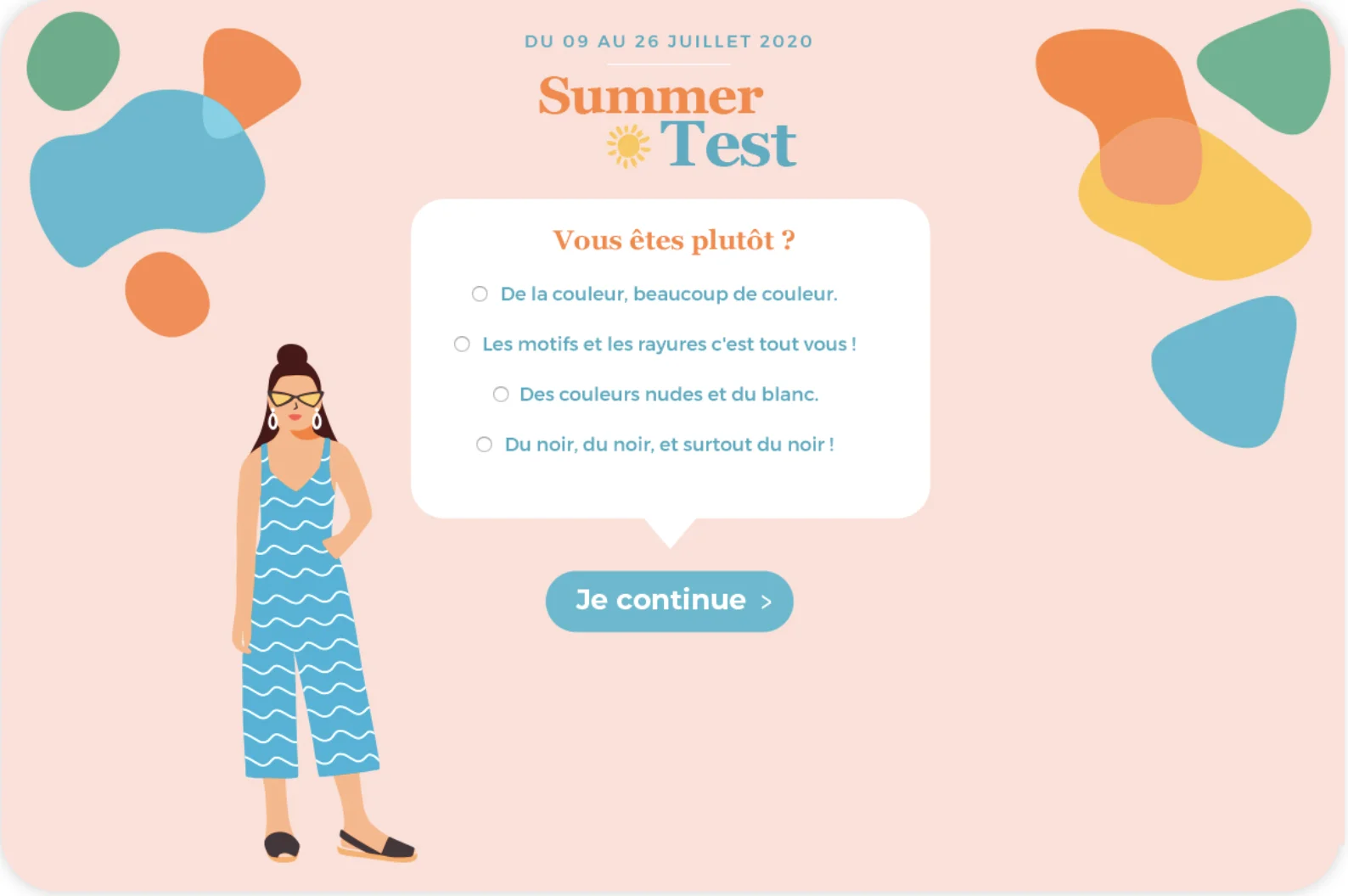
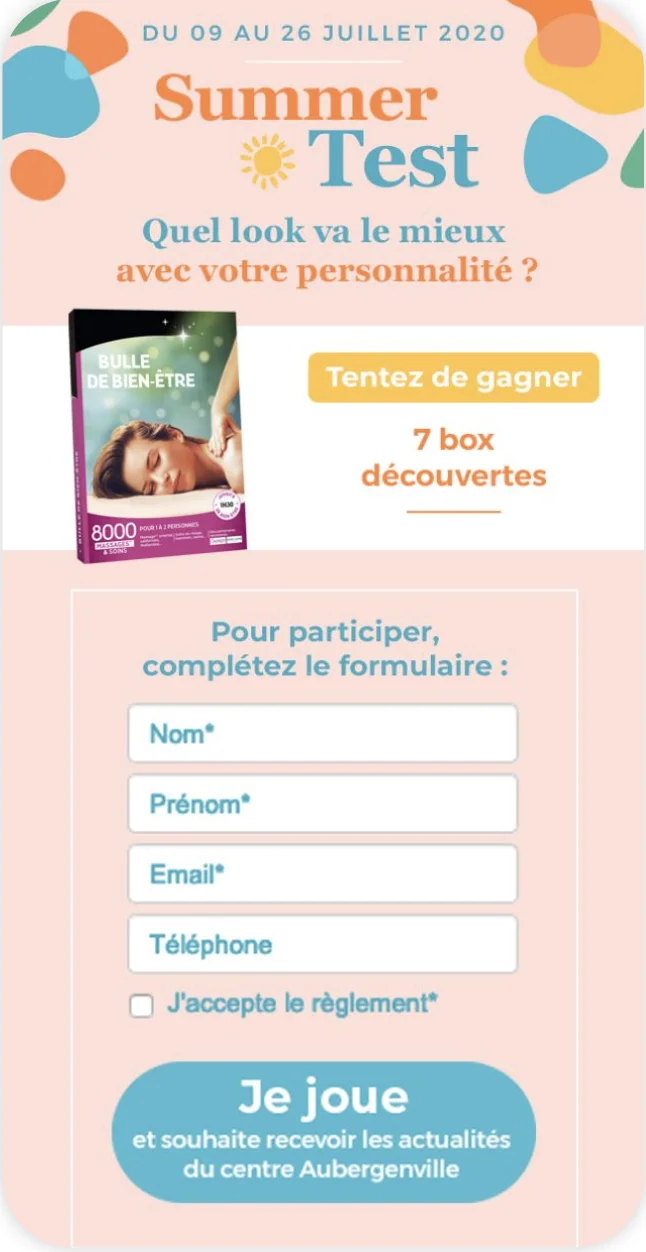
Example: Altarea Cogedim launched the Summer Test (a personality quiz) to drive traffic to its shopping centers during the summer sales. This personality quiz aimed to generate traffic and boost purchases. Result: the brand collected over 16K new contact prospects, gathered opt-in consents, and gained visibility during this key promotional event.
2. Driving engagement during key promotional events
Gamification boosts retail stores during key promotional periods. It drives traffic, increases time spent with the brand, and highlights a product selection tailored to the event (chocolates for Easter, school supplies for back to school). Event activations also allow customer data collection, strengthening the bond with the retailer and improving insight into consumer preferences.
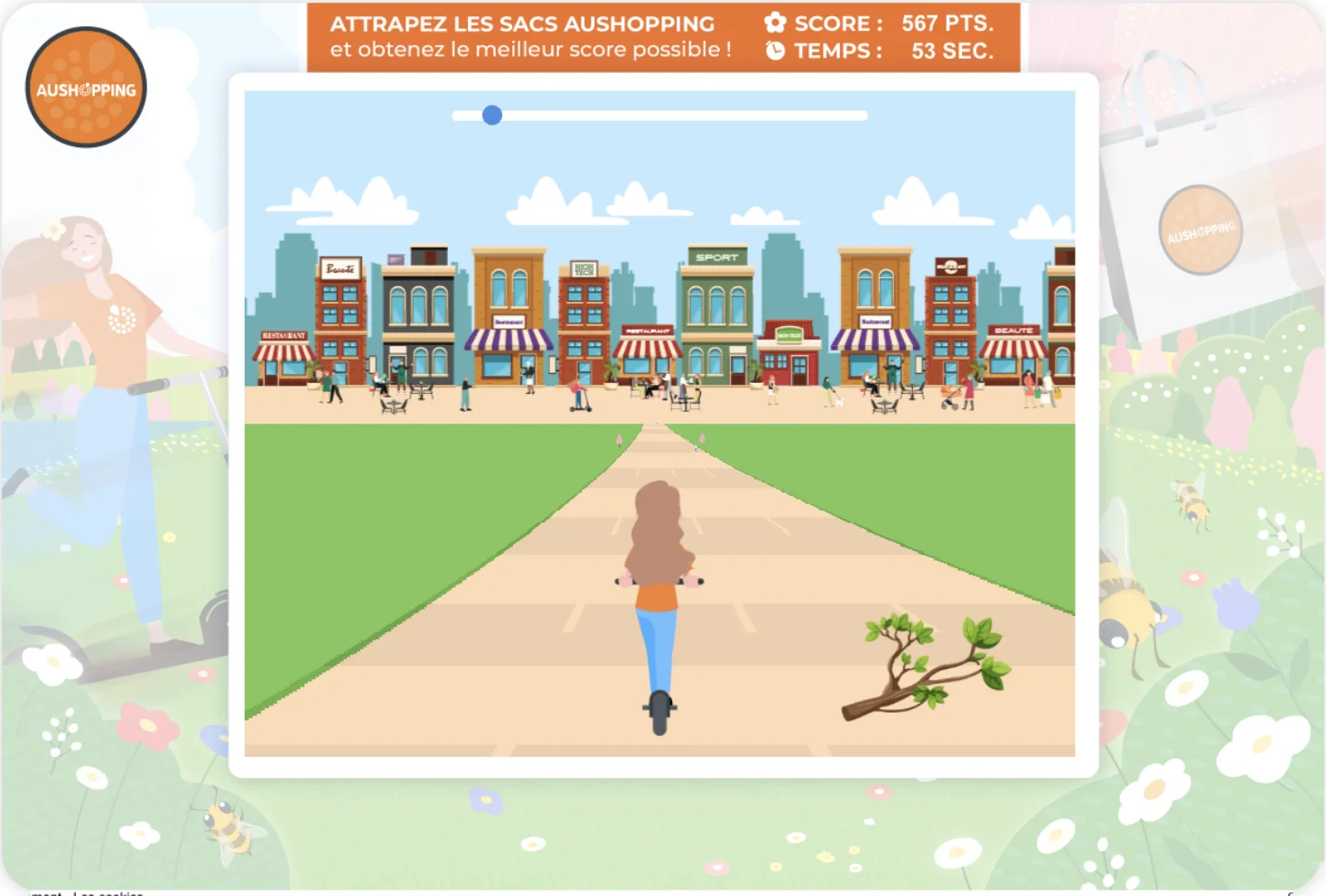
Example: Aushopping used the Outrun game for its spring Web-to-Store campaigns. The activation aimed to drive engagement in stores while capturing new contact prospects. Result: an average of over four games played per registrant and qualified contacts for retargeting and customer retention.
3. Optimizing retail loyalty programs
Gamification also optimizes retail marketing strategies by improving customer retention rates. Marketing games energize the loyalty program by making the experience more engaging and motivating for VIP customers.
Users are encouraged to accumulate points or reach new loyalty tiers to unlock rewards, which stimulates recurring purchases. Referral or recommendation mechanics also foster engagement while acquiring new customers.
4. Collecting qualified data on purchasing behavior
Gamification allows retailers to collect precise customer data in the most engaging and least intrusive way possible. Mechanics like Swipers or Battles reveal, for instance, product preferences, buying habits, and consumer trends.
This information then makes it possible to personalize offers, adapt marketing messages, and improve the customer experience in store or online. In an ultra competitive environment and faced with increasingly volatile consumers, these insights provide support to boost the ROI of commercial actions, guide consumers toward tailored offers, and build long term audience loyalty, notably by saving them time on their shopping trips.
5. Reactivating dormant customers via CRM campaigns
Marketing games feed the CRM with precise data on participants and their preferences. This information helps segment inactive customers and offer them personalized deals tailored to their needs and interests.
By making communication more relevant and attractive, gamification helps reactivate these dormant customers. Targeted actions, such as promotions or invitations to exclusive events, increase the chances of re engagement and boost repurchase rates.
Key performance indicators impacted by gamification
- In store footfall: Playful activations attract more visitors on site, increasing attendance and time spent in store.
- Opt in volume: Interactive games encourage participants to register, enriching the CRM database with qualified contacts.
- Participation rate: Gamification makes campaigns more engaging, increasing the proportion of active and involved customers.
- Revenue generated from promotional campaigns: Rewards and game mechanics guide customers toward targeted products, boosting sales during key promotional periods.
- CRM engagement: Collected data enables personalized campaigns, strengthening customer relationships and repeat purchases.
Gamification is emerging as a strategic tool to transform structural challenges in retail into opportunities for measurable marketing performance. By combining engagement, data collection, and loyalty, it creates memorable experiences for your customers. Explore Adictiz’s interactive mechanics to boost your campaigns, strengthen your customer relationships, and maximize the impact of your communications.
Adictiz, the platform to reach
your marketing goals