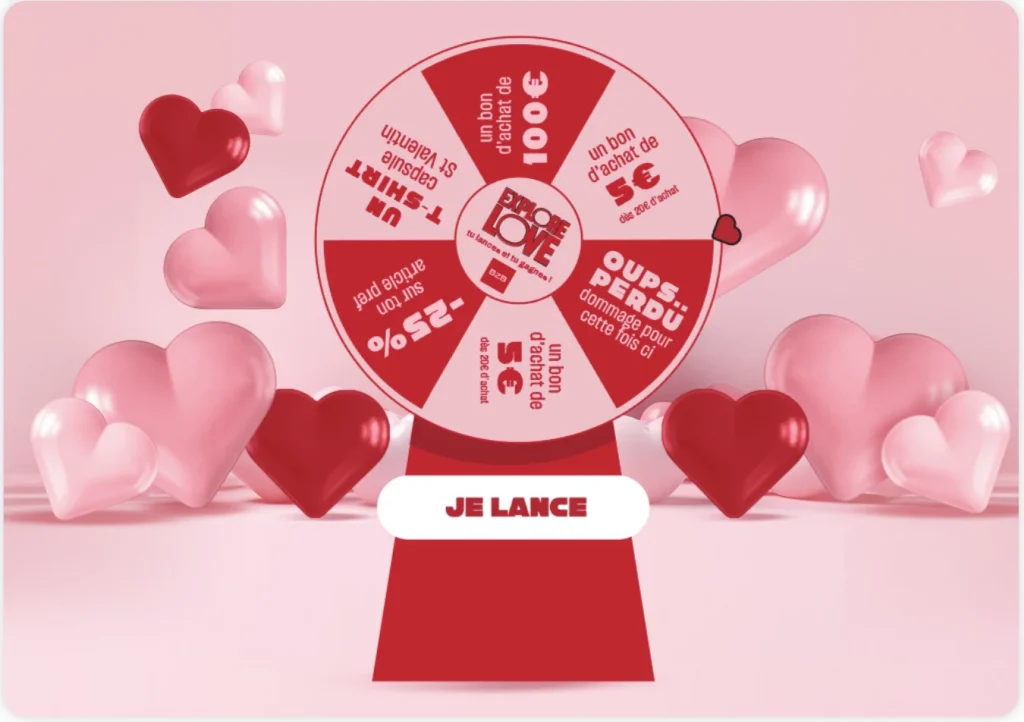


Third party cookies are disappearing, browsers are tightening privacy controls, and regulations are becoming stricter. For CRM and e commerce managers, the question is no longer how to track consumers without their knowledge, but how to convince them to share what matters most themselves.
That is the entire premise of zero-party data: data that consumers intentionally and transparently provide. It is more reliable, richer, and fully GDPR compliant. Still, consumers need a compelling reason to share it.
In this article, we define zero party data, explain why gamification is the ideal vehicle for it, and break down the mechanics and CRM strategies that turn this data into personalization.
Zero-Party Data: what are we talking about in a cookieless world?
A new context: cookieless and GDPR
For years, targeting relied on trackers placed without users truly realizing it. Today, privacy authorities strictly regulate cookies and other trackers, while browsers limit third party tracking. As a result, brands must rebuild customer insights on a foundation of explicit consent.
Definition: voluntarily declared data
Zero-party data refers to information that consumers share intentionally and proactively: their preferences, needs, purchase intentions, and life context. In other words, it is neither observed nor inferred data. It is declarative customer data, given in trust, in exchange for perceived value.

Third-party, first-party, zero-party: the essential difference
Third-party data is bought from external sources: it is increasingly scarce and contested. First-party data is gathered by the brand across its own channels: purchase history, browsing activity, signups. While valuable, it merely reflects past behavior.
Zero-party data, for its part, expresses intent. Thus, in the comparisonbetween first-party data and zero-party data, the latter does not replace the former: it complements it by uncovering the “why” behind the “what.” This is what makes cookieless marketing personalization truly relevant.
Why gamification is the ideal vehicle for Zero-Party Data
The principle of fair value exchange
No one fills out a long form without a good reason. However, an enjoyable experience, a personalized outcome, or a concrete benefit justifies the effort. This is the “value exchange”: information in return for an experience. Furthermore, participants understand exactly what they are sharing and why. Transparency directly enhances data quality.
The disappearance of the feeling of intrusion
A quiz does not feel like an interrogation. Questions unfold naturally within a narrative, anchored by a clear promise at the end. In this way, sharing information becomes part of the fun rather than a chore. This absence of feeling intruded upon explains the high completion rates of interactive formats, which far exceed those of traditional forms.

Designing the right value exchange
What should you offer in return? The answer depends on what you are asking for. A personalized result is enough for a few preferences: a beauty profile, an interior design style, or usage advice. A discount or early access makes sense when asking for purchase intent or budget details. Exclusive content rewards comprehensive feedback.
The rule is proportionality. The more demanding the question, the more valuable the reward must feel. On the other hand, there is no need to overpay for simple information: doing so only attracts opportunists and damages database quality. Finally, state the promised value clearly before the very first question. Transparency is, in itself, a form of reward.
Personality tests and profiling quizzes
It is the gold standard for collecting zero-party data. In five to eight questions, a cosmetics brand uncovers a skin type, a fashion retailer reveals a personal style, or a bank identifies a major life goal. The result delivered at the end rewards the participant, while each answer enriches their customer profile.

Interactive polls and swipers
When it comes to instant feedback, nothing beats a simple swipe. A swiper presents products or offers that users accept or discard with a quick thumb movement. For instance, a brand can test a new collection and identify best sellers before they even launch. Interactive polls serve the same purpose for more open questions.

The personalized product recommender
This mechanism combines data collection with immediate e commerce recommendations. The user describes their need through a few simple choices and instantly receives a tailored selection. In other words, they gain tangible value right away, while the brand captures a qualified purchase intent. This is the clearest illustration of gamified data marketing.
Leveraging Zero-Party Data in your CRM ecosystem
Collecting is only half the battle. Real value comes from activation. Here is how to structure its implementation.
Above all, measure what you collect. Three key indicators are enough: the journey completion rate, the share of profiles genuinely enriched with at least one preference, and the impact of personalization on your subsequent campaigns, such as the click through rate of a segmented email compared to a generic broadcast. In this way, zero party data stops being just a concept and turns into a measurable result.
Granular segmentation of your databases
Declared preferences become segmentation attributes: tastes, preferred purchase frequency, occasions, budget. These segments then feed precise audiences for your campaigns, far more reliable than behavioral deductions. To explore these methods further, consult our guide and data collection tools.
Ultra-personalized email and automation workflows
A “sensitive skin” profile does not receive the same message as an “anti aging” profile. Thanks to zero-party data, your automation workflows speak to each individual about what they explicitly shared themselves. That is why relevance, and consequently engagement and conversion, increase significantly. This logic fits into a broader strategy, detailed in our 4 levers for collecting first-party data.
Seamless integration thanks to Adictiz connectors
With Adictiz, every data point collected during a game integrates natively into your tools: Salesforce, HubSpot, Klaviyo, among others. Built in data quality modules filter out bots and cheaters upstream, while consent is gathered in full compliance with the GDPR. We break down these best practices in GDPR and first-party data: solutions for a cookieless world.
Finally, if you are just geeting started, our article on how to collect zero-party data offers an initial step by step approach, complementary to this guide focused on gamification.
Governance and trust: the golden rules
Zero-party data relies entirely on trust. It is quickly lost if the actual use betrays the original promise. Four rules safeguard it. First, an explicit purpose: explain why you collect data, and use it exclusively for that reason. Second, data minimization: ask only for what genuinely serves personalization.
In addition, establish a retention period and stick to it. Finally, make it easy to exercise rights: access, rectification, withdrawal of consent. These principles stem directly from GDPR date collection standards, but they also represent sound marketing habits. Customers who feel respected share more information, and do so for longer.
Zero-party data is the ethical and high performing answer to the end of cookies: declared, consented, and actionable data. Gamification serves as its natural vehicle, from quizzes to product recommenders. Discover how Adictiz helps you build a high performing zero-party data strategy and request a demonstration.