

Back to school is a crucial time for brands. Everyone wants to capture the attention of consumers, but only those with the right marketing strategy will stand out from the crowd!
With budgets back in hand, new purchasing intentions and the start of the sprint towards the end of the year, the strategic stakes are enormous. Provided you know where to focus your efforts. So how to get your fourth term off to a good start and maximise the impact of your back to school communications?
The major marketing challenges of the autumn
September is a key time for brands. After the summer break, it’s a time of renewal, with shoppers returning to their usual patterns of consumption. For companies, it’s a time to finalise their strategies as the competition for customers’ attention intensifies.
Here are the main marketing issues that brands need to anticipate to maximise the impact of their back to school communication.
1. Boost brand awareness and generate new leads
After the summer, brands need to reconnect with their audience and attract prospects. This is time to launch brand awareness campaigns, via social networks, display advertising and influencer partnerships.
The statistic to remember: Nearly 4 out of 5 French people (79%) are planning to change their shopping habits this autumn.
The marketing action to launch: a marketing campaign on social networks with an engaging format to maximise the brand’s visibility.
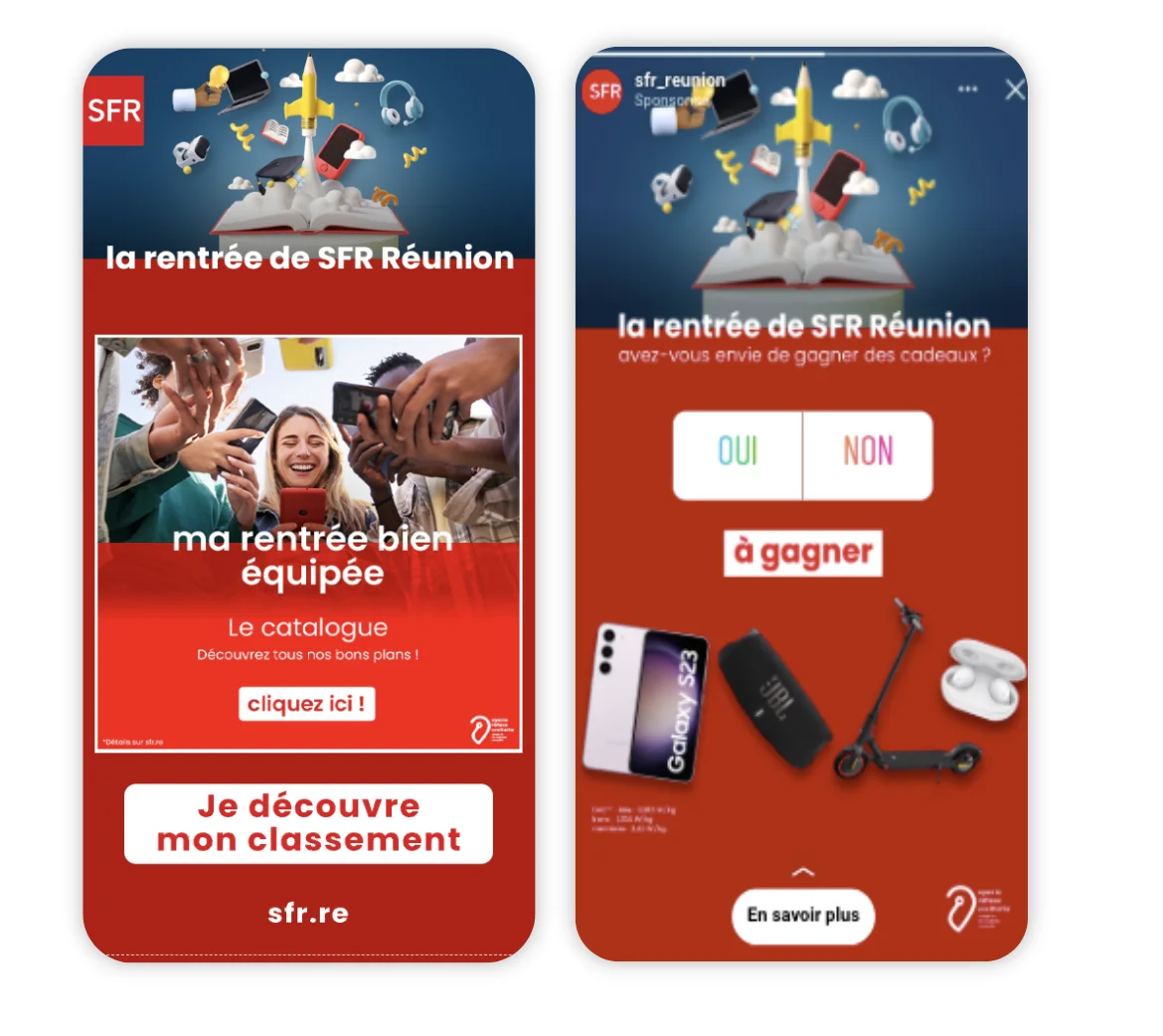
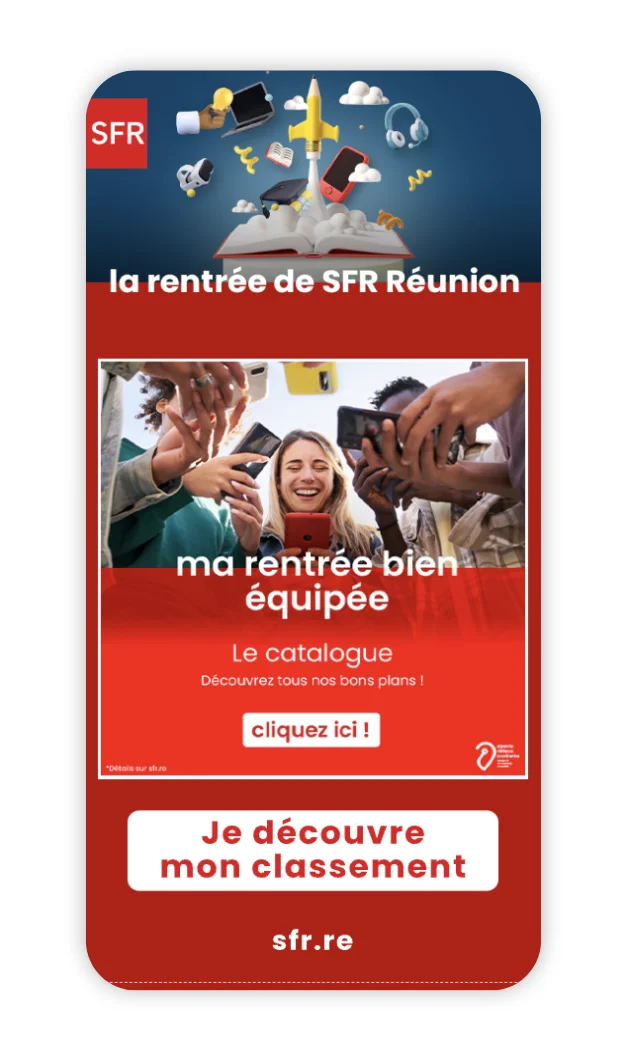
An example to follow: For its « Back to School » campaign, SFR relied on the Match 3 mechanic to promote the start of the new school year. This addictive game recruited 4,200 leads and generated 38 games played per participant. The Adictiz Ads media campaign generated a 98% response rate, an essential visibility factor.
2. Refine customer knowledge to improve future marketing campaigns
September is a time to collect customer data (via surveys or interactive quizzes). This enables brands to understand the expectations of their audience. They can target their marketing campaigns and maximise their return on investment (ROI).
The statistic to remember: 83% of consumers say they are willing to share their preferences with a brand in exchange for a personalised experience. And brands that exploit first-party data generate 2.9 times more revenue.
The marketing action to launch: Brands can share an interactive Personality Test on their site to understand their customers’ interests and needs. Customers will be redirected to product pages or retargeted by email with offers.
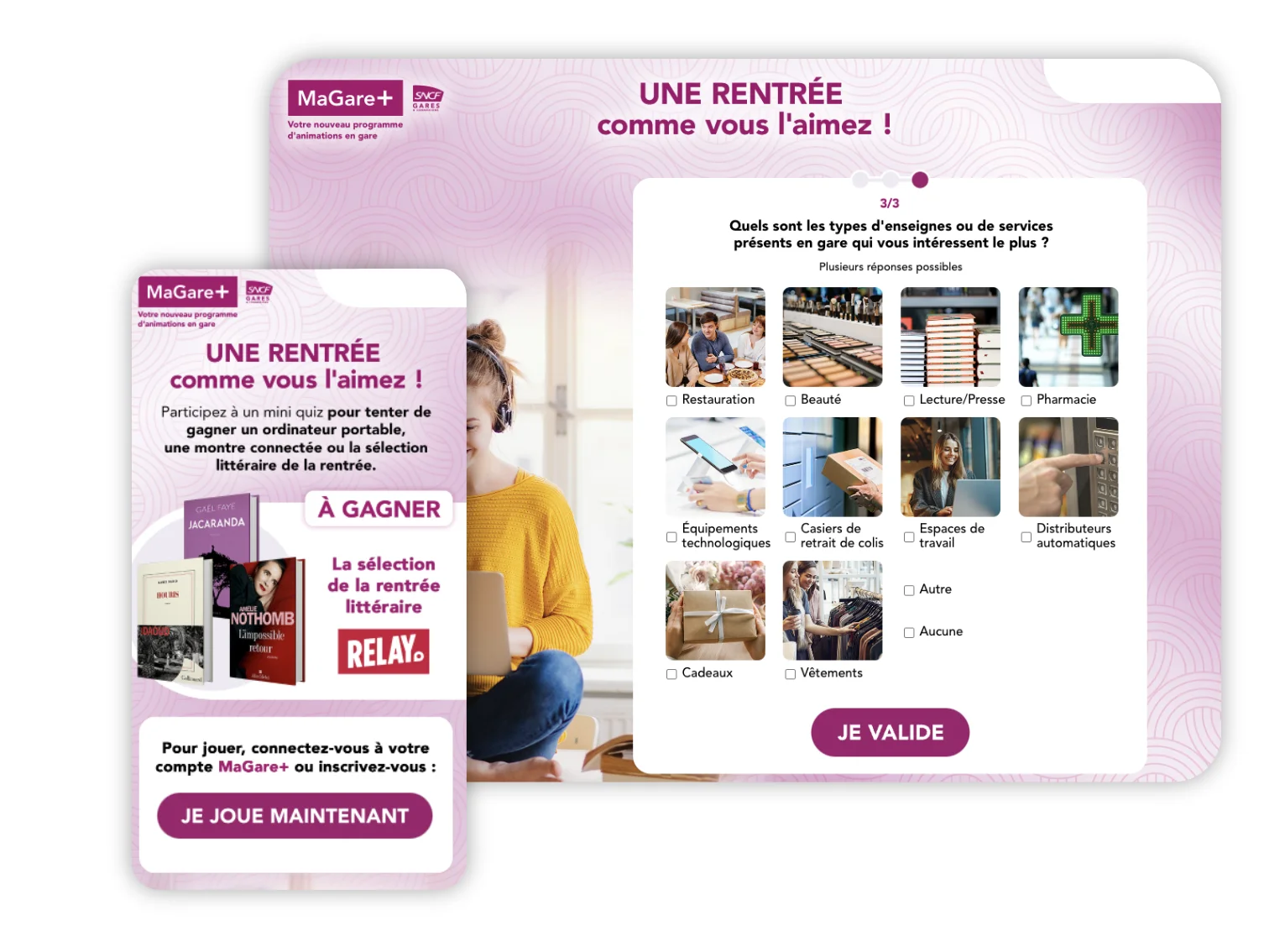
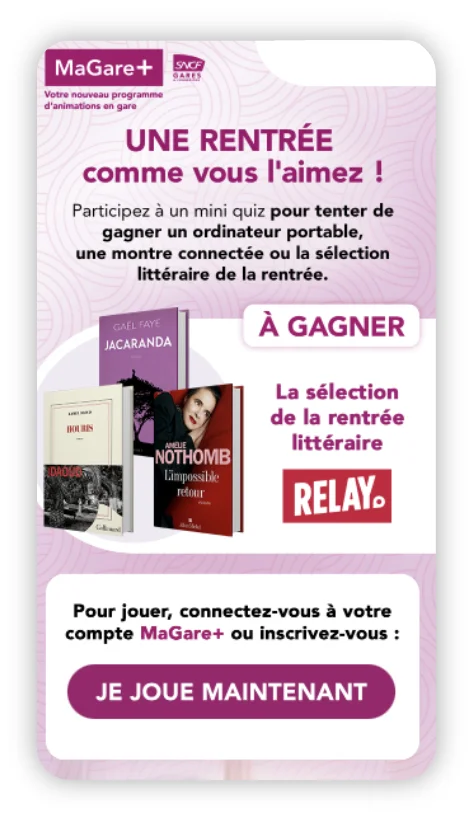
An example to learn from: The interactive quiz shared by MaGare+ as part of its back-to-school game enabled the company to collect data. It has been able to identify the station services that are likely to be of interest.
3. Capitalise on purchase intentions to improve conversion
With the return to school and work, consumers are on a buying spree. Whether for school supplies, clothing, electronics or services. Brands have a window of opportunity to convert these intentions into sales or customer account creation.
Key statistic: At the start of the school year, families spend an average of 304 euros per person.
The marketing action to launch: Consumers are likely to make a purchase or create a customer account in exchange for a discount or reward. Brands can boost their conversion rate by proposing an attractive welcome offer (a discount on the first order) or by distributing discount coupons via a 100% instant win.
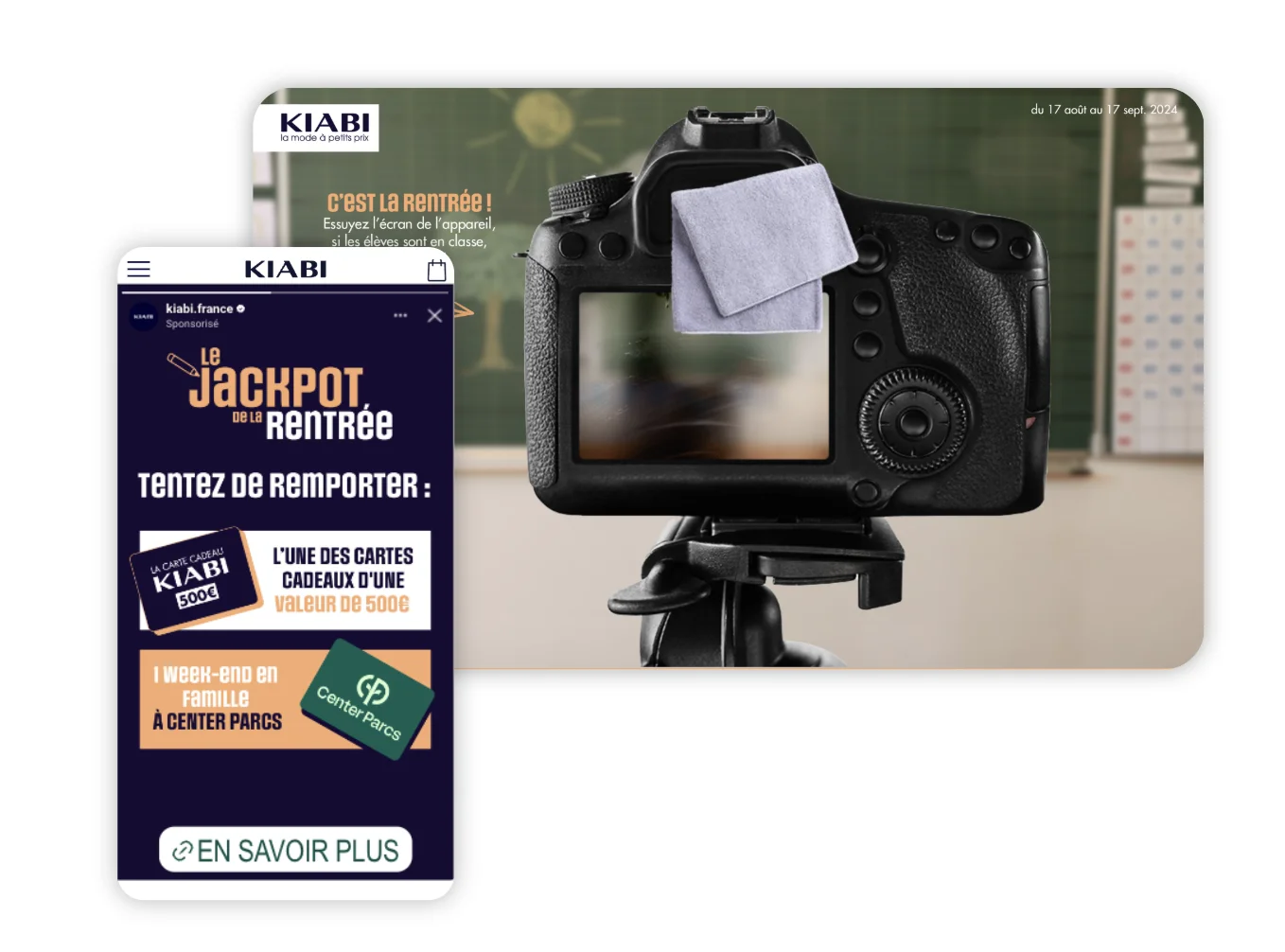
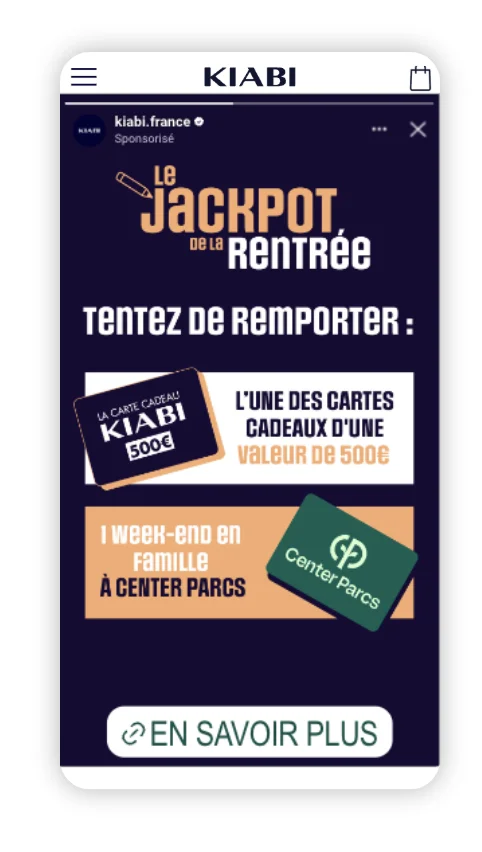
An example to follow: For the back-to-school season, Kiabi launched a campaign focusing on lead generation and conversion. Giving participants the chance to win attractive prizes, including shopping vouchers. Thanks to media coverage via Adictiz Ads, the operation recorded an opt-in rate of 68%. Which is testifying to participants’ commitment and the effectiveness of the campaign.
4. Building loyalty and preparing for the last quarter of the year
The last quarter of the year (Q4) is crucial, with events such as Black Friday, the autumn sales and the festive season. Building customer loyalty from September onwards maximises sales during this strategic period and considerably reduces the budget for future marketing campaigns.
The statistic to remember: A loyal customer spends on average 67% more than a new customer (Source: Harvard Business Review). Not to mention that attracting a new customer costs five times more than bringing one back.
The marketing campaign to launch: to boost your retention rate, there’s nothing better than an innovative loyalty programme. This will encourage consumers to buy from the brand by giving them access to more attractive discounts or previews of Black Friday offers.
An example to follow: In 2021, Decathlon has decided to transform its traditional loyalty programme into a more inclusive offering, allowing customers to collect points through various actions (in particular their interactions with the brand) and no longer just when they make purchases. The catalogue of rewards has also been expanded, giving programme members the opportunity to spend their points at partner stores.
3 tips for a successful back-to-school sales operation
To maximise the impact of back-to-school communications, brands need to put the right strategy in place. Here are three tips for optimising your sales operation and achieving concrete results.
1. Identify your objectives and your target’s needs
An effective back-to-school marketing campaign must therefore be perfectly tailored to the expectations of its audience. To achieve this, brands need to collect data upstream. Marketing games will enable them to analyse the preferences and behaviour of consumers in greater detail, so that they can better qualify their leads.
2. Stand out from other advertising campaigns
3. Use omnichannel marketing to maximize the impact of your back-to-school sales campaign
Consumers are constantly moving from one channel to another: they consult a product on their mobile, read a review on social networks and then complete their purchase in-store. A coherent omnichannel strategy can support this journey and multiply the points of contact. To achieve this, brands can communicate both online and in their physical points of sale, offer drive-to-store operations and also explore co-branding.
Conclusion
The key to a successful back-to-school campaign is a strategic approach that combines personalisation, engagement and channel diversification. By targeting your objectives carefully, you can create an effective campaign and maximise your chances of capturing and converting your audience. All you have to do to take action is choose from our range of marketing games!